


For three decades, websites have been designed around one assumption: a human being will arrive, look at a screen, click through menus and eventually take an action.
That assumption is starting to break.
A growing share of online activity now comes from software acting on behalf of people. AI agents can search for products, compare prices, gather information, fill forms and increasingly complete transactions. Cloudflare said in July 2026 that automated agents and bots now account for more than half of web requests across its network.
The result is an important shift in digital strategy. Companies still need websites that are fast, attractive and intuitive for people. But increasingly, they also need digital infrastructure that machines can understand and act upon.
Welcome to the era of AI-native web design, where your next important visitor may never actually look at your homepage.
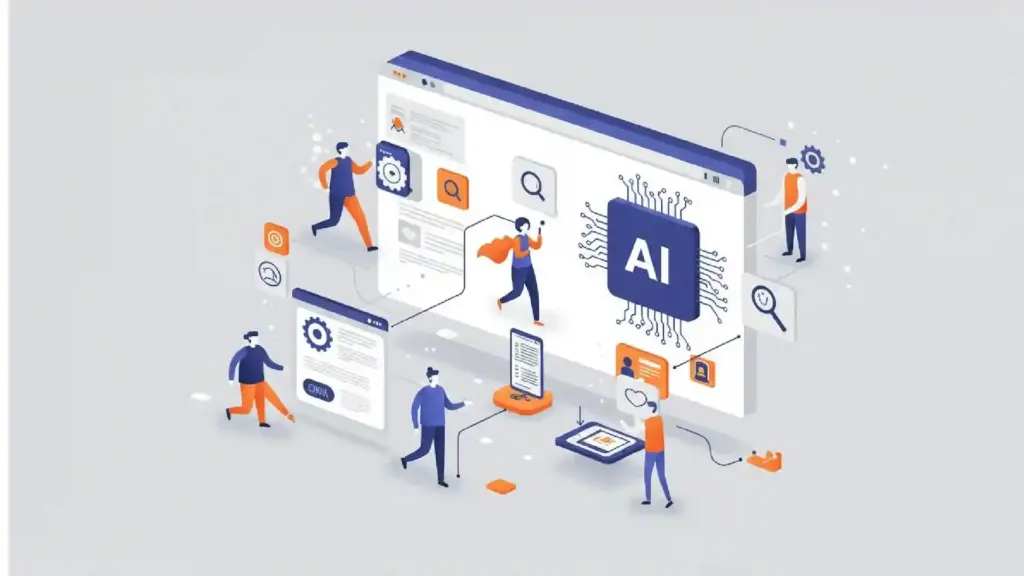
From Human Visitors to Machine Customers
Traditional web design is built around visual behavior.
Designers think about navigation bars, landing pages, calls to action, checkout buttons, typography and the path a visitor takes from arrival to conversion. Search engine optimization developed alongside this model, helping search engines understand pages so they could send humans to them.
AI agents change that relationship.
Instead of asking, “Which website should I visit?”, a consumer can tell an AI assistant: “Find me a business-class hotel near the conference venue for less than $300 a night, with breakfast and late checkout.”
The agent can potentially research the options, compare conditions and present a recommendation. As agent capabilities mature, it may also make the reservation after receiving the appropriate authorization.
The website is no longer necessarily the destination. It becomes part of the infrastructure supplying information and services to an intelligent intermediary.
OpenAI’s early computer-using technology demonstrated this direction in 2025. Its Computer-Using Agent was designed to interact with graphical interfaces using the same basic tools people use, including screens, mouse actions and keyboards. In OpenAI’s published evaluations, the system scored 58.1% on WebArena, compared with 36.2% for the previous state of the art, although human performance remained considerably higher at 78.2%.
That gap matters. Agents are not universally reliable web users yet. But businesses do not need to wait for perfection to recognize where the interface is heading.
The more significant question is what happens when businesses stop forcing machines to navigate websites exactly like humans.
That is where AI-native design begins.
What Does AI-Native Web Design Actually Mean?
AI-native web design is the practice of building websites and digital services so that both humans and AI agents can easily discover information, understand its meaning and complete authorized actions.
It does not mean eliminating visual design.
A luxury hotel still needs photography that creates desire. A fashion retailer still needs merchandising. A technology company still needs a website capable of communicating trust and differentiation.
But underneath that human-facing experience, businesses increasingly need a second layer optimized for machines.
Think of a restaurant.
A human visitor might understand that “Dinner with a View” refers to an evening reservation package. An AI agent needs more explicit information: location, available dates, seating times, price, menu conditions, cancellation rules and a reliable mechanism for checking availability or booking.
The same principle applies across industries.
An e-commerce business needs structured product names, prices, specifications, inventory and return policies. An airline needs machine-accessible routes, fares and baggage conditions. A software company needs clear documentation, pricing and product capabilities. A financial platform needs precise descriptions of products, eligibility requirements and permissions.
In other words, websites need to become less ambiguous.
Cloudflare’s evolving bot infrastructure illustrates how quickly this distinction is becoming operational. In 2026, it began separating AI-related traffic into three categories: Search, which collects information for answering questions; Agent, which performs real-time activity on someone’s behalf; and Training, which gathers information for model development.
That separation is revealing.
“AI traffic” is no longer one thing. A machine visiting a website may be indexing it, learning from it, answering a question about it or trying to do business with it.
Web architecture must increasingly account for the difference.
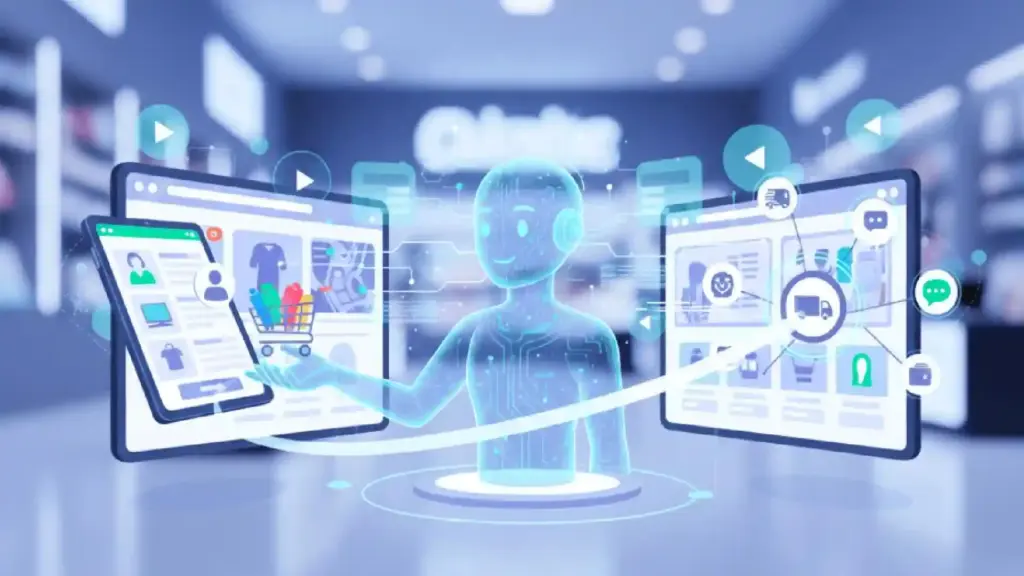
The Agentic Web Is Becoming a Commercial Channel
The biggest reason entrepreneurs should pay attention is commerce.
The web’s previous commercial model depended heavily on traffic. Search engines discovered pages, ranked them and sent users to websites. Businesses then competed to convert those visitors.
Agentic commerce can shorten that journey dramatically.
OpenAI introduced its Agentic Commerce Protocol with Stripe in September 2025, describing it as an open standard through which AI agents, consumers and businesses can complete purchases. Its initial Instant Checkout implementation allowed eligible shoppers to move from product discovery to purchase without leaving the ChatGPT experience.
By March 2026, OpenAI had expanded the protocol toward product discovery, enabling richer product information and comparisons inside ChatGPT. The company argued that merchants could benefit from shoppers arriving with considerably stronger purchase intent.
This points toward a fundamental change in the customer journey.
The old funnel might look like:
Search → Website → Product Page → Comparison → Cart → Checkout
The emerging agentic journey can look more like:
Intent → AI Agent → Comparison → Authorization → Transaction
Several traditional website interactions disappear from the middle.
That does not make the merchant less important. It makes the merchant’s data and transactional infrastructure more important.
Consider an online furniture retailer. A customer might ask an agent for “a solid oak dining table for six, under $2,000, available for delivery to Doha within two weeks.”
A visually beautiful website alone is insufficient. The agent needs to determine whether the table is actually oak, its dimensions, price, delivery region, inventory status and estimated arrival date.
If those details are hidden inside images, inconsistent product descriptions or complicated JavaScript interactions, the business becomes harder for machines to evaluate.
The competitive advantage shifts from simply being attractive online to being understandable and actionable.
SEO Is Evolving Into Agent Discoverability
This development also challenges one of digital marketing’s largest industries: search engine optimization.
For years, the objective was relatively straightforward. Make content understandable to search engines, rank highly and win the click.
AI interfaces increasingly answer questions before a click occurs.
Cloudflare’s 2025 data showed that AI “user action” crawling grew more than 15-fold during the year. Its more detailed analysis reported that user-action crawler traffic rose more than 21 times between January and early December 2025.
By July 2026, Cloudflare reported an even broader milestone: more than 50% of Internet traffic was non-human across its measurements. It also said 52% of crawler requests it classified by purpose were associated with AI training in June 2026, while mixed-use crawlers accounted for more than 36%.
For publishers, retailers and service businesses, this creates an uncomfortable equation: machine visibility does not automatically produce human traffic.
Cloudflare has documented what it calls the “crawl-to-click gap,” where AI systems can consume large amounts of content while generating comparatively limited referral traffic.
That means businesses may eventually need to measure something beyond traditional rankings and sessions.
Did an agent cite the brand?
Did it accurately understand the product?
Was the company included in a comparison?
Could the agent verify availability?
Could it complete an authorized transaction?
Did that transaction produce revenue?
This emerging discipline is sometimes described through terms such as AI search optimization, generative engine optimization or agent optimization. Whatever terminology survives, the commercial objective is clear: businesses want their information to be accurately represented when AI systems mediate customer decisions.
The future equivalent of ranking first may not always be receiving the first click.
It may be becoming the agent’s preferred answer.
Designing for Agents Requires a Different Technical Mindset
Building for agents does not necessarily require replacing a company’s existing website. It requires treating the website as both an interface and a structured information system.
For entrepreneurs, five priorities stand out:
- Make important information explicit. Product specifications, pricing, availability, policies, addresses and conditions should be presented consistently rather than buried in marketing language.
- Use structured, semantic information. Clear page hierarchy, metadata and structured data help machines distinguish a price from a model number, an event date from a publication date or a product from an editorial article.
- Provide reliable interfaces for actions. Where appropriate, APIs and emerging agent protocols can offer safer and more predictable ways for authorized software to retrieve information or execute tasks than repeatedly manipulating visual interfaces.
- Design permissions into the experience. Reading public information is different from changing an account, placing an order or making a payment. Agent-native systems need clear authentication, authorization and confirmation boundaries.
- Measure machine traffic separately. Companies should understand which automated systems are visiting, why they are visiting and whether those interactions create business value.
The final point is becoming especially important. Cloudflare now distinguishes between AI search, agent and training behavior, allowing website operators to establish different policies for different kinds of machine traffic.
This could become a new layer of digital business strategy.
A publisher might welcome an agent retrieving an article for a paying subscriber while restricting mass training crawlers. An online store might encourage shopping agents because they generate transactions. A subscription database might permit limited discovery but require authentication for detailed information.
The question is shifting from “Should AI access our website?” to something more sophisticated:
Which AI systems should access which resources, for what purpose, under what commercial terms?
The Website Is Not Dying. Its Job Is Changing
Predictions about the “death of the website” are likely exaggerated.
People will continue visiting websites for entertainment, exploration, brand experiences, research and high-consideration purchases. Humans also care about qualities that are difficult to compress into structured information: taste, credibility, emotion and identity.
But the website’s monopoly over the customer relationship is weakening.
In the next phase of the web, a company’s digital presence may need to serve two audiences simultaneously.
The first is human.
The second is machine.
The human wants clarity, trust, beauty and simplicity.
The machine wants structured information, predictable interfaces, explicit permissions and reliable actions.
The strongest AI-native businesses will design for both.
This is comparable to the shift to mobile computing. Early in the smartphone era, many businesses treated mobile as a smaller version of the desktop web. Eventually, mobile became a fundamental design constraint and, for many companies, the primary digital channel.
Agents may follow a similar path.
Initially, companies will retrofit existing websites so AI systems can navigate them. Later, more businesses are likely to build digital infrastructure assuming from the beginning that intelligent software will be among its users.
That transition could be much larger than a design trend. It could redefine what a website is.
What Entrepreneurs Should Do Now
Companies do not need to rebuild their digital operations overnight. They do need to audit them through a different lens.
Start by asking whether an AI agent can accurately determine what your company sells, how much it costs, who it is for, whether it is available and what conditions apply.
Then examine whether your most valuable customer actions can be completed through dependable, permissioned digital interfaces.
Finally, establish an explicit policy for AI access. Some agents may represent distribution. Others may represent customers. Others may simply consume valuable intellectual property.
Those categories should not automatically receive identical treatment.
The next generation of web competition will therefore involve more than page speed, conversion rates and search rankings. Companies will compete on how easily intelligent systems can understand, trust and transact with them.
For entrepreneurs, that creates a simple strategic principle:
Build websites that people want to experience, but build digital businesses that machines can understand.
The web was originally built for humans clicking links.
Its next major users may be agents acting on human intent.
Businesses that recognize that distinction early will not merely have better websites. They will be better positioned for an Internet in which the interface between a customer and a company is increasingly intelligent software.
FAQs:
What is AI-native web design?
AI-native web design is an approach to building websites and digital services so both humans and AI agents can understand information and complete appropriate actions. It combines good user experience with structured data, machine-readable information, reliable interfaces and clear permissions.
Why are websites being designed for AI agents?
AI agents are increasingly being used to search, compare products, retrieve information and perform online tasks. Designing for agents helps businesses make their products, services and information easier for these systems to discover and use accurately.
Will AI agents replace traditional websites?
Not necessarily. Websites will remain important for human experiences, branding and direct customer relationships. However, some functional interactions may increasingly happen through AI assistants rather than directly through a company’s visual website.
How can a business make its website more AI-friendly?
Businesses should provide accurate structured information, use semantic markup, maintain consistent product and service data, improve API accessibility where appropriate and create clear authentication and authorization processes for actions performed by agents.
Is AI-native web design the future of SEO?
It is more likely to expand SEO than replace it. Traditional search visibility will remain valuable, while businesses increasingly optimize for AI discovery, citations, product comparisons and agent-mediated transactions. The goal is shifting from winning only human clicks to being accurately understood and selected by intelligent systems.