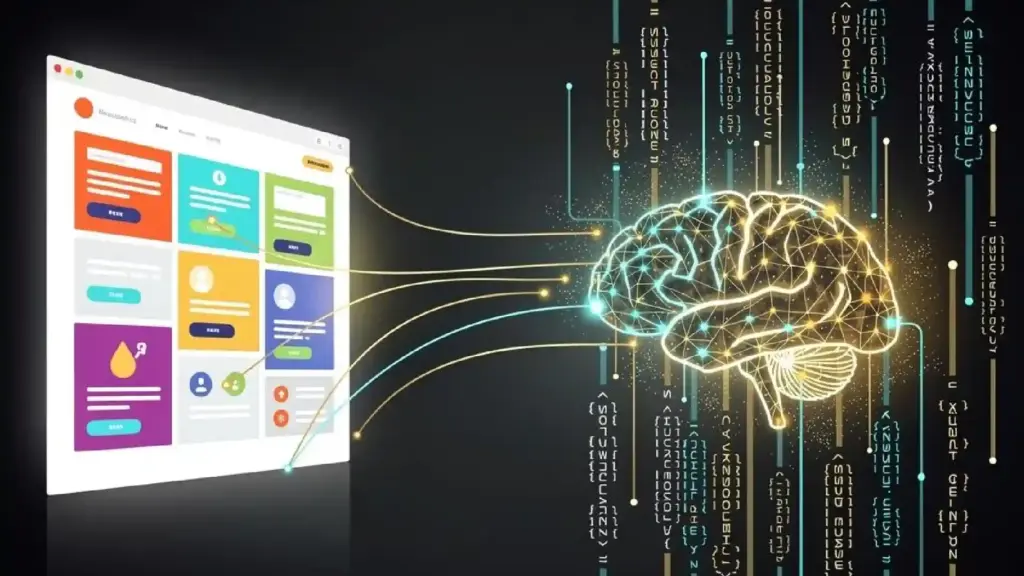


The business website has survived several predictions of its death.
Social media was supposed to replace it. Then marketplaces and mobile apps were expected to make standalone sites unnecessary. Now, ChatGPT, AI search and autonomous AI agents present a more serious challenge: if customers can ask an AI assistant to find a supplier, compare products, summarize reviews and eventually complete a purchase, why should a business maintain a website at all?
The answer is yes, businesses still need websites. But the purpose of a business website is changing.
In the AI era, a website is becoming less like a digital brochure that humans must visit and more like a company’s authoritative digital headquarters, supplying information to humans, search engines and AI agents alike.
That distinction will define the next generation of digital business.
AI Is Changing Discovery, Not Eliminating the Web
For more than two decades, the dominant online journey was predictable:
Search → website → research → decision → transaction.
Generative AI is disrupting that sequence.
A customer looking for accounting software, for example, may no longer search through ten blue links and open six browser tabs. They can ask ChatGPT or another AI assistant to compare platforms for a 30-person company, explain the differences, identify suitable options and narrow the decision to two vendors.
The customer might interact with only a fraction of the websites they once would have visited.
That sounds threatening for websites. Yet there is another side to the story: AI systems still need reliable digital information from somewhere.
OpenAI says that public websites can appear in ChatGPT search and advises publishers that want their content included in summaries and snippets to allow its OAI-SearchBot to access their sites.
In other words, the interface may be changing, but the underlying business information remains extremely important.
This creates a new customer journey:
Question → AI assistant → recommendation → trusted source → action.
Increasingly, that trusted source is still the company’s website.
The difference is that the website may now have two audiences: the customer and the customer’s AI.

Your Website Is Becoming an Information Source for AI Agents
The website of the past was designed primarily to persuade humans.
It needed attractive photography, compelling headlines, navigation menus and strong calls to action. Those elements still matter. But tomorrow’s business website also needs to communicate effectively with machines.
Imagine a customer asking an AI assistant:
“Find me a boutique hotel in Doha with meeting facilities, airport transfers and rooms below my company’s travel budget.”
To make a useful recommendation, the AI needs reliable information about room types, location, amenities, policies, prices and availability.
A business with clear, accessible and well-structured information has an advantage over one whose digital presence consists primarily of scattered Instagram posts and outdated directory listings.
This is already becoming measurable.
Adobe reported in April 2026 that significant portions of U.S. retail websites were not completely readable by machines, potentially limiting their visibility in AI search results.
Meanwhile, Cloudflare’s 2025 Internet analysis found that AI “user action” crawling, where automated systems access web content on behalf of users, increased by more than 15 times during 2025.
The implication for entrepreneurs is straightforward.
Businesses spent the last 20 years asking:
“Can Google understand my website?”
The next question is:
“Can AI understand my business?”
That requires accurate product descriptions, service information, FAQs, locations, credentials, policies, pricing where appropriate, structured data and other machine-readable content.
SEO is therefore not disappearing. It is expanding into AI search optimization, generative engine optimization (GEO) and broader AI discoverability.
AI May Reduce Website Visits While Increasing Their Value
There is a paradox emerging in digital marketing.
AI assistants may answer many questions without requiring customers to visit a company’s website. That could mean fewer clicks.
But the clicks that remain can be considerably more valuable because the AI has already helped the customer research the decision.
Adobe’s data offers an early indication of this shift.
During the 2025 holiday season, traffic from generative AI tools to U.S. retail websites increased approximately 693% year over year. More importantly, Adobe reported that visitors referred by AI assistants spent 45% more time on retail sites and viewed 13% more pages per visit than visitors from other traffic sources. AI-referred visitors also converted at a higher rate during that period.
This suggests AI can function as a qualification layer.
Consider the difference between two visitors.
The first searches “best CRM software,” clicks an advertisement and arrives knowing very little about the company.
The second spends ten minutes discussing CRM requirements with an AI assistant, compares several vendors, asks which platform is best for a particular industry and then visits the recommended company’s website.
The second visitor may arrive much further down the sales funnel.
That changes how businesses should think about website traffic.
The goal can no longer be simply maximizing page views. Increasingly, companies should care about being correctly represented in AI-generated recommendations and converting the highly informed visitors who arrive afterward.
In that world, 10,000 qualified visitors can be worth considerably more than 100,000 casual ones.

A Website Gives Businesses Something Social Platforms Cannot: Ownership
There is another reason websites remain strategically important: control.
A company’s presence on Instagram, TikTok, LinkedIn, Amazon or another platform exists inside somebody else’s ecosystem.
Algorithms change. Accounts can be restricted. Advertising prices rise. Features disappear. Platforms lose popularity.
A website provides a digital asset that the business largely controls.
That matters even more as AI becomes an intermediary between companies and customers.
A business needs an authoritative place where its identity, product catalog, intellectual property, policies, leadership information, case studies, contact details and brand story can exist independently of third-party platforms.
Think of the modern digital ecosystem as a hub-and-spoke model.
Social platforms generate attention. Search engines create discovery. Marketplaces facilitate transactions. AI assistants increasingly provide recommendations and decision support.
The website remains the hub.
This does not mean every customer must visit it. It means every external platform should have an authoritative source to reference.
For entrepreneurs, this distinction is important.
Owning a website does not guarantee distribution. But depending entirely on platforms means renting your digital identity.
Trust May Become More Important as AI-Generated Content Explodes
Generative AI has made content extraordinarily cheap to produce.
A company can generate dozens of blog posts, hundreds of product descriptions and thousands of social posts faster than a marketing department could have imagined five years ago.
The predictable result is an abundance of information.
The scarce commodity becomes trust.
When customers hear about an unfamiliar company through ChatGPT, an AI agent, a social media recommendation or a marketplace, many will still want to verify that the business is legitimate.
A professional website provides that verification layer.
Customers can examine the company’s leadership, address, certifications, client stories, product documentation, terms, privacy policies, contact information and evidence of expertise.
For high-value decisions, this becomes especially important.
Few executives would award a $500,000 consulting contract solely because an AI chatbot recommended a company. They would investigate the organization, its executives, previous projects and credentials.
Likewise, investors evaluating a startup, journalists researching a founder or procurement teams assessing a supplier need an authoritative first-party source.
The website therefore moves from being simply a marketing channel to becoming part of a company’s digital trust infrastructure.
From SEO to GEO: Businesses Must Optimize for AI Discovery
For years, businesses built websites around Google search.
That produced an entire industry around keywords, backlinks, search rankings and technical SEO.
AI search introduces another layer.
The objective is no longer merely to rank first for a keyword. A company also wants to become a credible source when an AI system answers questions relevant to its market.
For example, a cybersecurity company may want AI systems to recognize it when a customer asks:
“Which cybersecurity providers specialize in financial institutions in the Middle East?”
A restaurant might want to appear when an AI agent is asked:
“Find a quiet Italian restaurant near my hotel that can accommodate eight people at 8 p.m.”
An industrial supplier may want to be recommended when a procurement agent searches for a specific component meeting particular certifications.
Winning these moments requires more than repeating keywords.
Businesses need clear facts, consistent brand information, authoritative content, structured product or service data, expert material, strong external references and technically accessible websites.
Adobe has described this emerging challenge as LLM discoverability, arguing that conversational interfaces are changing how consumers discover brands.
The practical lesson is simple: optimize less for algorithms alone and more for answers.
Ask what questions customers give AI systems before buying your product. Then make your website the best authoritative source for answering those questions.
AI Agents Could Make Websites More Important, Not Less
AI agents represent the bigger long-term shift.
Today’s chatbots primarily help users find and understand information. Agents are increasingly designed to perform actions.
An AI agent could eventually research flights, compare hotels, schedule meetings, reorder supplies, negotiate simple purchases, manage software subscriptions or coordinate a business trip.
This creates a machine-to-business economy.
A human customer may never browse a company’s homepage. Their AI agent could interact directly with the company’s digital infrastructure.
That means the traditional visual website could become only one layer of a broader digital presence.
Behind it may sit product databases, structured data, APIs, authentication systems, payment infrastructure and machine-readable service information.
Cloudflare’s 2026 analysis illustrates how quickly the internet’s traffic composition is changing. The company reported that more than half of Internet traffic had become non-human and that AI-training activity represented a rapidly growing share of crawler requests.
The business implication is significant.
Tomorrow’s best website may not simply be the prettiest.
It may be the easiest for both humans and machines to understand and transact with.
What Should Businesses Build Now?
The wrong reaction to AI is to abandon the website.
The equally wrong reaction is to continue building websites exactly as businesses did in 2015.
Companies should instead treat their websites as digital infrastructure.
That means maintaining fast, mobile-friendly pages for humans while ensuring important business information is technically accessible and clearly structured for search engines and AI systems.
Product companies should maintain accurate specifications, pricing information where possible, availability, comparisons and documentation. Service businesses should clearly explain expertise, industries served, geography, processes, case studies and credentials.
Businesses should also strengthen first-party authority.
Publish original research. Answer specific customer questions. Showcase genuine expertise. Maintain accurate company information. Provide evidence behind claims rather than producing hundreds of generic AI-generated articles.
Finally, companies should monitor a new category of visibility.
Traditional analytics tells you how many people reached your website from Google.
The next generation of analytics needs to answer another question:
How often does AI recommend your company before the customer ever reaches your website?
That may become one of the most important marketing metrics of the next decade.

The Website Is Not Dying. Its Job Is Changing.
The rise of ChatGPT and AI agents does not eliminate the need for websites.
It changes what websites are for.
The old website competed for clicks.
The new website competes to become an authoritative source of truth about the business.
It needs to serve people who want to research a company, search engines indexing information, AI assistants constructing answers and eventually autonomous agents attempting to perform transactions.
Some businesses may see fewer human visits as AI interfaces absorb more of the discovery journey. But those visits could become more intentional and commercially valuable.
Entrepreneurs should therefore stop asking whether customers will still browse websites five years from now.
A better question is:
When a customer’s AI asks the internet about your business, what will it find?
Companies that can answer that question confidently will be better positioned for an internet where humans increasingly delegate discovery, comparison and purchasing decisions to machines.
The website is not disappearing.
It is becoming infrastructure for the AI economy.
FAQs:
Do businesses still need a website in the age of AI?
Yes. A website remains an important first-party source for company information, trust, sales and AI discovery. Its role is evolving from primarily attracting visitors to supplying authoritative information to humans, search engines and AI assistants.
Will ChatGPT replace business websites?
ChatGPT and similar AI systems may replace some website visits, particularly during research and comparison. However, AI search also relies on information from the web and can direct users to original sources, products and businesses.
What is GEO in digital marketing?
Generative Engine Optimization, commonly called GEO, refers to efforts to make a brand and its content easier for generative AI systems to understand, reference and recommend. It complements traditional search engine optimization rather than simply replacing SEO.
How can I make my website easier for AI to understand?
Use clear page structures, accurate business information, descriptive product and service pages, FAQs, structured data, accessible technical architecture and original authoritative content. Businesses should also review crawler settings so they understand which AI search and training systems can access their content.
Will AI agents eventually buy products without visiting websites?
In some situations, yes. AI agents are increasingly capable of performing tasks on behalf of users. This could shift digital commerce from human browsing toward machine-assisted transactions, making structured product data, APIs and reliable digital infrastructure increasingly important.