
The next generation of global digital creators may not need to choose between Los Angeles, London, or New York. Increasingly, they are looking toward Dubai, Riyadh, Doha, and other Gulf cities, where digital infrastructure, commercial opportunities, and government-backed initiatives are reshaping the business of content creation.
What was once viewed primarily as a region of energy wealth and luxury tourism is developing into a serious market for digital media, influencer marketing, gaming, podcasts, and online entrepreneurship.
This transformation is not simply about social media popularity. It reflects a wider economic shift in which creators are becoming business owners, brands are investing in digital communities, and governments are treating creative industries as part of economic diversification.
The Gulf’s opportunity lies in bringing audiences, investment, infrastructure, and international talent into one increasingly connected creative economy.
A Digitally Connected Region Is Creating New Opportunities
The Gulf’s rise as a digital creator hub begins with a simple advantage: its population is highly connected.
Smartphones, high-speed mobile networks, and social media platforms have become central to everyday communication, entertainment, and commerce. For creators, this means access to audiences that are already comfortable discovering products, following personalities, and consuming digital content.
Saudi Arabia illustrates the scale of this opportunity. According to DataReportal’s Digital 2025 report, the Kingdom had 33.9 million internet users at the beginning of 2025, representing 99% internet penetration. The report also identified 34.1 million social media user identities, although these estimates do not necessarily represent unique individuals.
Platforms such as YouTube, TikTok, Instagram, and Snapchat allow creators to build communities around subjects ranging from technology and business to fashion, food, travel, and gaming.
Arabic-language content is particularly important. Creators who understand regional culture, humor, language, and consumer preferences can develop relationships with audiences that international campaigns sometimes struggle to reach.
At the same time, the Gulf’s international population creates opportunities for English-language and multilingual content. A creator based in Dubai or Doha can speak to audiences in the Middle East, South Asia, Europe, and beyond.
This combination of local relevance and international reach makes the region commercially attractive.
Dubai Is Building an Ecosystem Around the Creator Economy
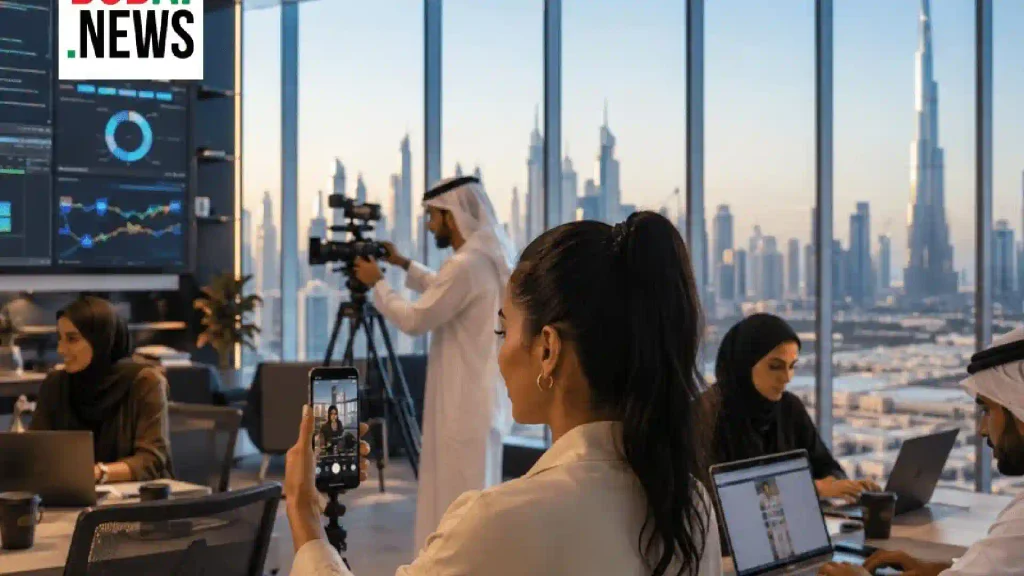
Dubai has moved beyond promoting itself as a visually appealing destination for influencers. It is increasingly positioning content creation as an industry with its own business infrastructure, professional networks, and investment opportunities.
One example is the 1 Billion Followers Summit, which brings together creators, digital platforms, investors, and media companies.
The January 2026 summit was organized around the theme Content for Good, with discussions covering digital media, investment, entrepreneurship, and the changing economics of online content. The Dubai Media Office’s official announcement described the event as part of the UAE’s effort to attract and develop creative ventures.
The significance extends beyond the event itself.
Creator-focused initiatives, media free zones, production facilities, and business services can help turn independent content production into a more established commercial activity. Dubai Media City and other creative districts provide environments where agencies, technology companies, production teams, and entrepreneurs can work near one another.
This proximity is valuable. A creator developing a video series may need a production studio, an editor, a commercial partner, a legal adviser, and a brand sponsor. When those services are accessible within the same business ecosystem, building a sustainable company becomes easier.
Dubai also offers an international lifestyle and strong transport connections. For creators whose businesses involve travel, events, interviews, and cross-border partnerships, connectivity can be an operational advantage.
However, the city’s appeal should not be confused with guaranteed profitability. Housing, production, licensing, and staffing costs can be substantial. Residency and business permissions also depend on individual eligibility and the activities being conducted.
The larger change is that creators are increasingly being approached as entrepreneurs rather than simply as online personalities.
A successful creator might begin with short videos and eventually operate a media company, sell educational products, establish a marketing agency, or launch a consumer brand.
Dubai wants to be part of that journey.
The UAE’s Creators HQ offers a concrete example. Launched in January 2025 at Emirates Towers, it set a target of attracting 10,000 creators to the country. By August 2025, it reported 2,415 active members from 147 countries and 78 international content-sector companies attracted to the UAE. Emirates News Agency
These figures demonstrate international interest, although attracting members is not the same as proving that every creator has established a profitable business.
Saudi Arabia Is Turning Digital Entertainment Into an Economic Industry
While Dubai focuses heavily on attracting international talent and media businesses, Saudi Arabia is developing a large domestic market for digital entertainment and creative production.
Under Vision 2030, the Kingdom has identified entertainment, technology, tourism, and creative industries as important areas for economic diversification.
Gaming and esports provide a particularly clear example.
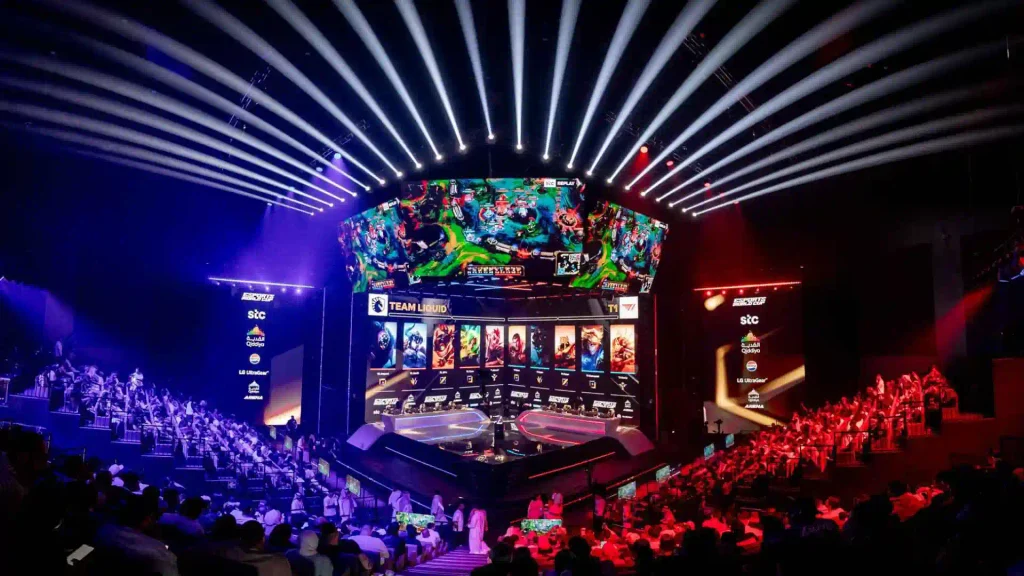
Saudi Arabia’s National Gaming and Esports Strategy, announced in 2022, set targets of approximately SAR 50 billion in direct and indirect GDP contribution and 39,000 jobs by 2030. These are strategic goals, not confirmed economic outcomes.
The strategy also outlines initiatives involving game development, education, investment, and international competitions. Saudi Press Agency
For digital creators, the implications extend beyond professional gaming.
Gaming tournaments create demand for livestreamers, commentators, video editors, interviewers, event photographers, graphic designers, and social media specialists. A major entertainment event can support an entire network of independent creative businesses.
Consider a gaming creator who begins by livestreaming matches. As the audience grows, that individual might secure brand sponsorships, produce tournament coverage, collaborate with professional teams, or launch a gaming-focused media company.
Saudi Arabia’s entertainment investments create more opportunities for such businesses to develop around live events and local communities.
The Kingdom also offers a large Arabic-speaking audience, which makes culturally relevant content especially valuable.
A creator who understands Saudi consumer behavior may be able to build a stronger relationship with local audiences than a global campaign relying on generic messaging.
For international brands, this creates an incentive to work with regional creators rather than simply translating advertisements developed elsewhere.
The result is a market where cultural understanding can become a competitive business advantage.
Qatar Is Strengthening the Technology and Startup Ecosystem
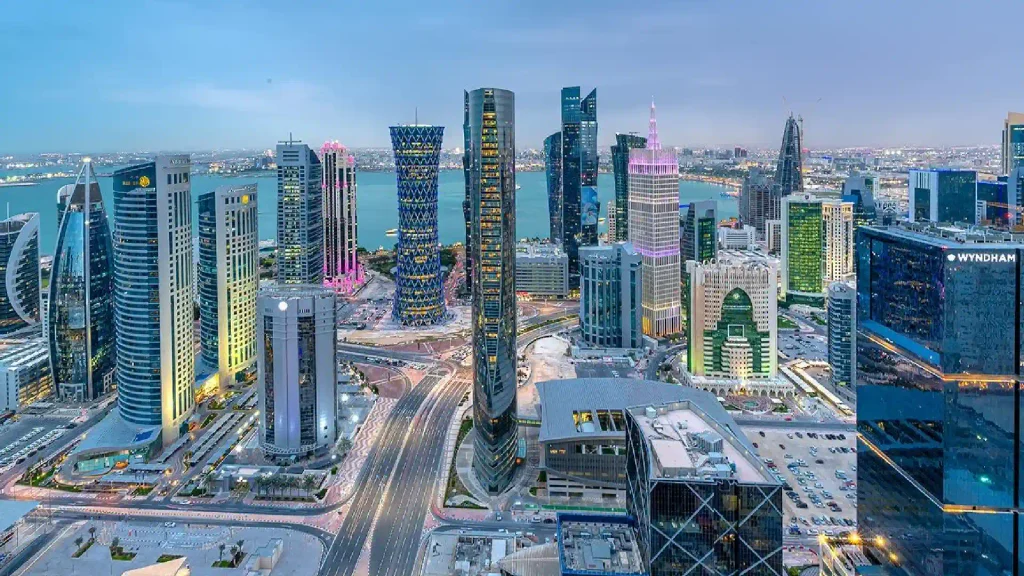
Qatar is approaching the digital economy through its wider investment in technology, innovation, entrepreneurship, and international business connections.
Although its creator ecosystem differs in scale from Dubai’s, Doha offers opportunities for digital entrepreneurs working across media, technology, education, sports, and business communications.
Web Summit Qatar illustrates the country’s broader ambitions.
According to the event organizer, the 2025 edition attracted 25,747 attendees from 124 countries, alongside 1,520 startups and 723 investors. Nearly half of the participating startups were women-founded. Web Summit Qatar’s official report
These figures are not a direct measurement of the creator economy. However, they show the scale of the technology and entrepreneurial networks gathering in Doha.
For digital creators, access to such networks can be commercially important.
A business-focused podcaster might connect with startup founders seeking visibility. A video production company could find technology clients that need product demonstrations. An educational creator might develop partnerships with training providers or emerging software businesses.
This is where the distinction between a content creator and a digital entrepreneur becomes increasingly blurred.
The creator may be the public face of a business, but the underlying company could earn revenue from production services, consulting, educational subscriptions, events, or intellectual property.
Qatar’s investment in innovation infrastructure creates possibilities for these business models, particularly where content intersects with specialist knowledge.
Its international profile in sports and major events also offers potential opportunities for sports storytelling, documentary production, and multilingual digital coverage.
Still, creators considering Qatar need to evaluate the size of the local commercial market and the availability of relevant clients. The presence of major technology events does not automatically translate into a mature creator industry.
The opportunity is strongest for entrepreneurs who can connect creative skills with specific business needs.
Why Brands Are Increasingly Investing in Regional Creators
The growth of the Gulf’s digital creator economy is also being influenced by changes in advertising.
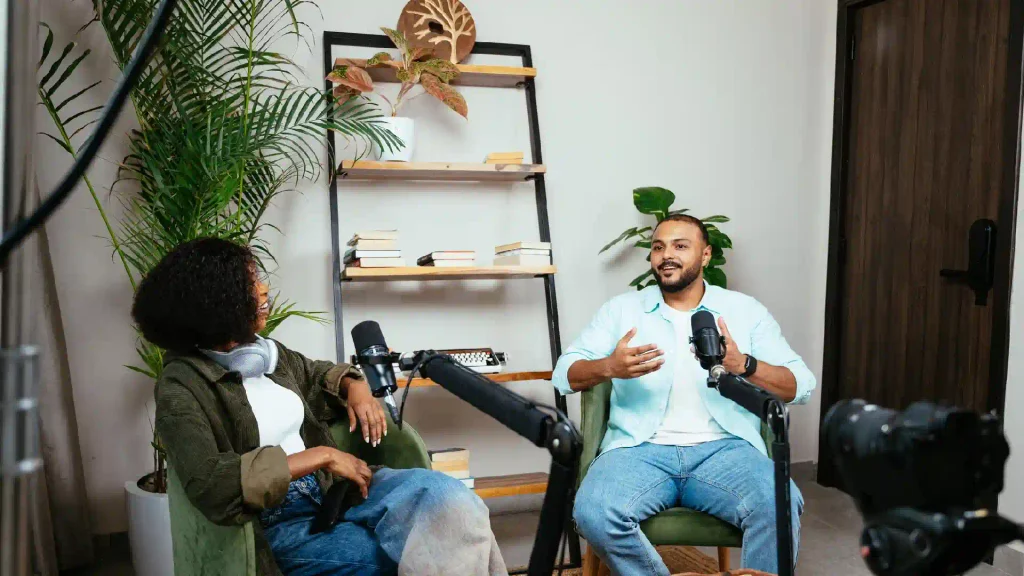
Traditional advertising often involves a company developing a message and distributing it to a broad audience. Creator-led marketing works differently because the audience has already chosen to follow the person delivering the message.
That relationship can give creators influence over product discovery and purchasing decisions.
A beauty creator in Dubai, a technology reviewer in Riyadh, or a food personality in Doha can communicate with audiences through familiar language, personal experience, and cultural context.
For businesses, this can be more relevant than simply purchasing advertising space.
The region’s international population also encourages brands to develop more targeted campaigns. A company may need different content for Arabic-speaking residents, South Asian communities, Western expatriates, and international visitors.
This creates opportunities for creators serving clearly defined audiences, even when they do not have millions of followers.
Micro-influencers, typically creators with smaller but focused communities, can be valuable when their audiences closely match a brand’s target customers.
However, follower counts alone are a weak measure of commercial success. Brands increasingly need to assess audience quality, genuine engagement, conversions, and measurable business results.
For creators, the lesson is straightforward: a loyal audience with clear interests may be more commercially valuable than a large but disengaged following.
The Gulf’s next stage of creator economy growth will depend partly on whether brands and creators can develop sustainable, transparent partnerships rather than relying on one-off promotional campaigns.
From Influencers to Founders: The New Business Model
Perhaps the most important shift is the transformation of creators into entrepreneurs.
The first generation of influencer marketing was largely built around sponsored posts. Today, successful creators can develop businesses with multiple revenue streams.
A fitness creator might sell training programs. A financial educator could offer courses or subscriptions. A travel creator might establish a production agency, while a technology reviewer could build a specialist media platform.
This evolution reduces dependence on any single social media platform.
It also creates demand for professional services, including accounting, legal support, marketing, video production, and talent management.
Dubai’s Creators HQ reflects this direction. Its creator-development activities are connected to a wider effort to support the commercial sustainability of content businesses. The initiative is also associated with an AED 150 million Content Creators Support Fund, according to Creators HQ’s published information.
Such initiatives signal that digital content is being treated as an economic sector rather than a temporary social media trend.
But building a business requires more than creative ability.
Creators need to understand contracts, intellectual property, audience analytics, cash flow, taxation, advertising disclosures, and platform policies. They must also consider the risks of relying on algorithms that can change without warning.
Artificial intelligence adds another dimension. AI-assisted editing, translation, captioning, and production tools can help smaller teams produce content more efficiently.
At the same time, easier production may increase competition. When almost anyone can generate polished content, original ideas, credibility, and trusted relationships become more valuable.
The strongest creator businesses are therefore likely to be those that combine creative talent with operational discipline.
Challenges That Could Shape the Gulf’s Creator Economy
Despite the opportunities, the Gulf is not a frictionless market for digital creators.
Costs vary considerably between cities. Production facilities, accommodation, business licenses, staffing, and professional services can place pressure on independent entrepreneurs.
Regulatory requirements also differ across Gulf countries. Commercial content, advertising activity, business registration, and residency may be subject to specific rules that creators need to understand before operating.
A creator working across multiple countries must pay particular attention to the distinction between personal content and paid promotional activity.
Competition is another challenge.
As more creators enter the market, brands gain additional choices. This may make it harder for individuals producing generic lifestyle content to command premium sponsorship fees.
There is also the question of economic resilience. A creator whose income depends entirely on one platform or a small number of sponsors remains exposed to sudden changes in advertising budgets and online distribution.
These challenges are not unique to the Gulf. They exist across the global creator economy.
What matters is whether the region can develop the supporting institutions needed for long-term growth: transparent commercial practices, professional training, reliable payment systems, intellectual property protection, and access to investment.
A successful creator hub is not measured only by the number of influencers who move there. It is measured by how many sustainable businesses emerge and how much lasting value they create.
The Future of Digital Creators in the Gulf
The Gulf’s creator economy is entering a phase in which content production is increasingly connected to broader economic development.
Dubai is working to attract global talent and establish creator-focused infrastructure. Saudi Arabia is developing entertainment and gaming industries with significant commercial ambitions. Qatar is expanding its technology and startup networks, creating opportunities for creators who serve specialist industries.
These strategies differ, but they share an important principle: digital creativity can generate economic activity far beyond advertising.
Looking ahead, several areas deserve attention:
- Creator-owned businesses: More creators may seek to build agencies, media brands, educational products, and subscription services.
- Arabic-language content: Regional storytelling and culturally relevant content can create opportunities for entrepreneurs serving underserved audiences.
- AI-powered production: New tools can reduce production costs while increasing the importance of originality and trust.
- Cross-border partnerships: Creators who work across Gulf markets may gain access to larger audiences and more diversified commercial relationships.
- Professionalization: Clearer contracts, performance measurement, and business training will be essential for sustainable growth.
The region’s long-term success will depend on whether these opportunities produce durable companies rather than short-lived online popularity.
Conclusion: The Gulf Is Becoming More Than a Destination for Influencers
The Gulf’s emergence as a digital creator hub reflects a deeper transformation in the relationship between technology, culture, and entrepreneurship.
High internet penetration, active digital audiences, government-backed initiatives, international connectivity, and growing creative industries are making the region increasingly relevant to the global content economy.
Yet its most significant opportunity is not simply attracting more influencers.
It is creating an environment where talented individuals can turn creativity into businesses, build international audiences, and develop products and services that generate lasting economic value.
For entrepreneurs, the practical starting point is to identify a specific audience, validate a commercial need, understand local regulations, and develop revenue sources beyond sponsored posts.
For brands and investors, the opportunity lies in supporting creators with genuine expertise, strong communities, and scalable business models.
The Gulf’s next chapter may not be defined by how many people create content there, but by how many global businesses are built from that content.
FAQs:
1. Why is the Gulf becoming popular among digital creators?
The Gulf offers strong digital connectivity, international audiences, expanding brand partnerships, and growing support for creative businesses. Cities such as Dubai, Riyadh, and Doha are developing different parts of this ecosystem.
2. Which Gulf city is best for content creators?
It depends on the business model. Dubai offers established international media networks and creator-focused initiatives. Riyadh provides access to a large Saudi audience and growing entertainment industries, while Doha can appeal to creators working with technology, business, and specialist sectors.
3. How do digital creators earn money in the Gulf?
Common revenue sources include brand sponsorships, advertising, affiliate marketing, content production services, consulting, subscriptions, educational products, and creator-owned businesses.
4. Can international creators establish businesses in the Gulf?
Yes, international entrepreneurs can establish businesses through applicable company formation and residency frameworks. Requirements differ by country, activity, licensing authority, and individual eligibility.
5. What is the future of the Gulf’s creator economy?
Growth opportunities include AI-assisted production, gaming, Arabic-language digital media, creator-led commerce, and specialist online education. Long-term success will depend on sustainable business models, talent development, and regulatory clarity.