


Every customer interaction tells a story. A website visit, an abandoned shopping cart, a social media click, or a repeat purchase reveals something about what people want and how they make decisions. For businesses that know how to interpret these signals, customer data can become one of their most valuable growth assets.
This is the promise of data-driven marketing, an approach that replaces assumptions with evidence and transforms customer insights into smarter business decisions.
From global technology companies to emerging startups, organizations are using marketing analytics to understand their audiences, improve customer experiences, and make their marketing budgets work harder.
But collecting data alone does not create growth. The real competitive advantage comes from turning information into meaningful action.

What Is Data-Driven Marketing and Why Does It Matter?
Data-driven marketing is the practice of using customer information, behavioral patterns, and performance metrics to guide marketing decisions. Instead of relying entirely on intuition or broad demographic assumptions, businesses use measurable evidence to understand which customers to reach, what messages to deliver, and where to invest their resources.
Imagine two online retailers launching the same advertising campaign. The first shows identical advertisements to every visitor, while the second studies purchasing behavior, product preferences, and previous interactions to create tailored messages. The second retailer has a better opportunity to deliver relevant offers and reduce wasted advertising, provided its data and testing are reliable.
That distinction explains why data-driven marketing has become a core business capability rather than simply a digital marketing trend.
The Business Value of Customer Intelligence
Customer insights can support growth across several dimensions:
- Better targeting: Reach audiences more likely to become paying customers.
- Higher marketing efficiency: Identify campaigns that generate meaningful business results.
- Stronger customer retention: Recognize disengagement signals and respond before customers leave.
- More relevant experiences: Tailor communications to customer needs and preferences.
- Faster decision-making: Adjust marketing strategies using current performance evidence.
Research from McKinsey & Company published in 2021 found that 71% of consumers expected personalized interactions, while 76% became frustrated when personalization did not happen.
The findings underline an important shift. Customers increasingly evaluate brands not only by what they sell but also by how well they understand and serve individual needs.
However, personalization must be handled responsibly. Customers may appreciate useful recommendations while rejecting intrusive tracking or unexpected uses of their personal information.
The goal is not to know everything about a customer. It is to understand enough, with appropriate permission, to deliver a better experience.
Turning Customer Data Into Actionable Insights
Businesses generate enormous amounts of information, but raw data is rarely useful on its own. A dashboard showing thousands of website visits, for example, says little about business performance unless those visits are connected to customer behavior, conversions, and revenue.
Successful data-driven marketing begins by asking the right questions.
Which customers generate the greatest long-term value? Why do some visitors abandon their purchases? Which marketing channels attract loyal customers rather than one-time buyers? What factors influence repeat purchases?
The answers help marketers move from reporting activity to understanding what drives results.
From Information to Customer Segmentation
One of the most practical applications of customer insights is segmentation: dividing an audience into groups with similar characteristics or behaviors.
A subscription-based software company, for example, might identify three distinct groups: new users exploring the platform, active customers regularly using its features, and subscribers showing signs of disengagement.
Each group requires a different marketing approach.
New users may benefit from onboarding tutorials. Active customers might respond to advanced features or upgrades. At-risk subscribers may need support, product education, or a timely retention offer.
This strategy is more precise than sending every customer the same promotional message.
A useful framework is RFM analysis, which groups customers according to recency of purchase, frequency of purchase, and monetary value. It allows retailers and service businesses to identify loyal customers, occasional buyers, and customers who may be drifting away.
Importantly, segments should evolve as behavior changes. A customer who was highly engaged six months ago may no longer have the same needs today.
The strongest marketing systems treat customer understanding as an ongoing process, not a one-time research exercise.
Personalization: Making Marketing More Relevant and Profitable
Personalization is one of the most visible outcomes of effective data-driven marketing. It allows companies to adapt messages, recommendations, and experiences according to what customers actually need.
Consider Netflix. Its recommendation system uses viewing behavior and other signals to help subscribers discover relevant content. Rather than presenting every viewer with an identical experience, the platform organizes recommendations around individual interests.
A similar principle applies to Amazon, where product recommendations help shoppers discover related or complementary items.
These examples demonstrate how customer intelligence can become part of the product experience itself.
The Role of Artificial Intelligence
Artificial intelligence is making sophisticated personalization more accessible. AI-powered systems can analyze large datasets, identify patterns, predict likely behavior, and help marketers produce tailored communications more efficiently.
For example, an online fashion retailer could use AI to identify customers who frequently purchase sportswear and recommend relevant new arrivals. A financial technology company could use product engagement data to identify customers who may benefit from educational resources about features they have not yet explored.
McKinsey’s research on the next frontier of personalized marketing highlights AI-driven targeted promotions and generative AI content as opportunities for retailers to deliver more relevant customer experiences.
However, automation does not guarantee accuracy. Poor-quality data can produce irrelevant recommendations, while overly aggressive personalization can damage trust.
Businesses should therefore combine automation with human judgment, clear privacy safeguards, and continuous testing.
Why Customer Experience Must Come First
Personalization works best when it solves a customer problem rather than merely increasing promotional frequency.
A travel company that remembers a customer’s preferred destinations may provide useful recommendations. But a business that repeatedly targets customers with products they have already purchased may appear disconnected from their needs.
The difference lies in context.
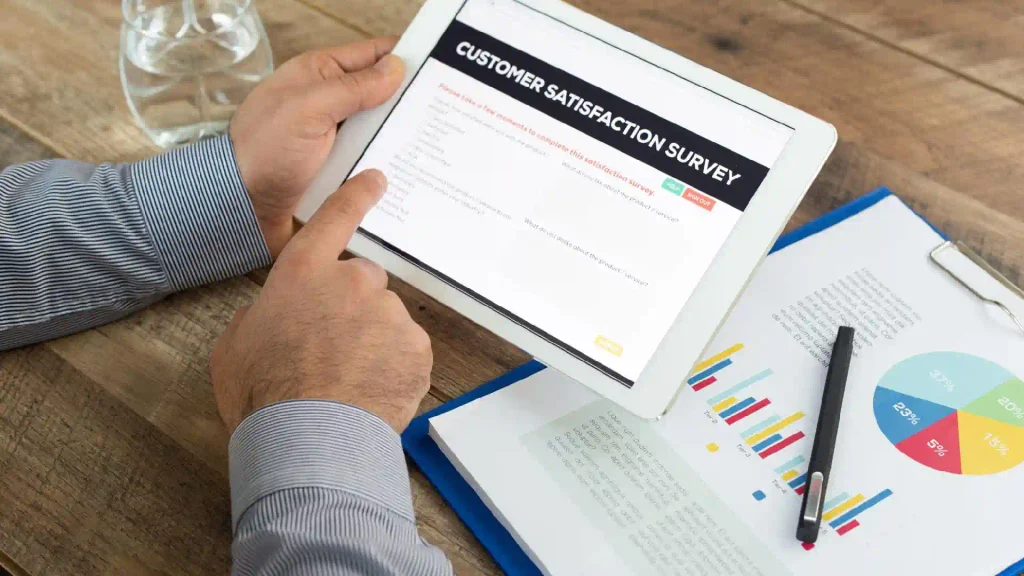
Marketers should evaluate whether personalized communications improve satisfaction, reduce unnecessary friction, and strengthen long-term relationships.
The most valuable customer insight is not necessarily the one that generates an immediate click. It is the one that helps build a more profitable and trusted relationship over time.
Measuring Marketing ROI: From Clicks to Business Growth
One of the biggest mistakes in digital marketing is confusing activity with performance.
A campaign may generate millions of impressions, thousands of clicks, and substantial social media engagement without delivering profitable growth.
This is why marketing analytics must connect campaign activity to financial outcomes.
Businesses need to understand not only how many people interact with their marketing but also how those interactions contribute to revenue, profitability, and customer retention.
Five Metrics Every Growth-Focused Business Should Track
| Metric | What it reveals |
|---|---|
| Customer Acquisition Cost (CAC) | The average cost of acquiring a new customer |
| Customer Lifetime Value (CLV) | The estimated economic value of a customer relationship |
| Conversion Rate | The percentage of users completing a desired action |
| Return on Ad Spend (ROAS) | Revenue attributed to advertising relative to advertising spend |
| Customer Retention Rate | The percentage of existing customers retained over a defined period |
These metrics work best when interpreted together.
A company might reduce acquisition costs by targeting customers attracted by heavy discounts. Yet if those customers rarely purchase again, the apparent efficiency may not translate into sustainable profitability.
Conversely, a campaign with a higher acquisition cost may prove worthwhile if it attracts customers who remain loyal and generate strong lifetime value.
Understanding Incremental Growth
A particularly important question is whether a marketing campaign created additional sales or simply received credit for purchases that would have happened anyway.
This is the purpose of incrementality testing.
Businesses compare outcomes between groups exposed to a campaign and comparable groups that were not exposed. Properly designed experiments help estimate the additional business impact caused by marketing activity.
In November 2025, Google Ads reported that 80% of surveyed senior marketing analytics professionals in the United States believed applying insights from incrementality experiments had a high impact on revenue growth. This was a perception-based survey, not a measured revenue uplift.
Google has also expanded its advertising experimentation capabilities, including updates announced in May 2026 that support more scalable A/B testing and reporting.
For entrepreneurs, the lesson is straightforward: do not automatically increase spending on campaigns that appear successful. First, determine whether they are generating additional profitable demand.
How Entrepreneurs Can Build a Data-Driven Marketing Strategy
Large corporations may invest millions in analytics infrastructure, but smaller businesses do not need complex systems to begin making better decisions.
A startup can develop a meaningful data-driven marketing strategy using website analytics, customer relationship management software, email performance reports, and structured customer feedback.
The critical requirement is not technological sophistication. It is consistency in collecting, interpreting, and acting on reliable information.
A Practical Five-Step Growth Framework
- Define clear business objectivesChoose measurable outcomes such as increasing qualified leads, improving repeat purchases, or reducing acquisition costs. Avoid collecting data without a specific business purpose.
- Build a reliable customer data foundationBring together relevant information from websites, sales systems, customer support, and marketing platforms. Establish consistent definitions and appropriate consent practices.
- Identify high-value customer segmentsAnalyze buying behavior, engagement, customer needs, and potential lifetime value. Prioritize segments where the business can offer a meaningful advantage.
- Experiment before scalingTest marketing messages, audience targeting, landing pages, and offers. Use A/B tests where appropriate, with sufficient sample sizes and clearly defined success metrics.
- Review performance and reinvestEvaluate campaign results regularly. Shift resources toward initiatives supported by evidence of sustainable business value.
A Practical Example: A Growing E-Commerce Brand
Consider a hypothetical beauty startup operating across the Gulf Cooperation Council (GCC).
The company discovers through its customer records that shoppers who purchase skincare products are more likely to return when they receive useful product education after their first order.
Instead of immediately increasing advertising spending, the company tests a personalized post-purchase email program offering skincare guidance, product usage tips, and carefully selected recommendations.
Half of the eligible customers receive the new communications, while the other half continue with the existing customer experience.
After an appropriate measurement period, the company compares repeat purchases, customer satisfaction, and contribution profit between the groups.
If the new program delivers a meaningful improvement, the business can expand it with greater confidence.
The example illustrates a powerful principle: growth does not always require attracting more customers. Sometimes it comes from creating more value for the customers a business already serves.
Research discussed by Harvard Business Review has long highlighted the economic importance of retention, although its financial impact varies significantly across industries and business models.
The Future of Data-Driven Marketing: AI, Privacy, and Predictive Insights
The next stage of data-driven marketing will be shaped by three connected forces: artificial intelligence, changing privacy expectations, and more sophisticated measurement.
Businesses are moving beyond simply describing what customers did yesterday. Increasingly, they want to estimate what customers might do next and determine which interventions can genuinely improve outcomes.
Predictive analytics can help identify likely customer churn, forecast demand, and estimate purchasing behavior. Generative AI can assist with campaign development, content variations, and customer communication.
But greater technological capability also introduces new responsibilities.
Building Growth Around First-Party Data
First-party data is information a business collects directly through its own customer relationships, such as purchases, subscriptions, account activity, and feedback.
As privacy expectations evolve, companies have strong reasons to build transparent, permission-based data practices.
This is particularly important for businesses operating internationally, where privacy requirements can differ across markets.
Organizations should clearly explain their data practices, limit unnecessary collection, secure customer information, and honor applicable consent and deletion rights.

The Global Opportunity for Emerging Businesses
For entrepreneurs in the Middle East, Africa, Asia, and other rapidly developing digital markets, data-driven marketing offers opportunities to compete through customer understanding rather than advertising budgets alone.
A regional retailer may identify demand for locally relevant products. A digital education platform may discover different learning preferences across markets. A financial services startup may identify where customers encounter difficulties during onboarding.
These insights can guide product development as well as marketing.
However, international expansion requires more than translating advertisements. Customer preferences, purchasing power, language, cultural expectations, and privacy rules vary between markets.
The businesses that succeed will combine analytical capabilities with local knowledge and genuine customer understanding.
In this environment, data should inform decisions without replacing creativity, empathy, or strategic judgment.
Conclusion: Customer Understanding Is the Real Growth Advantage
Data-driven marketing is transforming how businesses attract, engage, and retain customers. By connecting customer insights with measurable business objectives, organizations can make more informed investments, deliver relevant experiences, and identify new opportunities for growth.
Yet the greatest advantage does not come from having the largest database or the most advanced AI platform. It comes from asking better questions, testing assumptions, and using evidence to create meaningful customer value.
For entrepreneurs, the starting point is practical: identify a business challenge, gather reliable information, test one improvement, and measure its impact.
As marketing technology becomes more sophisticated, the companies that combine analytical intelligence with customer trust will be better positioned to build lasting competitive advantages.
The future of marketing belongs not simply to businesses that collect more data, but to those that turn customer understanding into better decisions and sustainable growth.
FAQs:
1. What is data-driven marketing?
Data-driven marketing is a strategy that uses customer information, behavioral insights, and performance analytics to improve marketing decisions. It helps businesses target audiences, personalize experiences, optimize campaigns, and measure growth.
2. How does data-driven marketing increase business growth?
It helps businesses identify valuable customers, reduce inefficient advertising spending, improve conversion rates, and strengthen customer retention. By testing campaigns and analyzing results, companies can invest in strategies that produce measurable returns.
3. What tools are used in data-driven marketing?
Common tools include Google Analytics, customer relationship management (CRM) platforms, email marketing software, business intelligence dashboards, and customer data platforms. AI-powered analytics tools can also support customer segmentation and predictive analysis.
4. Can small businesses benefit from data-driven marketing?
Yes. Small businesses can begin with affordable analytics tools, customer surveys, purchase histories, and email performance reports. Even simple experiments can reveal opportunities to improve marketing efficiency and customer satisfaction.
5. What is the difference between traditional marketing and data-driven marketing?
Traditional marketing often relies on broad audience assumptions, historical experience, and creative judgment. Data-driven marketing adds customer-level evidence, measurable performance indicators, and experimentation to guide decisions. The strongest strategies combine both approaches.