

A website used to have a fairly simple job: look professional, explain the business, and make it easy for visitors to find information. In 2026, that standard feels increasingly outdated.
Users now arrive with expectations shaped by the best digital products they use every day. They expect pages to respond quickly, interfaces to feel intuitive, content to adapt to their needs, and interactions to work smoothly across devices. Increasingly, they also expect websites to understand natural language and help them complete tasks rather than simply present information.
This shift is changing the meaning of good web design. Modern web design trends are no longer primarily about visual fashion. They are redefining the relationship between businesses and users, turning websites from static destinations into responsive, personalized and increasingly intelligent experiences.
1. AI-Powered Personalization Is Moving From Novelty to Expectation
One of the biggest changes in web design is happening behind the interface.
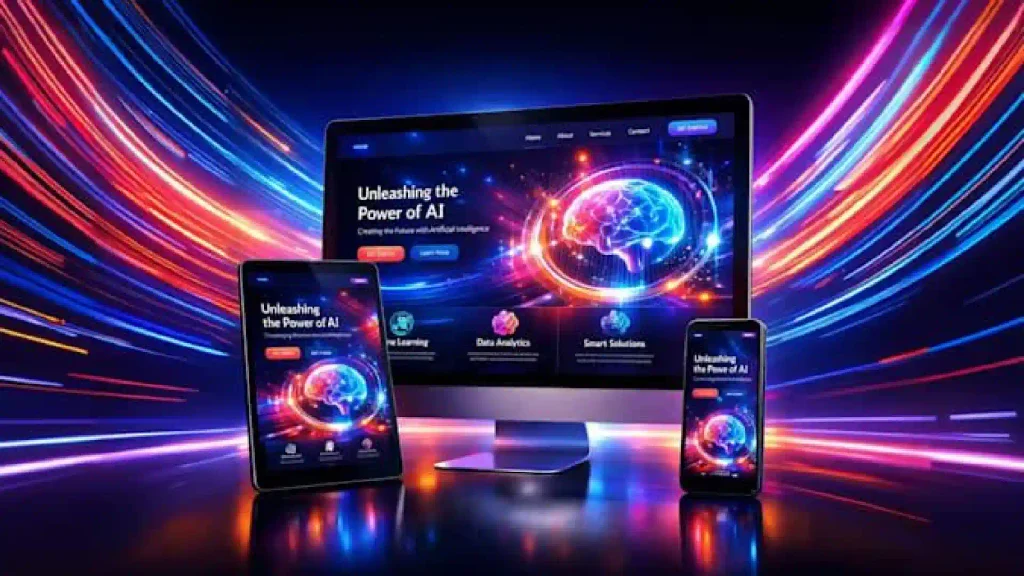
For years, personalization often meant displaying a visitor’s name or recommending products based on previous purchases. Artificial intelligence is making that model far more sophisticated. Modern websites can increasingly adjust recommendations, support interactions and content based on what a user appears to need.
The business case is becoming difficult to ignore. Adobe’s 2026 AI and Digital Trends report, based on surveys of 3,000 executives and practitioners and 4,000 consumers, found that 80% of organizations believe breakthrough customer experiences over the next few years will be highly personalized and able to anticipate customer needs in real time.
This creates a new benchmark. When consumers receive useful personalization from major retailers, streaming platforms or financial services, they begin to expect similar intelligence elsewhere.
The important word, however, is useful.
A website that changes simply because AI makes personalization possible can quickly become confusing. The strongest experiences use personalization to remove unnecessary decisions. An online store might prioritize relevant categories. A financial platform might surface the tools most relevant to a customer’s situation. A B2B website could change its case studies depending on the visitor’s industry.
For entrepreneurs, the lesson is straightforward: personalization should reduce friction, not demonstrate technology.
2. Conversational Interfaces Are Turning Websites Into Assistants
The traditional website asks users to understand its structure.
Visitors open a menu, select a category, scan another page, apply filters and eventually find what they need. Conversational interfaces reverse that relationship. Instead of learning how the website works, users can increasingly tell the website what they want.
This is one reason AI assistants, conversational search and intelligent chat interfaces are becoming important parts of user experience design.
Adobe’s 2026 research found that one in four surveyed customers already uses AI-powered platforms as a primary source when searching for information, making purchasing decisions or seeking recommendations. The research also found that roughly two-thirds of organizations consider AI-powered conversational platforms important to future brand relevance.
Figma’s 2026 web design trends analysis similarly identifies proactive AI chatbots and voice-activated interfaces among the technologies influencing modern websites.
Consider the difference between browsing a travel website through several menus and simply asking, “Show me family-friendly hotels near the beach under $250 a night.”
The second experience feels closer to having an assistant.
This does not mean navigation menus will disappear. Instead, businesses increasingly need to design for two behaviors: people who want to browse visually and people who want to express an intention directly.
The winning websites will make both feel effortless.
3. Speed and Responsiveness Have Become Part of the Design
Beautiful design cannot compensate for an interface that feels slow.
Users increasingly experience speed as part of design itself. A button that reacts immediately feels more polished than one that hesitates. A page that loads smoothly feels more trustworthy than one where content jumps around. An animation that responds naturally can make an interface feel almost physical.
This helps explain why current web development trends emphasize immediacy. Figma’s analysis of web development in 2026 describes the web as moving toward more fluid experiences where reducing delays and smoothing transitions are central priorities.
The principle is simple: users should rarely have to wonder whether the website heard them.
For businesses, this has practical consequences. Huge videos, excessive animation, complicated scripts and unnecessary third-party tools can make a visually ambitious website feel worse in everyday use.
The strongest modern sites therefore balance expression with performance.
Think of a luxury car. Its design matters, but the experience would quickly lose its appeal if the engine took several seconds to respond whenever the driver pressed the accelerator. Digital experiences work in much the same way.
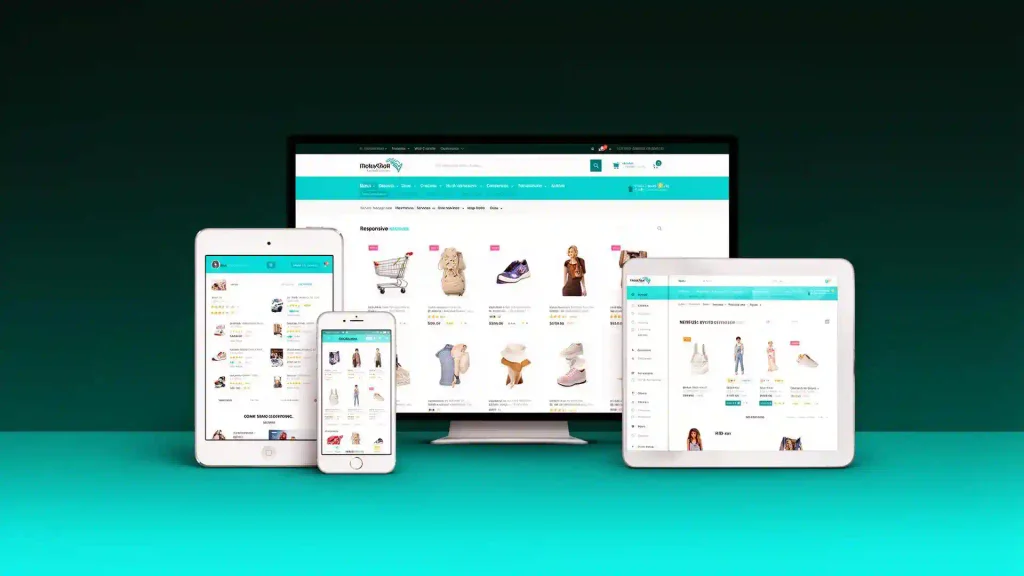
Responsive web design has also evolved beyond making layouts fit smaller screens. Users expect interactions, forms, navigation and content hierarchy to feel deliberately designed for whichever device they happen to be using.
Performance is no longer something developers fix after the design is finished. It is part of the design decision itself.
4. Accessibility Is Becoming a Baseline for Quality
For too long, accessibility was treated as an additional feature to consider near the end of a website project.
That approach is becoming harder to defend.
Accessible web design benefits people with visual, hearing, physical and cognitive disabilities, but many accessibility decisions also make websites easier for everyone to use. Clear navigation, readable typography, visible focus states, usable controls and logical information structures improve the broader customer experience.
The World Wide Web Consortium’s WCAG 2.2 standard provides an international framework for making digital content more accessible. WCAG 2.2 added nine success criteria beyond WCAG 2.1, including improvements addressing areas such as touch interaction and cognitive accessibility.
This matters even more as websites become visually experimental.
A dramatic interface may look impressive in a portfolio, but if users cannot understand where to click, navigate with a keyboard or comfortably read the text, creativity has become an obstacle.
Accessibility is therefore influencing aesthetics as well as engineering.
Strong contrast, clear information hierarchy, meaningful labels, appropriately sized interaction targets and reduced-motion options can all contribute to more inclusive experiences.
There is also a broader business principle involved. A website is often the digital front door of an organization. Designing that door so fewer people can enter is not only an accessibility problem. It is a customer experience problem.
5. Immersive Design Is Bringing Depth Back to the Web
Minimalism dominated digital design for years. White backgrounds, geometric typefaces, flat illustrations and familiar card layouts became the visual language of countless startups.
Now, some designers are pushing in the opposite direction.
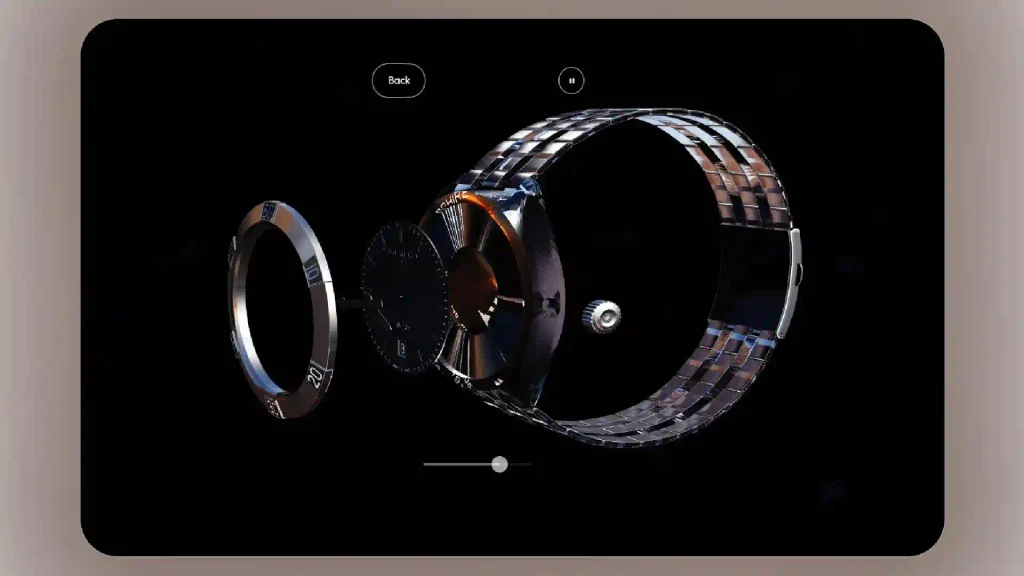
Three-dimensional objects, interactive product models, layered visuals, shaders, motion and spatial interfaces are making websites feel deeper and more expressive. Figma lists 3D and immersive elements among the major web design trends shaping 2026.
The technology available to designers is evolving alongside this shift. At its 2026 Config event, Figma highlighted tools involving motion, shaders, interactive UI components and more expressive digital materials.
For product-led companies, immersive design can be particularly powerful.
Imagine a furniture company allowing visitors to rotate a sofa and inspect its materials. A property developer can create a digital tour of a future building. An automotive company can let potential buyers explore a vehicle before visiting a showroom.
The important distinction is between immersion and decoration.
When 3D, animation or motion helps users understand a product, it creates value. When it exists purely to make a website look expensive, it can increase loading times and distract from the customer’s objective.
The best immersive web experiences make information easier to understand, not harder to reach.
6. Bold Visual Identity Is Challenging Template-Like Design
There is a paradox at the center of modern digital design.
Creating a competent website has never been easier. AI tools, website builders, component libraries and mature design systems allow teams to produce polished interfaces quickly. But as more websites become technically polished, many also begin to look similar.
That creates an opportunity for distinctive brands.
Experimental typography, unconventional grids, oversized headlines, expressive illustration, rich textures and controlled maximalism are appearing as alternatives to generic startup minimalism.
AI is accelerating this tension because it dramatically increases the speed at which teams can generate ideas and prototypes. Figma’s 2026 AI research found that AI is also changing how product teams collaborate: 41% of surveyed respondents said AI meaningfully changes how their teams work together, compared with 7% two years earlier.
As production becomes faster, taste becomes more valuable.
A company can generate dozens of homepage concepts, but someone still needs to decide which concept communicates the right message, creates the right emotional response and supports the business strategy.
That makes brand identity increasingly important.
Entrepreneurs should not ask only, “Does our website look modern?” A more useful question is, “Could someone recognize our brand if our logo disappeared?”
In an internet increasingly filled with competent design, memorability becomes a competitive advantage.
7. Simplicity Is Evolving Into Frictionless Design
One of the most important modern web design trends is also one of the least visually dramatic: removing unnecessary work.
Users increasingly have little patience for complicated checkout processes, endless forms, confusing menus or account creation requirements that provide no immediate value.
Adobe’s 2026 consumer research describes customers as having extremely low tolerance for friction as AI changes how people search, shop and make purchases. Its broader study also found that half of surveyed customers say promotional emails, advertisements and social posts have only two to five seconds to capture their interest.
That short attention window has implications for website design.
A landing page should communicate its value quickly. A checkout process should ask only for information that matters. Navigation should reflect what users are trying to accomplish rather than how the company happens to be organized internally.
This is where modern design becomes less about adding features and more about removing obstacles.
Every unnecessary click represents a tiny piece of friction. One may not matter. Ten of them can cost a sale.
The next generation of excellent websites will therefore often feel surprisingly simple, even when sophisticated technology is working underneath.
What These Web Design Trends Mean for Businesses
The larger shift is clear: users increasingly expect websites to adapt to them rather than forcing them to adapt to websites.
That expectation connects nearly every major trend.
AI personalization reduces irrelevant information. Conversational interfaces reduce searching. Performance reduces waiting. Accessibility reduces barriers. Responsive design reduces device friction. Immersive experiences make complex products easier to understand.
For founders and business leaders, this means website redesigns should begin with customer behavior rather than visual references.
Before discussing fonts, animations or color palettes, companies should understand where visitors struggle. Where do they leave? Which questions repeatedly reach customer support? Which forms are abandoned? Which products are difficult to understand?
Those problems provide the roadmap.
A modern website is not defined by how many current trends it uses. It is defined by how successfully it meets the expectations those trends have created.
Conclusion: The Best Modern Web Design Will Feel More Human
The future of web design may be powered heavily by artificial intelligence, automation and increasingly sophisticated browser technology. Yet the most successful experiences are likely to feel less technological, not more.
Users want websites that understand what they are trying to accomplish, respond quickly, respect their abilities and preferences, and remove unnecessary effort.
For businesses, that changes the investment case for design. Web design is no longer simply a branding expense or a digital storefront. It increasingly sits at the intersection of customer service, sales, accessibility, technology and brand strategy.
The companies that succeed will not necessarily be those with the most futuristic websites. They will be those that use modern technology with restraint and purpose.
As AI makes interfaces easier to create, the real competitive advantage will shift toward something harder to automate: understanding people well enough to design an experience they actually want to use.
FAQs:
1. What are the biggest modern web design trends in 2026?
Major trends include AI-powered personalization, conversational interfaces, immersive 3D experiences, expressive visual identities, faster interactions, accessibility-first design and simplified user journeys.
2. How is AI changing web design?
AI is helping websites personalize content, provide conversational assistance, improve recommendations and automate parts of the customer journey. It is also changing how designers and developers prototype and build digital products.
3. Is minimalist web design still popular?
Yes, but minimalism is evolving. Many businesses still prioritize simple layouts and clear navigation, while others are introducing stronger typography, motion, textures and more expressive visual systems to create distinctive brand identities.
4. Why is accessibility important in modern web design?
Accessibility allows more people, including users with disabilities, to navigate and interact with websites. Many accessible design practices also improve usability for the broader population.
5. What should businesses prioritize when redesigning a website?
Businesses should prioritize user needs, speed, mobile usability, accessibility, clear navigation and friction reduction before adding visual trends. AI and immersive features should be introduced when they solve a genuine customer problem rather than simply making a website appear more advanced.