


In today’s digital economy, every website, mobile app, and online platform relies on two essential components: front-end development and back-end development. While users often interact with polished interfaces and seamless experiences, there is a powerful infrastructure operating behind the scenes to make everything work.
For aspiring developers, entrepreneurs, and business leaders, understanding the distinction between front-end and back-end development is crucial. These two disciplines serve different functions, require different skill sets, and contribute uniquely to the success of digital products. Whether you’re launching a startup, hiring technical talent, or exploring a career in software development, knowing how these roles differ can help you make informed decisions.
What Is Front-End Development?
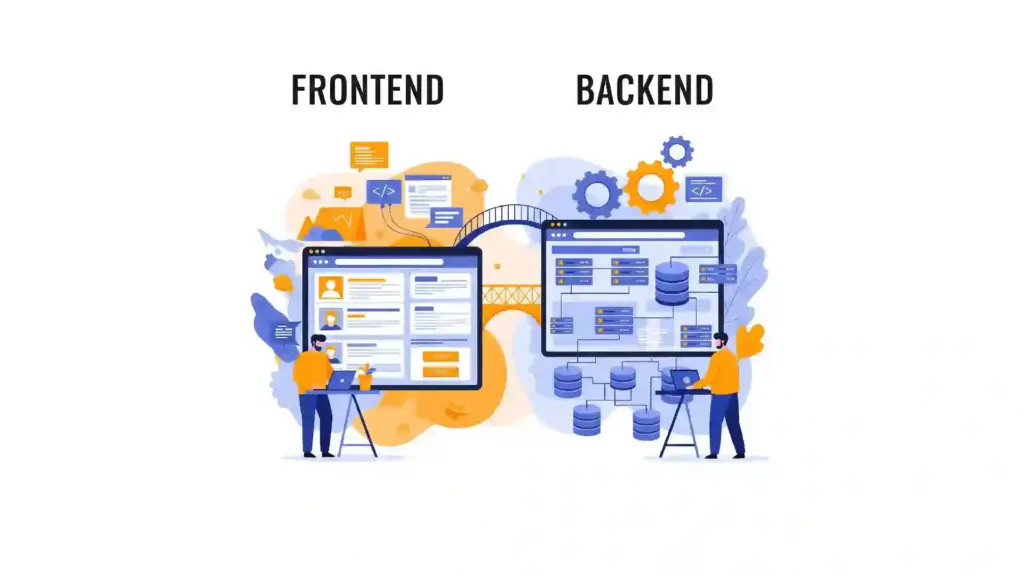
Front-end development focuses on everything users see and interact with on a website or application. It is often referred to as the “client side” of development because it runs directly in the user’s web browser.
A front-end developer is responsible for creating visually appealing, responsive, and user-friendly interfaces. Their goal is to ensure that users can easily navigate and engage with digital products.
Key Responsibilities of Front-End Developers
- Designing and implementing website layouts
- Creating responsive designs for mobile and desktop devices
- Building interactive user interfaces
- Optimizing website performance and loading speed
- Ensuring accessibility and usability
- Integrating APIs and external services
Common Front-End Technologies
Some of the most widely used front-end technologies include:
- HTML (HyperText Markup Language): Structures web content
- CSS (Cascading Style Sheets): Controls design and styling
- JavaScript: Adds interactivity and functionality
- React: A popular JavaScript library for user interfaces
- Angular: A framework for building dynamic applications
- Vue.js: A lightweight and flexible front-end framework
According to the 2024 Stack Overflow Developer Survey, JavaScript remains one of the most commonly used programming languages globally, highlighting its continued importance in front-end development.
Example of Front-End Development
When you open an e-commerce website, the product images, navigation menus, search bar, shopping cart icon, and checkout forms are all products of front-end development. Every button click and animation you experience is designed and implemented by front-end developers.
What Is Back-End Development?
Back-end development powers the functionality behind the scenes. It is often called the “server side” because it manages the servers, databases, and application logic that users do not directly see.
While front-end development focuses on presentation, back-end development ensures that data is processed, stored, and delivered correctly.
Key Responsibilities of Back-End Developers
- Building and maintaining servers
- Managing databases
- Creating APIs for communication between systems
- Implementing authentication and security features
- Processing business logic
- Optimizing application performance
Common Back-End Technologies
Popular back-end technologies include:
- Python
- Java
- PHP
- Ruby
- Node.js
- C#
Common database systems include:
- MySQL
- PostgreSQL
- MongoDB
- Microsoft SQL Server
Cloud platforms such as Amazon Web Services (AWS), Microsoft Azure, and Google Cloud have also become essential tools for modern back-end developers.
Example of Back-End Development
Consider a user logging into an online banking application. The login form is visible on the front end, but the back end verifies credentials, checks account information, retrieves data from databases, and securely returns the requested information.
Without back-end development, websites would simply be static pages with no ability to process information or perform transactions.

Front-End vs Back-End Development: Key Differences
Although both disciplines contribute to software development, their responsibilities differ significantly.
| Aspect | Front-End Development | Back-End Development |
|---|---|---|
| Focus | User interface and experience | Server-side functionality |
| User Visibility | Visible to users | Hidden from users |
| Primary Languages | HTML, CSS, JavaScript | Python, Java, PHP, Node.js |
| Main Goal | Improve usability and design | Manage data and functionality |
| Tools | React, Angular, Vue.js | Django, Spring, Express.js |
| Data Handling | Displays data | Stores and processes data |
| Security Focus | Interface-level security | Authentication and database security |
A simple analogy is a restaurant. The dining area, menu, and customer experience represent the front end. The kitchen, inventory systems, and food preparation process represent the back end. Customers interact with one side, but both are essential for success.
How Front-End and Back-End Developers Work Together
Modern applications require close collaboration between front-end and back-end teams.
For example, when a customer submits an online order:
- The front end collects customer information.
- The request is sent to the back-end server.
- The server processes payment and inventory checks.
- The database stores the transaction.
- The server sends confirmation data back to the front end.
- The user receives an order confirmation page.
This seamless communication is typically enabled through APIs (Application Programming Interfaces), which allow different systems to exchange information efficiently.
Companies such as Amazon, Netflix, and Airbnb rely heavily on coordinated front-end and back-end development to deliver smooth user experiences to millions of customers worldwide.
The Rise of Full-Stack Development
As technology evolves, many organizations seek developers who understand both front-end and back-end development. These professionals are known as full-stack developers.
A full-stack developer can:
- Build user interfaces
- Develop server-side applications
- Manage databases
- Deploy applications to the cloud
- Troubleshoot issues across the entire technology stack
This versatility makes full-stack developers particularly valuable in startups and small businesses where teams are often lean.
However, larger enterprises frequently maintain separate front-end and back-end specialists to achieve deeper expertise in each area.
Career Opportunities and Salary Potential
Demand for software developers continues to grow globally as businesses accelerate digital transformation efforts.
Front-End Developer Career Path
Common roles include:
- Front-End Developer
- UI Developer
- Web Designer
- React Developer
- User Experience Engineer
Desired skills include creativity, design thinking, responsiveness, and strong JavaScript expertise.
Back-End Developer Career Path
Common roles include:
- Back-End Developer
- Software Engineer
- Database Administrator
- API Developer
- Cloud Engineer
Key strengths include problem-solving, system architecture, database management, and cybersecurity awareness.
Full-Stack Developer Career Path
Full-stack developers often progress into:
- Senior Software Engineer
- Technical Lead
- Engineering Manager
- Chief Technology Officer (CTO)
Because they possess broader technical knowledge, full-stack professionals often enjoy expanded career flexibility.
Which Path Should You Choose?
Choosing between front-end and back-end development depends largely on your interests and strengths.
Front-end development may be ideal if you:
- Enjoy design and visual creativity
- Like building interactive experiences
- Focus on user behavior and usability
Back-end development may be a better fit if you:
- Enjoy logic and problem-solving
- Like working with databases and systems
- Prefer building infrastructure and functionality
For those seeking versatility, full-stack development provides exposure to both disciplines and can open doors to leadership opportunities.
The good news is that many developers begin in one area and expand their skills over time.
Conclusion
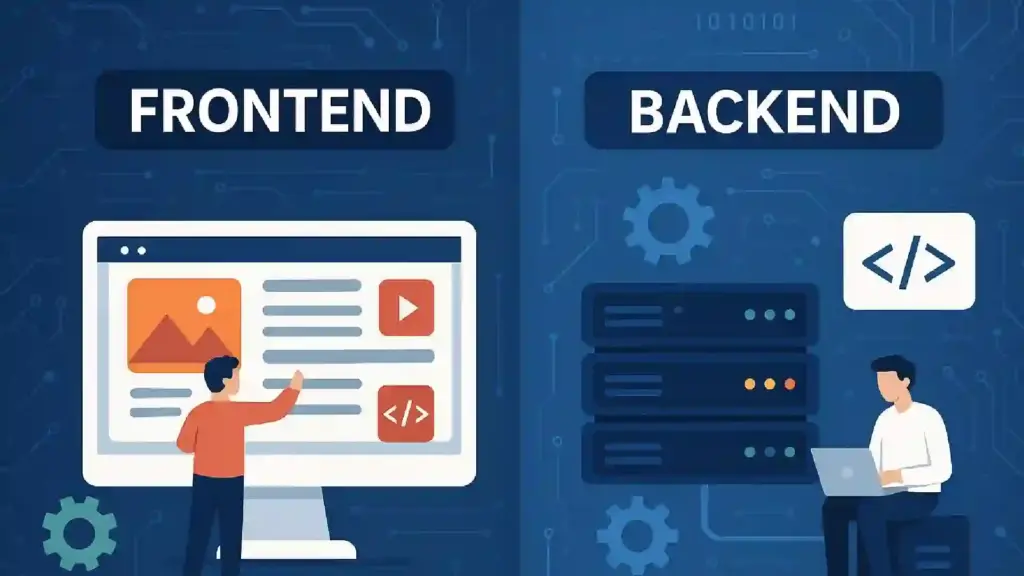
Front-end and back-end development represent two sides of the same digital ecosystem. Front-end developers create the experiences users interact with, while back-end developers build the systems that power those experiences behind the scenes.
As businesses increasingly depend on digital platforms, both skill sets remain in high demand. Understanding their differences helps organizations hire effectively, entrepreneurs build stronger products, and aspiring developers choose the career path that aligns with their strengths.
The future of software development will continue to require collaboration between front-end and back-end professionals. Whether you specialize in one area or pursue a full-stack path, mastering these foundational disciplines offers significant opportunities in the rapidly evolving technology landscape.
FAQs:
1. What is the main difference between front-end and back-end development?
Front-end development focuses on user interfaces and experiences, while back-end development manages servers, databases, and application logic.
2. Is front-end development easier than back-end development?
Neither is inherently easier. Front-end development requires design and user experience skills, while back-end development focuses more on logic, data management, and system architecture.
3. Can one person do both front-end and back-end development?
Yes. Developers who work on both areas are called full-stack developers.
4. Which programming language is best for front-end development?
JavaScript is the dominant programming language for front-end development, often combined with HTML and CSS.
5. Is back-end development a good career choice?
Yes. Back-end developers are in high demand due to the growing need for scalable applications, cloud infrastructure, cybersecurity, and data-driven services.