


Your website has a sleek design, professional photography, smooth animations, and a polished layout. Visitors arrive, explore a few pages, and then disappear without making a purchase, booking a consultation, or submitting an inquiry.
It is one of the most frustrating problems facing businesses in the digital economy: a website that looks impressive but delivers disappointing commercial results.
The problem is rarely about appearance alone. A modern website can still create confusion, hide essential information, load too slowly, or fail to convince visitors that a business deserves their trust.
For entrepreneurs and business leaders, the distinction matters. A website is not simply a digital showroom. It is a commercial asset expected to attract, persuade, and convert potential customers.
The real measure of a successful website is not how modern it looks, but how effectively it helps visitors take meaningful action.

1. The Difference Between Good Design and High Conversion
A visually attractive website creates a positive first impression. But first impressions are only the beginning of the customer journey.
Imagine entering a luxury retail store with beautiful lighting, elegant displays, and expensive furniture. Everything looks impressive, but there are no visible prices, the products are difficult to locate, and no one explains how to make a purchase.
Most customers would eventually leave.
The same principle applies online. Visitors need more than visual appeal. They need clarity, confidence, and a compelling reason to act.
Research from Nielsen Norman Group shows how quickly people form impressions of digital interfaces. However, an attractive first impression does not guarantee that users will complete a transaction.
A successful website must balance three essential elements:
- Visual credibility: Does the business appear professional and trustworthy?
- Functional usability: Can visitors find information and complete tasks easily?
- Commercial persuasion: Does the website communicate enough value to motivate action?
Many companies invest heavily in the first element while overlooking the other two.
This creates what might be called the design-performance gap, where a website receives compliments for its appearance but struggles to generate measurable business outcomes.
The solution is not to abandon attractive design. It is to make design serve a clear commercial purpose.
2. Your Website Looks Impressive but Communicates Too Little
One of the most common conversion problems is unclear messaging.
Businesses frequently fill their homepages with fashionable phrases such as “Transforming the Future,” “Innovating Digital Experiences,” or “Empowering Tomorrow.”
These statements sound ambitious, but they often fail to explain what the company actually offers.
A visitor arriving at a website typically wants answers to three questions: What does this business do? How can it help me? What should I do next?
If those answers are not immediately apparent, the visitor must work harder to understand the offer.
Consider two homepage headlines for a software company.
Design-focused but unclear
“Reimagining the Future of Business Innovation.”
Benefit-focused and specific
“Automate Your Invoices and Get Paid Faster.”
The second headline immediately identifies the service and communicates a customer benefit.
This is especially important for startups and small businesses competing against established brands. When potential customers are unfamiliar with a company, clarity becomes a powerful competitive advantage.
The principle is simple: Customers should understand your value proposition before they admire your creativity.
Strong website copy should communicate outcomes, address customer problems, and guide visitors toward the next step.
3. The Hidden Cost of Poor User Experience
A website can look modern on a designer’s screen while performing poorly in everyday use.
Complex navigation menus, excessive animations, confusing page structures, and hidden contact information can all create friction.
This is where website user experience, commonly known as UX, becomes commercially important.
UX describes how easily and comfortably someone can interact with a digital product. Good UX removes obstacles. Poor UX introduces unnecessary effort.
Research from the Baymard Institute places average documented online shopping cart abandonment at approximately 70%, although the figure varies by study and context.
Not all abandonment represents a website failure. Some shoppers are simply browsing or comparing prices. Nevertheless, Baymard’s research identifies checkout complexity and other usability problems as important reasons customers abandon purchases.
For businesses, these problems often appear in surprisingly ordinary situations.
A customer cannot find the shipping policy. A mobile visitor struggles to complete a form. A potential client clicks a contact button but encounters a confusing series of fields.
Each obstacle reduces the likelihood of conversion.
Companies should therefore evaluate their websites from the customer’s perspective rather than relying exclusively on internal design reviews.
A practical usability assessment should examine whether visitors can navigate the site without assistance, understand the offer, find important information, and complete the desired action with minimal effort.
A website should feel effortless to use, even when the business behind it is complex.
4. Slow Loading Speeds Are Driving Customers Away
Modern websites frequently use high-resolution images, background videos, elaborate transitions, and interactive features. While these elements can enhance presentation, they can also reduce performance.
A visitor who must wait for a page to load may never experience the design that took months to develop.
Google evaluates website experience using Core Web Vitals, which measure loading performance, responsiveness, and visual stability.
Google’s recommended Core Web Vitals thresholds
Largest Contentful Paint (LCP)
≤ 2.5 seconds
How quickly the main content appears
Interaction to Next Paint (INP)
≤ 200 ms
How quickly the page responds
Cumulative Layout Shift (CLS)
≤ 0.1
How much content unexpectedly moves
Reference thresholds, not measured website performance. Source: Google Search Central.
Performance problems can be especially costly in markets where customers rely on mobile connections or less powerful devices.
A website that performs beautifully on a high-end office computer may struggle on an older smartphone.
Entrepreneurs should regularly evaluate loading speeds using Google PageSpeed Insights, optimize images, remove unnecessary scripts, and prioritize essential content.
Speed is not merely a technical consideration. It is part of the customer experience and a prerequisite for efficient digital commerce.
5. Visitors Do Not Trust Your Business Enough to Buy
Trust is one of the most underestimated elements of conversion rate optimization.
A modern design can make a company appear established, but visual sophistication alone cannot prove credibility.
Visitors often look for evidence that a business is legitimate, reliable, and capable of delivering its promises.
This is particularly important for companies selling expensive products, professional services, or unfamiliar digital solutions.
According to Baymard Institute’s 2026 cart abandonment research, 19% of surveyed US online shoppers cited concerns about trusting a website with their credit card information as a reason for abandoning an order.
A consulting firm without credible case studies may struggle to secure inquiries. A new online retailer without clear return policies may lose cautious buyers. A technology startup without product demonstrations may find it difficult to communicate reliability.
Businesses can strengthen trust by displaying genuine customer testimonials, verifiable reviews, detailed company information, transparent policies, and relevant certifications.
Case studies are particularly effective because they connect promises to outcomes.
Rather than simply claiming to improve business efficiency, a service provider can explain how it helped a specific customer reduce administrative work, shorten delivery times, or improve operational performance.
These examples must be genuine and supported by evidence.
In international markets, trust also depends on local expectations. Payment preferences, language options, customer support channels, and regulatory disclosures can influence purchasing decisions.
A website designed for a global audience should recognize these differences instead of assuming every customer behaves the same way.

6. Your Calls to Action Are Weak, Hidden, or Confusing
Every business website should guide visitors toward a meaningful next step.
That action might involve purchasing a product, requesting a quotation, booking a demonstration, subscribing to a service, or contacting a sales representative.
Yet many websites make these actions unnecessarily difficult.
Some hide their primary call to action beneath large visual banners. Others overwhelm visitors with competing buttons, multiple promotional messages, and unclear navigation choices.
A call to action, or CTA, should explain exactly what happens when someone clicks.
For example, “Submit” communicates little value. “Get Your Free Consultation” explains the action and its immediate benefit.
Similarly, “Learn More” may be appropriate for informational content, but “See Pricing Plans” is more specific when visitors are evaluating costs.
The placement of these buttons also matters.
A homepage might introduce the primary offer, establish credibility, and present a clear action. A product page should support purchasing decisions with relevant information and a visible buying option.
An effective landing page optimization strategy ensures that each page has a defined objective.
The goal is not to force every visitor into an immediate purchase. It is to make the next logical step obvious.
For a business-to-business software company, that step may be scheduling a demonstration. For a professional services firm, it could be requesting an assessment.
Conversion improves when the website aligns its calls to action with the visitor’s level of interest and readiness to buy.
7. You Are Attracting Traffic That Is Unlikely to Convert
Sometimes the problem is not the website itself. It is the audience arriving there.
A company might invest heavily in search engine optimization, paid advertising, and social media campaigns while paying insufficient attention to visitor intent.
High traffic can create the appearance of digital success. However, visitors who have little interest in purchasing are unlikely to generate meaningful revenue.
Consider an accounting software company that attracts thousands of visitors through articles about general financial news.
Those articles may generate awareness, but many readers may have no immediate need for accounting software.
A smaller group searching for “accounting software for small businesses” may be significantly more valuable because the search indicates a relevant commercial need.
This distinction is central to an effective website conversion strategy.
Businesses should examine where their visitors originate, what information they seek, and which pages lead to meaningful actions.
They should also ensure consistency between advertising messages and landing pages.
If an advertisement promises affordable website development, visitors should arrive on a page that clearly explains the service, pricing approach, and next steps.
Sending them to a generic homepage creates unnecessary friction.
Strong conversion performance requires alignment between marketing, audience expectations, and website content.
The most valuable visitor is not necessarily the person who spends the longest time browsing. It is the person whose needs match the solution the business provides.
8. Your Business Is Not Measuring What Actually Matters
Many entrepreneurs judge website performance through traffic numbers, social engagement, or visual feedback.
These indicators can be useful, but they do not provide a complete picture of commercial effectiveness.
A website attracting 50,000 monthly visitors may appear successful. Yet if very few visitors become customers, the business may be spending heavily on attention without generating proportional returns.
Conversion rate provides a more meaningful starting point.
If 10,000 visitors produce 200 conversions, the conversion rate is 2%.
Improving that rate to 3% would generate 300 conversions from the same traffic, representing 100 additional conversions without increasing visitor volume.
This example illustrates why improving conversion efficiency can be more valuable than continually increasing advertising expenditure.
Businesses should monitor form completion, qualified leads, purchases, checkout abandonment, and revenue per visitor.
Tools such as Google Analytics 4 can help teams understand user journeys and identify where potential customers disengage.
However, data collection alone does not create improvement.
Businesses must translate findings into experiments, test changes, and measure whether those changes produce better outcomes.
9. What Successful Websites Do Differently
Successful digital businesses tend to approach website design as an ongoing process rather than a one-time project.
Consider Shopify. Its business model depends on helping merchants create and operate online stores. The platform emphasizes product presentation, checkout capabilities, and operational tools that support the commercial journey.
Airbnb provides another useful example. Its search-oriented experience helps users move from discovering accommodation to evaluating listings and making reservations. Photography supports the decision, but search filters, pricing information, reviews, and booking functionality are also central.
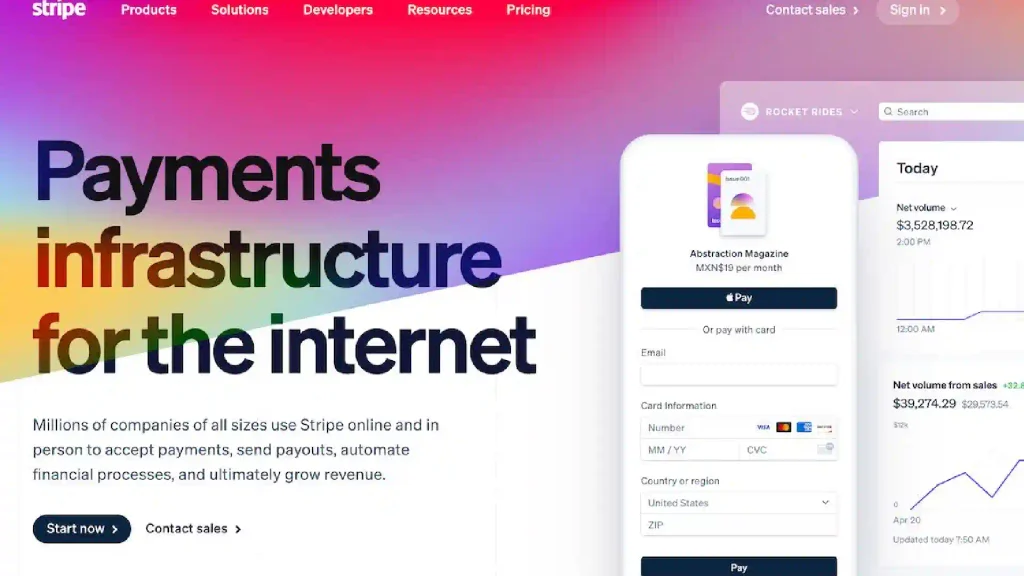
Meanwhile, Stripe demonstrates the importance of explaining complex services through structured product information, developer resources, and business-focused messaging.
These companies operate in different industries, but their websites illustrate a common principle: visual design works best when it supports user decisions.
Their approaches should not be copied without considering the needs of a smaller business.
A local consultancy, for example, may benefit more from clear service descriptions, strong case studies, and a simple appointment-booking process than from an elaborate interactive homepage.
A regional e-commerce business may need to prioritize delivery transparency, mobile payment options, and multilingual support.
The right conversion strategy depends on the customer, the product, and the purchasing process.
10. How to Turn a Beautiful Website Into a Conversion Engine
Improving website performance does not necessarily require a complete redesign.
In many cases, targeted changes can deliver meaningful improvements while preserving the existing visual identity.
Start by examining the customer journey. Identify what visitors expect when they arrive, which questions they need answered, and what might prevent them from taking action.
Next, prioritize problems based on their potential commercial impact.
A slow product page with substantial traffic may deserve more attention than a rarely visited company information page. A complicated checkout process may be more urgent than a minor visual inconsistency.
Baymard’s research provides a practical example. Its 2025 checkout benchmark found that 64% of desktop sites and 63% of mobile sites in its evaluated sample had checkout experiences rated mediocre or worse.
Once these fundamentals are addressed, businesses can experiment with more advanced improvements, including personalized landing pages, clearer pricing comparisons, and different call-to-action messages.
Each experiment should have a measurable objective.
The goal is not to redesign endlessly. It is to build a website that becomes progressively more effective at supporting business growth.
Conclusion: The Future Belongs to Websites That Perform, Not Just Impress
A modern website can strengthen brand perception, but visual sophistication is only one part of digital success.
Businesses must also deliver clarity, speed, usability, trust, and a straightforward path to action.
For entrepreneurs, the opportunity is significant. Improving conversion performance can help generate more commercial value from existing marketing investments, reducing the need to depend entirely on additional traffic.
As digital competition intensifies, companies that understand customer behavior and continuously improve their online experiences will be better positioned to compete.
The next generation of successful business websites will combine attractive design with measurable performance, thoughtful personalization, and customer-centered functionality.
A website should not simply make visitors say, “This looks impressive.” It should give them enough confidence and motivation to say, “This is exactly what I need.”
That is the difference between a modern website and a website that genuinely drives business growth.
FAQs:
1. Why does my website get traffic but no conversions?
Your website may attract visitors who are not ready to buy, communicate an unclear value proposition, load slowly, lack trust signals, or make the next action difficult. Reviewing traffic sources and user behavior helps identify the cause.
2. What is a good website conversion rate?
There is no universal benchmark. Conversion rates vary by industry, traffic source, product price, and conversion goal. Businesses should compare results against their own historical performance and relevant industry data.
3. Does website design affect conversion rates?
Yes. Website design influences navigation, readability, credibility, accessibility, and ease of completing tasks. Effective design supports customer decisions rather than focusing solely on visual appearance.
4. How can I improve my website conversion rate without redesigning it?
Start with clearer headlines, stronger calls to action, faster loading times, simpler forms, customer testimonials, and transparent pricing. Test individual improvements and measure their impact.
5. How long does website conversion optimization take?
Simple improvements can be implemented within days, but evaluating their impact may require several weeks or longer, depending on traffic volume and conversion frequency. Conversion optimization is an ongoing process.