


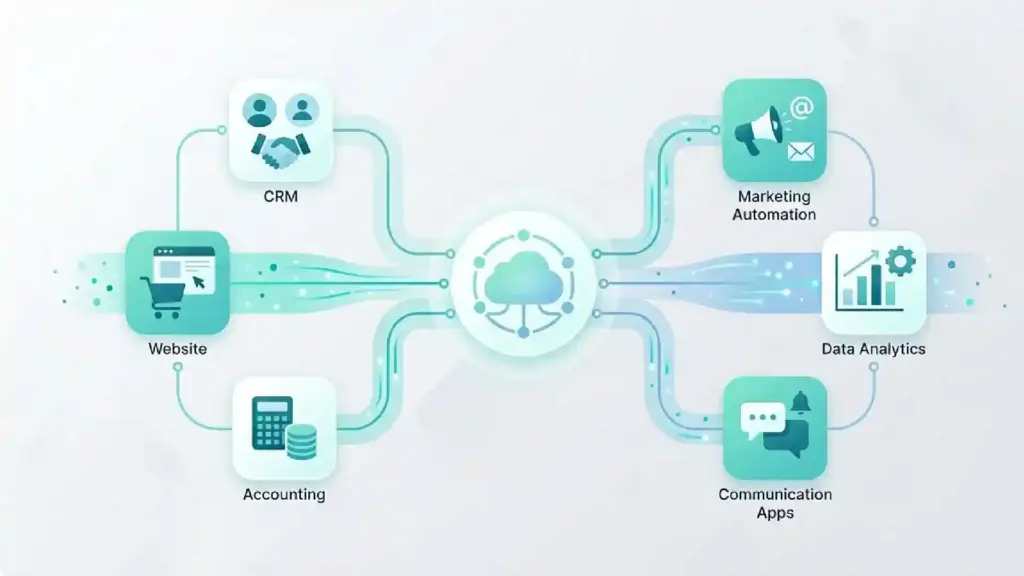
Modern digital products rarely operate alone. An online store connects to payment providers, logistics platforms, analytics tools, customer databases, and mobile applications. A financial platform may need to exchange information with banks, regulators, identity services, and artificial intelligence systems.
API-first web development treats these connections as a central part of the product rather than an afterthought. Teams define how applications will communicate before they build the underlying features. The API becomes a formal contract that guides developers, testers, product managers, partners, and increasingly, AI agents.
This approach can reduce integration problems, support faster product delivery, and make software easier to scale across markets and channels. However, API-first development requires more than publishing a few endpoints. It depends on clear specifications, consistent governance, strong security, reliable testing, and an excellent developer experience.
What Is API-First Web Development?
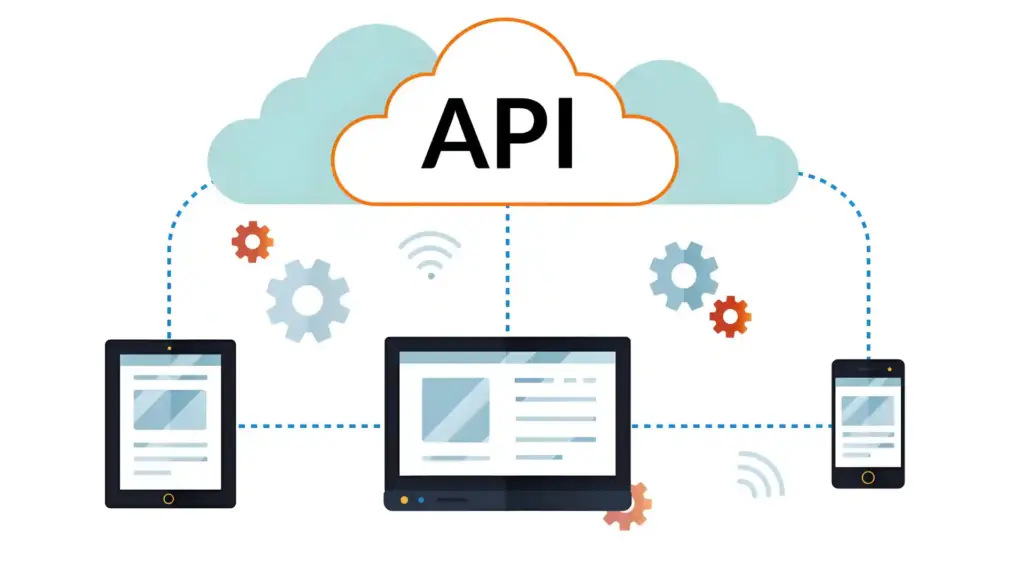
API-first web development is an approach in which teams design and agree on an application programming interface before implementing the application behind it. The interface defines available resources, operations, data formats, authentication requirements, error responses, and expected behaviour.
Think of an API as the architectural plan for a building. Engineers, electricians, and interior designers can work independently because they share the same plan. In an API-first project, frontend developers, backend developers, mobile teams, partners, and quality assurance specialists can also work in parallel because they share an agreed technical contract.
The approach is closely connected to design-first development. According to the OpenAPI Initiative, design-first development begins with an API description, followed by the code that implements it. The organisation states that a specification can provide the initial structure for development and enable tools to generate boilerplate code automatically.
The OpenAPI Specification is one of the most widely used standards for describing HTTP APIs. OpenAPI 3.2.0, released in September 2025, provides a programming-language-independent way for humans and software tools to understand a service without inspecting its source code or network traffic.
This machine-readable contract can be used to generate documentation, client software development kits, test cases, mock servers, validation rules, and security checks. As a result, the specification becomes a working product asset rather than a document that quickly becomes outdated.
API-first should not be confused with API-only. A company can still offer websites, mobile applications, dashboards, and internal systems. The difference is that these experiences are built on consistent, reusable interfaces instead of creating separate backend logic for every channel.
The Business Benefits of an API-First Strategy
The first major benefit is speed. Once teams agree on an API contract, frontend developers can work with mock responses while backend developers build the real service. Testing teams can prepare automated checks, and external partners can begin planning their integrations before the complete platform is available.
This parallel workflow can remove one of the most common software-development bottlenecks: waiting for another team to finish. Instead of passing work from one department to the next, multiple groups build against the same contract at the same time.
API-first development also promotes reuse. A customer profile service created for a website might later support a mobile application, retail kiosk, customer-service dashboard, or partner portal. Reusing the same capability lowers duplication and helps users receive consistent information across every channel.
The commercial importance of APIs is expanding as AI becomes another software consumer. Postman’s 2025 State of the API Report surveyed more than 5,700 developers, architects, and executives. It found that 89% of developers were using AI, but only 24% were actively designing APIs for AI agents.
That gap represents both a risk and an opportunity. APIs designed only for human developers may have unclear descriptions, inconsistent responses, or undocumented dependencies. These weaknesses make it harder for autonomous AI systems to discover tools and complete tasks safely.
A strong API strategy also improves expansion into new markets. A business entering another country may need different payment services, delivery providers, tax systems, or identity-verification platforms. Well-designed interfaces allow those components to be replaced or added without rebuilding the entire product.
This flexibility is particularly valuable for companies using a microservices architecture. Each service can focus on a specific business capability, such as billing, inventory, or customer identity, while APIs define how those services communicate.
However, organisations should not adopt microservices simply because they are fashionable. For smaller products, a well-structured modular application may be easier to manage. API-first thinking remains valuable in either model because it separates the interface from the internal implementation.
How API-First Development Improves Product Quality
API-first development forces teams to discuss important product questions early. What information does the consumer actually need? Which actions should be allowed? How will users be authenticated? What happens when a resource cannot be found? How should pagination, filtering, and rate limits work?
Resolving these issues during design is generally less expensive than discovering them after several applications have already integrated with the service. A poorly designed endpoint can become difficult to change because every consumer may depend on its existing behaviour.
A formal specification also creates a shared language between technical and non-technical stakeholders. Product managers can review whether an operation reflects the intended business process. Security teams can examine authentication and data exposure. Developers can assess feasibility, while testers identify missing failure scenarios.
Machine-readable contracts support automation throughout the API lifecycle. The OpenAPI Initiative explains that OpenAPI descriptions can help teams generate client code, create tests, apply design standards, and understand how APIs work together.
This automation improves consistency. A continuous integration pipeline can check whether a proposed API follows naming conventions, contains required descriptions, defines authentication, and avoids breaking changes. Documentation can be generated from the same source used to validate implementation behaviour.
Reliable APIs must also account for network failures. A client may send a request successfully but lose the response because its connection drops. When it retries, the server could accidentally process the operation twice.
Payment provider Stripe addresses this risk through idempotency, which allows clients to retry supported requests without repeating the same operation. Stripe describes idempotency as the ability to apply an operation multiple times without changing the result after the first successful attempt.
For an ecommerce business, this principle can prevent a customer from being charged twice. In another system, it might prevent duplicate orders, reservations, or account transfers.
Product quality therefore depends not only on successful responses but also on predictable failure handling. Clear status codes, structured error messages, request identifiers, retry guidance, and audit logs help developers diagnose problems quickly and build safer integrations.

API-First Best Practices for Development Teams
Start with real consumer journeys
An API should be designed around the tasks consumers need to complete, not around the structure of an internal database. Begin with journeys such as registering a customer, submitting an order, checking delivery status, or cancelling a subscription.
Map every step, decision, dependency, and failure condition. This process helps teams avoid endpoints that expose internal complexity without supporting a meaningful business outcome.
The OpenAPI Initiative has also introduced the Arazzo Specification for describing sequences of API calls and the dependencies between them. This reflects the growing importance of documenting complete workflows rather than treating every endpoint as an isolated operation.
Create the API contract before implementation
Define resources, methods, request bodies, response schemas, authentication, examples, and error formats in an OpenAPI document. Review the contract with frontend, backend, security, product, and partner teams before development begins.
Use a mock server so consumers can test proposed interactions. Early feedback may reveal that a response contains unnecessary information, requires too many calls, or does not support a common user journey.
Apply consistent design standards
Consistency is one of the foundations of a strong developer experience. Similar resources should follow similar naming, filtering, pagination, authentication, and error-handling patterns.
For example, one endpoint should not use customer_id while another uses clientReference for the same concept unless there is a compelling reason. Consumers should be able to predict how the API behaves based on patterns they have already learned.
Create an internal style guide and automate its rules where possible. API linting can detect design issues before they reach production.
Treat security as a design requirement
Security reviews should begin during API design, not shortly before launch. Define who can access each operation, what data they can view, and which permissions are required.
Use established authentication and authorisation standards. Encrypt data in transit, validate all input, limit sensitive information in responses, and apply rate controls to reduce abuse. Teams should also maintain inventories of their APIs so forgotten or undocumented endpoints do not become security gaps.
Access should follow the principle of least privilege. A shipping partner, for example, may need a customer’s delivery address but should not automatically receive payment information or account history.
Plan versioning and compatibility
Changing a production API can break websites, mobile applications, and partner integrations. Teams should therefore define what counts as a breaking change and how consumers will be notified.
Whenever possible, add optional fields rather than changing or removing existing ones. Maintain compatibility for a published period, provide migration documentation, and monitor whether consumers are still using older versions.
Stripe’s current versioning model separates major releases, which can contain backward-incompatible changes, from monthly releases containing backward-compatible updates. This illustrates how an explicit release policy can help API consumers assess upgrade risk.
Build automated contract and integration tests
Testing should confirm that the implementation matches the published specification. Contract tests can verify field types, required properties, status codes, headers, and authentication behaviour.
Integration tests should cover complete journeys as well as failures. Test expired credentials, invalid input, duplicate requests, unavailable dependencies, timeouts, rate limits, and partial processing.
Performance testing is equally important. An endpoint that works for 100 users may fail under a major campaign, product launch, or seasonal demand spike.
Invest in documentation and onboarding
An API is successful only when consumers can use it effectively. Documentation should include a clear overview, authentication instructions, quick-start examples, endpoint details, error explanations, limits, changelogs, and working code samples.
Provide a sandbox with realistic data so developers can test integrations without affecting production. Measure how long a new consumer takes to make a successful call. This “time to first successful request” is a practical indicator of API usability.
Good documentation should be generated from the API contract where appropriate, but generated reference pages are not enough. Developers also need guides that explain business workflows, common mistakes, and recommended integration patterns.
Establish API governance without creating bureaucracy
API governance is the system of standards, responsibilities, and review processes used to keep APIs consistent and reliable. It should make good decisions easier rather than forcing teams through slow approval meetings.
Create reusable security schemes, response models, pagination patterns, and design templates. Automate checks in development pipelines and reserve human review for questions involving business logic, privacy, major architectural risk, or breaking changes.
Postman notes that API collaboration increasingly involves developers, testers, architects, and business stakeholders. Effective governance should therefore support cross-functional decision-making rather than placing all responsibility on one engineering group.
Common API-First Mistakes to Avoid
One common mistake is writing a specification and then allowing the implementation to drift away from it. The contract must be validated continuously. Otherwise, documentation may promise one response while production returns another.
Another mistake is designing an API around internal tables. Database-oriented interfaces often expose confusing technical relationships and force consumers to make numerous calls. APIs should represent stable business concepts, even when the underlying database changes.
Teams also underestimate operational requirements. Publishing an endpoint without monitoring, rate limiting, alerting, logs, ownership, and incident procedures creates long-term risk. Every production API should have a clearly identified owner and measurable service expectations.
Over-versioning can be equally harmful. Creating a new version for every small adjustment fragments the user base and increases maintenance. Versioning should be reserved for genuinely incompatible changes, while compatible improvements can usually be introduced within the existing contract.
Finally, teams may focus on building more APIs instead of improving the APIs people already use. Track adoption, failure rates, latency, support requests, consumer satisfaction, and abandoned integrations. A smaller portfolio of reliable, discoverable APIs often creates more value than a large catalogue of inconsistent endpoints.
Conclusion: Make the Interface a Product
API-first web development gives organisations a practical way to build connected, scalable digital products. By designing the interface before writing implementation code, teams can work in parallel, test ideas earlier, reuse capabilities, and integrate new channels more easily.
The strongest API-first programmes share several habits: they begin with consumer journeys, use machine-readable specifications, automate contract testing, design security from the start, protect backward compatibility, and invest in documentation. They also treat governance as a support system for delivery rather than a final approval barrier.
The next stage of API development will involve more machine consumers. Mobile apps and partner systems will remain important, but AI agents will increasingly need clear descriptions, predictable operations, and safe permission models.
Businesses should therefore review their most important digital journeys, identify the APIs supporting them, and assess whether those interfaces are understandable, secure, reusable, and ready for both human developers and autonomous systems.
FAQs:
1. What does API-first development mean?
API-first development means designing and agreeing on an API contract before building the application that implements it. The contract defines how software systems request information, perform actions, handle errors, and authenticate users.
2. What is the difference between API-first and code-first development?
In a code-first approach, developers build the application and generate or write the API description afterwards. In an API-first approach, teams design the interface before implementation, allowing consumers, developers, and testers to work against an agreed contract.
3. Is API-first development only suitable for microservices?
No. API-first development can support microservices, modular monoliths, software-as-a-service platforms, mobile applications, and partner integrations. Its main value comes from creating stable, clearly defined interfaces between systems.
4. Which tools or standards support API-first development?
The OpenAPI Specification is widely used for describing HTTP APIs. Teams may also use API design platforms, mock servers, contract-testing tools, documentation generators, security scanners, gateways, and continuous integration pipelines.
5. How can a company start adopting an API-first approach?
Start with one important customer or partner journey. Document its required API operations, create a machine-readable contract, review it with consumers and security teams, test it through a mock server, and automate checks that ensure the final implementation matches the contract.