


You do not necessarily need millions of followers to make money from social media anymore. In some cases, you do not even need a large audience.
A growing corner of the creator economy is built around user-generated content, or UGC, where ordinary-looking product demonstrations, testimonials and short videos are created for brands to use in their own marketing. The creator is paid primarily for making the content, rather than simply for distributing it to a huge following.
And the money can become significant. In September 2026, The Wall Street Journal reported on everyday TikTok and Instagram users earning as much as $6,000 a month from promotional content.
That headline number is not a typical starting salary. Current marketplace data shows much lower rates for the average individual project. But it illustrates how a side hustle once associated with free products and occasional sponsorships is evolving into a small creative-services business.
For entrepreneurs, marketers and aspiring creators, that shift matters.
What Exactly Is a UGC Side Hustle?
Traditional influencer marketing is largely an audience business. A company pays someone because that person has access to 100,000, one million or perhaps 10 million followers.
UGC changes the equation.
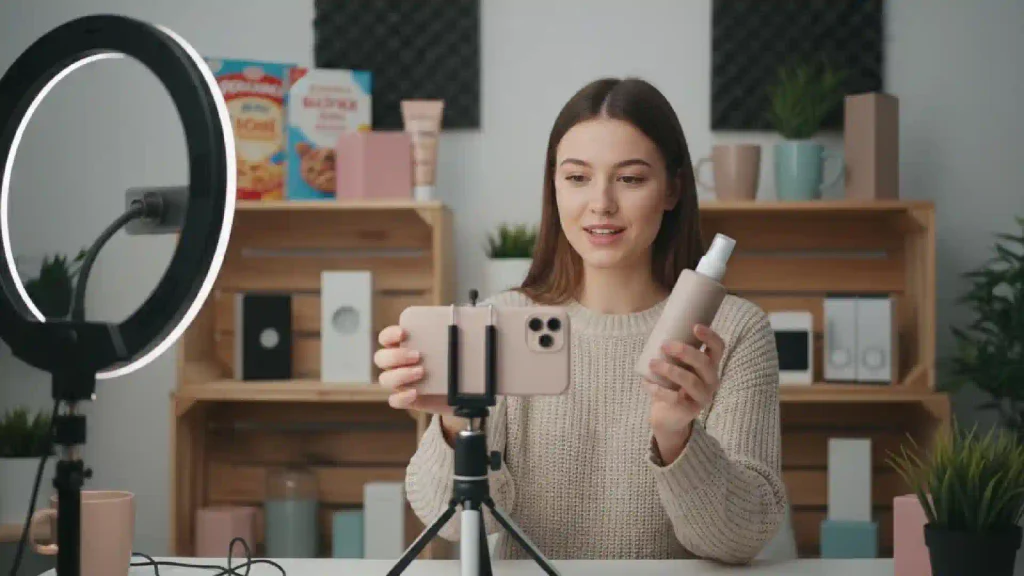
A creator might film a 30-second video showing how a skincare product fits into a morning routine, demonstrate an app on a smartphone, unbox a new gadget or record a testimonial-style clip. The brand can then use that creative on its social accounts or, depending on the agreement, in paid advertising.
The creator’s value is therefore not necessarily reach. It is the ability to produce authentic-looking short-form video that feels native to TikTok, Instagram Reels and similar feeds.
That distinction has lowered one of the biggest barriers to entering the creator economy.
Research from NeoReach, based on a survey of more than 1,000 UGC creators, found that 62.3% were doing UGC part-time. It also found that 59% had been creating UGC for less than a year when surveyed, highlighting how young the sector remains.
In other words, the UGC creator does not always resemble the celebrity influencer. They may look more like a freelance copywriter or photographer: someone selling a production skill to businesses.
That helps explain why brands are building infrastructure around the model.
TikTok’s own creator-marketing platform, TikTok One, allows businesses to discover creators, run collaborations and turn creator content into advertising. TikTok says its platform supports everything from individual creator collaborations to creator content produced at scale.
How Does Someone Actually Reach $6,000 a Month?
The important word is volume.
A creator charging $200 for a video would need 30 paid deliverables a month to generate $6,000 in gross revenue. At $400 per deliverable, that falls to 15. Alternatively, a creator might combine individual videos, bundles, retainers and additional fees for advertising usage.
The rates vary enormously.
UGC Roster’s September 2026 data, based on public brand listings, puts the median public offer at $200, with the middle 50% of offers ranging from $50 to $550. Its 90th percentile was $1,270 or more. The company cautions that public listings can skew toward lower rates because larger deals may be negotiated privately.
Upwork’s September 2026 hiring guide tells a similar story. It lists a single UGC video at roughly $50 to $440 per project, while packages of three to five videos can range from about $200 to $1,375. Monthly content retainers are listed from approximately $375 to $2,200.
So $6,000 is possible, but the arithmetic reveals what viral social posts sometimes leave out.
This is work.
A creator earning that amount consistently may be researching products, writing hooks, filming multiple takes, editing footage, responding to revisions, negotiating contracts, finding clients and tracking invoices. Revenue is also not the same thing as profit after equipment, products, software, taxes and other expenses.
The more sustainable model can therefore look less like “getting paid to post videos” and more like operating a miniature advertising studio.
Why Brands Want Content That Does Not Look Like Advertising
Scroll through TikTok or Instagram and highly polished advertising can sometimes feel out of place.
A professionally lit commercial enters a feed filled with bedroom reviews, kitchen demonstrations, car conversations and handheld videos. It can immediately announce itself as an advertisement.
UGC attempts to speak the visual language of that feed.
That has become increasingly valuable as marketers try to create advertisements that resemble the content people voluntarily watch. TikTok says that, in an APAC white paper conducted with Accenture, 76% of consumers surveyed wanted brands to post more authentic content, while nine in 10 said authentic content was likely to influence a purchase decision.
Meta has also been pushing brands toward creator-style vertical video. In a series of 15 A/B tests across several markets, Meta reported that adding partner-enabled native Reels creative produced an average 5% lower cost per result and 11% higher conversion rate compared with the business-as-usual campaign setup tested. Those results came from tests conducted between May 2022 and April 2023 and should not be treated as a universal guarantee of performance.
The commercial logic is straightforward.
Instead of producing one expensive advertisement and running it for months, a performance marketer can test many short videos, openings, creators and messages. The successful variations can receive more advertising budget. Weak ones can quickly be replaced.
That turns creators into a distributed creative laboratory.
The New UGC Creator Is Part Actor, Part Marketer
The barrier to entry may be low, but the barrier to becoming consistently valuable is higher.
Successful UGC requires more than pointing a smartphone at a product.
A creator needs to understand the first seconds of a video. They need to know how to demonstrate a benefit quickly, speak naturally on camera, create believable scenarios and deliver a clear call to action without making every clip feel like a television commercial.
That means the highest-value skill may not be video editing.
It may be direct-response storytelling.
Consider two hypothetical creators promoting the same productivity app.
One says: “This app has an AI-powered calendar and task manager.”
The other begins: “I kept forgetting which client I was supposed to follow up with, so I started doing this every morning.”
The first describes a feature. The second introduces a problem and gives viewers a reason to keep watching.
That difference is the essence of performance-oriented UGC.
Creators who learn those mechanics can become more valuable because they are no longer merely delivering footage. They are producing testable advertising concepts.
Platforms are formalizing this market. TikTok One allows creators to find paid opportunities and gives brands mechanisms for direct invitations and open applications. TikTok also says creators can add information such as their starting rates, languages and industries to their profiles.
The result is a market increasingly resembling freelance creative work.

The $6,000 Headline Comes With an Important Warning
There is another side to UGC’s rapid growth: disclosure.
The same quality that makes UGC commercially attractive, its ability to look like ordinary social content, can create problems when viewers cannot tell that someone has been paid.
The Wall Street Journal reported in September 2026 on creators earning thousands of dollars from promotional posts that could resemble ordinary social recommendations, including cases where advertising relationships were not adequately disclosed.
For U.S.-facing content, the rules are important.
The Federal Trade Commission’s guidance for social media influencers says creators should clearly disclose a “material connection” with a brand. That connection can include payment as well as free or discounted products.
The FTC also says disclosures should be difficult to miss and placed alongside the endorsement itself. For video, its guidance says disclosure should appear in the video rather than relying only on the description.
Its Endorsement Guides were updated in 2023 to address modern advertising practices, including social media, and the agency emphasized that built-in platform disclosure tools may not always be sufficient on their own.
This matters because the industry’s greatest commercial strength can also become its greatest credibility risk.
UGC works because it feels human. If audiences conclude that supposedly spontaneous recommendations are actually hidden advertisements, that trust can disappear quickly.
The long-term winners are therefore likely to be creators and brands that combine authenticity with transparency.
Turning UGC From a Gig Into a Business
The creators most likely to build meaningful income will treat UGC as a service business rather than a lottery ticket.
That begins with a portfolio. A beginner does not necessarily need to wait for a paid client before demonstrating ability. They can create sample videos using products they already own, clearly identifying them as portfolio examples rather than pretending a commercial relationship exists.
The next stage is specialization.
A creator who becomes particularly effective at beauty demonstrations, financial-app explainers, travel content, software tutorials or food videos can develop expertise that makes pitching easier. Specialization also allows creators to understand what kinds of hooks, objections and visual formats work in a particular category.
Then comes pricing.
Instead of thinking only in terms of “one video equals one fee,” creators increasingly need to understand deliverables and rights separately. A project can include the base creative, alternative hooks, raw footage, revisions, additional formats and permission for the brand to use the creator’s likeness or content in paid advertising.
Recurring relationships can be especially important.
A creator making $6,000 every month does not necessarily need dozens of entirely new clients. A smaller group of brands commissioning ongoing creative can make revenue more predictable and reduce the time spent prospecting.
That is where the UGC side hustle starts looking like entrepreneurship.
A Global Opportunity, With Local Rules
The model is inherently international.
A creator in Manila, Doha, London, Toronto or Johannesburg can theoretically produce vertical video for companies selling to customers thousands of kilometres away. Language skills and cultural knowledge can become commercial advantages as brands localize campaigns.
But the global opportunity does not mean every market operates identically.
Platform programs vary by region. TikTok, for example, says TikTok One availability and creator requirements can differ by country, region and individual project.
Advertising laws also vary between jurisdictions.
Creators working internationally therefore need to understand not only what the client requests, but where the advertisement will appear and what disclosure, tax, licensing and contractual requirements may apply.
The professionalization of UGC makes those details more important, not less.
A $100 experimental video between a small business and a new creator may involve little complexity. A creator whose face is being used across a multinational paid advertising campaign is entering a very different commercial relationship.

The Bigger Opportunity Behind the $6,000 Number
The most interesting thing about the UGC boom is not whether every aspiring creator can make $6,000 a month.
Most will not, and available industry data suggests earnings are highly uneven. NeoReach’s earlier survey found estimated average lifetime UGC earnings of $12,300 among respondents but a median of only $1,000, illustrating how a smaller group of higher earners can pull averages upward.
The bigger story is that social media has created a new category of creative labour.
For years, the central question of the influencer economy was: How many followers do you have?
UGC introduces another question: Can you make content that sells?
That is a fundamental shift.
It means a relatively unknown creator with strong storytelling instincts can potentially compete for marketing budgets without first spending years accumulating an enormous public audience. At the same time, brands gain access to a wider and more diverse pool of creative talent.
The smartphone becomes the studio. The bedroom or kitchen becomes the set. And a person’s ability to explain, demonstrate and tell a convincing 30-second story becomes a marketable skill.
For aspiring creators, the practical takeaway is simple: do not build a plan around the $6,000 headline. Build around becoming useful to brands. Develop a portfolio, learn short-form storytelling, understand advertising rights, price work commercially and disclose paid relationships clearly.
Do those things well, and UGC stops looking like easy internet money.
It starts looking like a real business.
FAQs:
1. What is a UGC side hustle?
A UGC side hustle involves creating photos or short-form videos for brands, often for use on TikTok, Instagram Reels or paid social advertising. Unlike traditional influencer marketing, creators may be hired primarily for their content-production ability rather than the size of their audience.
2. Can UGC creators really make $6,000 a month?
Some creators can reach or exceed that level, but it should not be treated as a typical income. September 2026 marketplace data from UGC Roster shows a median public paid listing of about $200, while higher-value projects and private negotiations can pay considerably more.
3. Do you need thousands of followers to become a UGC creator?
Not necessarily for UGC work generally because brands can hire creators to produce content without purchasing access to their audience. Individual marketplaces can impose follower requirements, however. TikTok says participation requirements for TikTok One projects vary, with some opportunities requiring at least 1,000 followers.
4. How much should a beginner UGC creator charge?
There is no universal rate. As of September 2026, UGC Roster reports a $200 median among public paid brand listings, while Upwork lists single-video projects at roughly $50 to $440. Rates can depend on experience, production complexity, revisions and how the brand is allowed to use the content.
5. Does paid UGC need to be disclosed as advertising?
When a creator endorses a product and has a material relationship with the brand, U.S. FTC guidance says that relationship should be clearly and conspicuously disclosed. Creators operating elsewhere should also check the advertising rules applying to the markets where their content is published or targeted.