


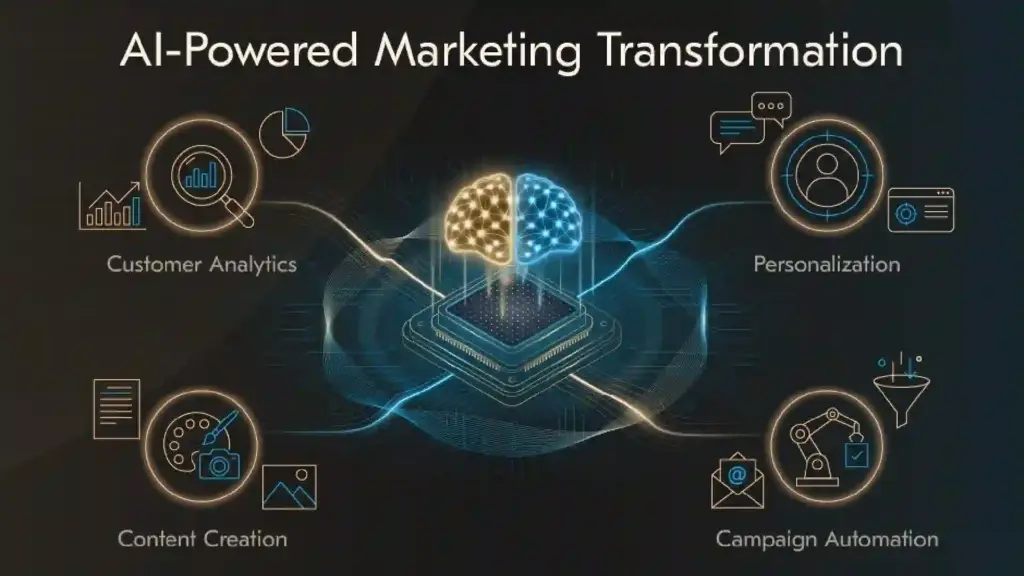
Artificial intelligence has moved from a futuristic concept to a competitive necessity in modern marketing. From content creation and audience targeting to predictive analytics and customer engagement, AI is reshaping how brands connect with consumers online.
The shift is happening rapidly. Research shows that most marketers now use AI to accelerate content creation, gain insights faster, and improve decision-making. Companies that successfully integrate AI into their marketing operations are seeing improvements in efficiency, personalization, and return on investment.
For businesses, the question is no longer whether to use AI, but how to use it effectively. The organizations achieving the strongest results combine AI-powered automation with human creativity, strategic thinking, and authentic brand storytelling.
Why AI Is Transforming Digital Marketing
Digital marketing has become increasingly complex. Consumers interact with brands across multiple platforms, including social media, search engines, websites, email campaigns, and messaging apps.
Managing these touchpoints manually is both time-consuming and inefficient. AI solves this challenge by processing vast amounts of data in real time and identifying patterns that would be difficult for humans to detect.
According to industry surveys, marketers primarily use AI to generate content faster, uncover insights more quickly, and make decisions with greater speed. These capabilities allow teams to focus on strategy while automation handles repetitive tasks.
Consider a global e-commerce company running campaigns across five continents. AI can analyze customer behavior, identify audience segments, personalize messaging, and optimize ad spending simultaneously. What once required dozens of specialists can now be accomplished more efficiently through intelligent systems.
AI-Powered Content Creation at Scale
Content remains the foundation of successful digital marketing. However, maintaining a consistent flow of high-quality content across platforms can strain even the most experienced marketing teams.
AI tools help marketers:
- Generate social media captions
- Create blog outlines
- Draft email campaigns
- Produce ad copy variations
- Generate video scripts
- Suggest content ideas based on trends
Studies indicate that more than 90% of marketers using AI leverage it to speed up content production.
Case Study: Scaling Content Production
A mid-sized software company publishing two blogs per week may struggle to keep pace with competitors. By using AI for research assistance, headline generation, keyword recommendations, and first-draft creation, the same team can significantly increase output without expanding headcount.
The key advantage is not replacing writers. Instead, AI removes repetitive tasks so content creators can focus on storytelling, expertise, and brand voice.
Best Practice
Use AI to create first drafts and generate ideas, but ensure human editors review all content for accuracy, originality, and authenticity.
Enhancing Social Media Performance with AI
Social media success depends on delivering the right content to the right audience at the right time.
AI excels in all three areas.
Modern social media platforms increasingly rely on AI to analyze engagement patterns, predict audience behavior, and optimize content distribution. Marketers can use AI-powered tools to:
- Identify trending topics
- Schedule posts for peak engagement
- Generate platform-specific content
- Analyze competitor performance
- Monitor brand sentiment
- Predict campaign outcomes
Research shows that AI adoption is helping marketers create more content, automate workflows, and gain actionable insights from social media data.
Real-World Example
A retail brand launching a new product can use AI to monitor conversations across social platforms, identify influential creators, and determine which messaging resonates most with customers.
Instead of waiting weeks for campaign reports, marketers receive insights in real time and can adjust strategy immediately.

Personalization: The New Competitive Advantage
Today’s consumers expect personalized experiences.
They want brands to understand their preferences, anticipate their needs, and deliver relevant recommendations.
AI makes this possible at scale.
Machine learning algorithms analyze:
- Purchase history
- Browsing behavior
- Engagement patterns
- Demographic information
- Customer preferences
Using these insights, businesses can create highly targeted campaigns that improve conversion rates and customer satisfaction.
Example
Streaming platforms such as Netflix built their success on recommendation engines powered by AI. The same principle now applies to marketing.
A fashion retailer can recommend products based on previous purchases, while an online education company can suggest courses aligned with a user’s interests.
Personalization not only improves engagement but also strengthens customer loyalty and lifetime value.
Smarter Advertising Through Predictive Analytics
Advertising has traditionally involved a degree of guesswork.
AI significantly reduces uncertainty by using predictive analytics to forecast future outcomes.
Predictive models can help marketers determine:
- Which audiences are most likely to convert
- Optimal ad budgets
- Best-performing creative assets
- Future purchasing behavior
- Customer churn risks
This data-driven approach improves efficiency and reduces wasted spending.
Recent industry developments show AI-powered advertising platforms delivering increasingly sophisticated campaign optimization and performance improvements.
Practical Application
A business investing $100,000 in digital advertising can use AI to continuously test audiences, creatives, and placements.
Instead of manually reviewing performance reports, AI reallocates budget toward higher-performing campaigns automatically.
The result is improved return on advertising spend and faster campaign optimization.
AI Chatbots and Conversational Marketing
Customer expectations have shifted toward immediate responses.
AI-powered chatbots enable businesses to provide 24/7 customer support without significantly increasing operational costs.
Modern conversational AI can:
- Answer frequently asked questions
- Recommend products
- Capture leads
- Schedule appointments
- Guide customers through purchasing decisions
Unlike traditional chatbots that relied on scripted responses, today’s AI assistants understand context and deliver more natural interactions.
Business Impact
For an online retailer, AI chatbots can handle thousands of customer inquiries simultaneously while collecting valuable customer data.
This improves customer experience while allowing human support teams to focus on complex issues.
Measuring Marketing Performance More Accurately
One of AI’s greatest strengths is its ability to transform raw data into actionable insights.
Marketing teams generate enormous amounts of information daily, including:
- Website analytics
- Social media engagement
- Advertising performance
- Email campaign results
- Customer behavior metrics
AI helps marketers identify trends, detect anomalies, and uncover growth opportunities faster than traditional analytics methods.
According to marketing surveys, AI users frequently cite faster insights and improved decision-making as major benefits.
Key Metrics to Track
When implementing AI-driven marketing, monitor:
- Customer acquisition cost (CAC)
- Conversion rates
- Engagement rates
- Return on ad spend (ROAS)
- Customer lifetime value (CLV)
- Lead quality scores
These metrics help determine whether AI investments are producing measurable business outcomes.
Challenges and Ethical Considerations
While AI offers substantial benefits, businesses must approach implementation responsibly.
Key concerns include:
Data Privacy
AI systems depend on customer data. Organizations must comply with privacy regulations and maintain transparency regarding data usage.
Authenticity
Consumers increasingly value genuine brand interactions. Recent discussions among marketing leaders emphasize that AI should enhance customer relationships, not replace them.
Content Quality
AI-generated content can sometimes lack originality, context, or emotional depth. Human oversight remains essential.
Transparency
As AI-generated influencers and content become more common, clear disclosure practices are increasingly important for maintaining consumer trust.
The Future of AI in Marketing
The next phase of AI adoption will move beyond automation toward intelligent decision support.
Future developments are likely to include:
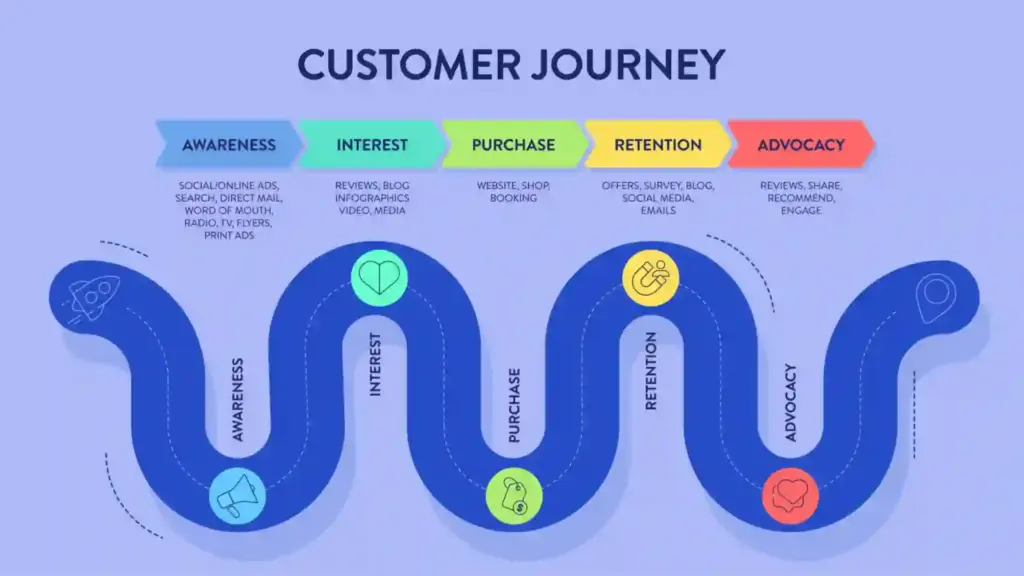
- Hyper-personalized customer journeys
- AI-generated video content at scale
- Predictive customer experience management
- Advanced voice and conversational commerce
- Autonomous campaign optimization
Industry surveys indicate continued growth in AI investment as organizations seek competitive advantages through smarter marketing operations.
The most successful organizations will not be those that automate everything. They will be the ones that combine AI efficiency with human creativity, empathy, and strategic vision.
Conclusion
AI is transforming social media and digital marketing from reactive activities into predictive, data-driven growth engines. Businesses can now create content faster, personalize experiences more effectively, optimize advertising campaigns in real time, and gain deeper customer insights than ever before.
However, technology alone is not enough. Sustainable success comes from balancing automation with authenticity. Brands that use AI to enhance human creativity rather than replace it will build stronger customer relationships and achieve better long-term results.
As AI capabilities continue to evolve, marketers who embrace intelligent tools today will be better positioned to lead tomorrow’s digital economy.
Authoritative Sources
- SurveyMonkey AI Marketing Statistics Report
- McKinsey Global Survey on AI 2025
- Journal of the Academy of Marketing Science on Generative AI in Marketing
- HubSpot AI Marketing Trends Research
- Reuters and industry reporting on AI adoption and marketing innovation

FAQs:
1. How can AI improve social media marketing?
AI improves social media marketing through content generation, audience analysis, automated scheduling, sentiment monitoring, and predictive engagement insights.
2. Is AI replacing digital marketers?
No. AI automates repetitive tasks and data analysis, allowing marketers to focus on strategy, creativity, and customer relationships.
3. What are the best AI applications in digital marketing?
The most effective applications include content creation, personalization, predictive analytics, advertising optimization, customer segmentation, and chatbot automation.
4. Can small businesses benefit from AI marketing tools?
Yes. AI tools help small businesses compete with larger organizations by improving efficiency, reducing costs, and enabling data-driven decision-making.
5. What are the risks of using AI in marketing?
Potential risks include privacy concerns, inaccurate content, over-automation, reduced authenticity, and compliance challenges. Human oversight remains essential.