


A beautifully designed website that users cannot navigate is like a luxury store with no doors. It looks impressive but fails at its core purpose. In an era where attention spans are shrinking and competition is one click away, web design and development can no longer start with visuals or code alone. They must start with people.
User experience, or UX, is the discipline that ensures digital products are intuitive, accessible, and genuinely useful. Companies that lead with UX consistently outperform those that treat it as an afterthought. According to multiple industry studies, UX-focused organizations see higher customer satisfaction, stronger brand loyalty, and better conversion rates. This article explores why UX must be the foundation of modern web design and development, and how designing for humans is no longer optional but a competitive necessity.
What UX Really Means in Web Design
UX is often misunderstood as visual design. In reality, it goes much deeper. UX encompasses how a user feels when interacting with a website, from the first page load to the final action.
At its core, UX design answers three questions: Is it useful? Is it usable? Is it desirable? This includes information architecture, content clarity, navigation logic, accessibility, and performance. Visual design supports UX, but it does not replace it.
The Nielsen Norman Group, one of the most respected authorities in the field, defines UX as covering all aspects of the end user’s interaction with a company, its services, and its products. Their research consistently shows that users prefer simplicity and clarity over complexity and novelty. When web projects ignore this principle, users disengage quickly.
Why UX Must Come Before Visual Design
Starting with visual design is tempting. Stakeholders like to see colors, layouts, and animations early. But without UX groundwork, visuals often decorate broken experiences.
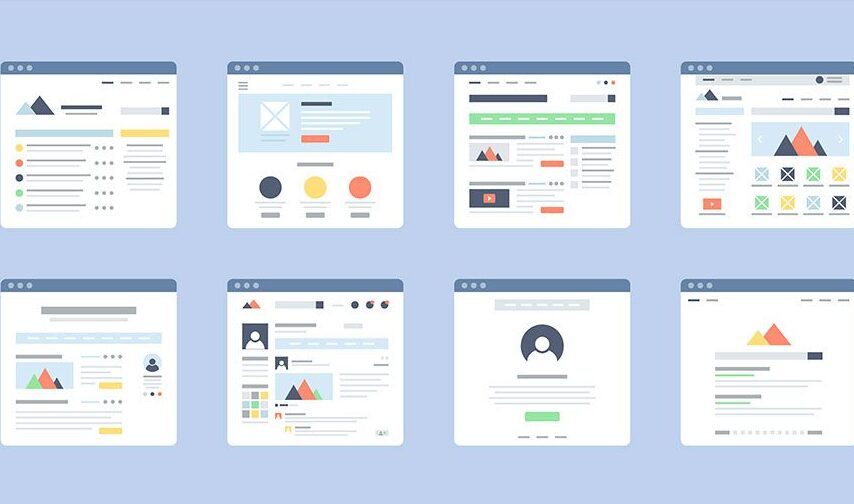
UX-first web design begins with understanding user goals, pain points, and behaviors. This research phase informs wireframes and prototypes before any pixels are polished. The result is a structure that supports real user needs.
A well-known case study comes from Airbnb. Early in its growth, Airbnb invested heavily in UX research to understand trust issues between hosts and guests. By redesigning flows around user concerns, not aesthetics, the company significantly increased bookings and long-term retention. The visuals came later, built on a solid UX foundation.
UX as a Business Growth Driver
UX is not just a design concern. It is a revenue lever. Studies from Forrester show that a well-designed user interface can raise conversion rates by up to 200 percent, while better UX design can yield conversion rates up to 400 percent.
When users can easily find what they need, they are more likely to take action. This could mean signing up, making a purchase, or requesting a demo. UX reduces friction, and friction is the enemy of growth.
Global ecommerce brands illustrate this clearly. When checkout processes are simplified through UX testing, cart abandonment drops. When content is structured around user intent, engagement time increases. These improvements directly impact the bottom line, making UX-first web design a strategic investment rather than a cost.
The Role of UX in Web Development
UX does not stop at design. It must extend into development. Developers who understand UX principles build faster, more scalable, and more maintainable products.
Performance is a key example. Research from Google indicates that as page load time increases from one second to three seconds, the probability of bounce increases by 32 percent. UX-driven development prioritizes performance, accessibility, and responsive behavior from the start.
Accessibility is another critical area. UX-informed development ensures websites are usable by people with disabilities, different devices, and varying internet speeds. This is not only ethical but increasingly required by regulations in many regions.
Human-Centered Design in a Global Context
Designing for humans means recognizing cultural and contextual differences. A UX pattern that works in one market may fail in another.
For example, navigation preferences, color meanings, and content density vary widely across regions. UX research conducted in Asia often reveals a preference for information-rich interfaces, while Western markets tend to favor minimalism. Human-centered design adapts to these realities rather than enforcing a one-size-fits-all approach.
Global companies that localize UX, not just language, see stronger adoption and trust. This is especially important for startups and scaleups targeting international markets. UX-first web design becomes a bridge between global ambition and local relevance.

UX Research and Testing: Designing With Evidence
One of the most powerful aspects of UX is its reliance on evidence. Usability testing, user interviews, and analytics replace assumptions with insights.
Even small-scale testing can uncover major issues. Watching five users struggle with a form often reveals more than weeks of internal debate. According to usability experts, testing with just five users can identify up to 85 percent of usability problems.
Companies that embed UX research into their workflow make better decisions faster. They iterate based on real feedback, reducing costly redesigns later. This evidence-based approach aligns design, development, and business goals around a shared understanding of the user.
The Risks of Treating UX as an Afterthought
Ignoring UX or adding it late in the process creates compounding problems. Development becomes reactive. Design changes become expensive. User frustration grows.
Many failed digital products share a common pattern. They were built around internal assumptions rather than user needs. Features were added without validation. Complexity replaced clarity.
In contrast, UX-first teams align early, reduce rework, and launch products that feel intuitive from day one. The difference is not talent or budget. It is mindset.
Conclusion: Designing for Humans Is Designing for Success
Web design and development are no longer about impressing users. They are about respecting them. UX-first web design acknowledges that every click represents a human decision shaped by emotion, context, and expectation.
For businesses, the message is clear. Start with UX, and everything else becomes easier. Conversions improve. Development accelerates. Brands earn trust.
As digital experiences continue to shape how we live, work, and buy, designing for humans is not just good design. It is good business.
FAQs:
1. What does “UX before code” mean in web design?
“UX before code” means prioritizing user research, user journeys, and interface design before writing any code. The goal is to understand real user needs and behaviors first, so development supports clear, intuitive experiences instead of fixing usability issues later.
2. How does human-centered design improve website performance?
Human-centered design improves usability, reduces friction, and increases trust. Websites built this way often see higher conversion rates, lower bounce rates, and better engagement because users can complete tasks quickly and confidently.
3. Isn’t focusing on UX first more expensive and time-consuming?
In the short term, UX work requires research and planning, but it reduces costly redesigns and rework later. Over time, it lowers development risk and saves money by preventing features users do not want or understand.
4. What UX activities should happen before coding starts?
Key activities include user research, persona creation, user journey mapping, information architecture, wireframing, and usability testing. These steps create clarity and alignment before developers begin building the site.
5. Can small businesses benefit from UX before code, or is it only for large companies?
Small businesses benefit just as much, if not more. Even simple UX steps like user interviews and basic wireframes can help small teams build focused websites that convert better without large budgets.