


AI has not simply upgraded search. It has reinvented it. What began as a tool for retrieving information is now a dynamic intelligence layer that anticipates intent, understands context, and delivers answers rather than links. This shift is redefining how organizations operate across industries. From global enterprises to scrappy startups, companies are using AI driven discovery to unlock efficiencies, accelerate decision making, and uncover insights that were previously hidden in data silos.
According to McKinsey, businesses deploying AI driven search and analytics are seeing productivity increases of up to 40 percent across knowledge intensive roles. The impact is undeniable. In this article, we explore how AI powered search technologies work, what they mean for business leaders, and how organizations can leverage them to remain competitive in an era defined by intelligent discovery.

How AI Is Transforming Traditional Search
Traditional search engines rely heavily on keywords. AI search uses natural language understanding, semantic modeling, and large language models to interpret meaning rather than just matching text. This shift allows search systems to understand intent, context, and relationships between data points.
A 2024 Gartner report notes that nearly 55 percent of enterprise content goes unused because employees simply cannot find it. AI driven discovery eliminates this friction. Instead of returning pages of documents, AI produces synthesized responses, highlights, and decision ready insights.
Example: A procurement manager can ask an AI system: What risks do we face with Supplier X this quarter? Instead of links, the system analyzes emails, contracts, invoices, market data, and compliance logs, then delivers a concise assessment. This elevates search from retrieval to reasoning.
The Rise of Intelligent Enterprise Search
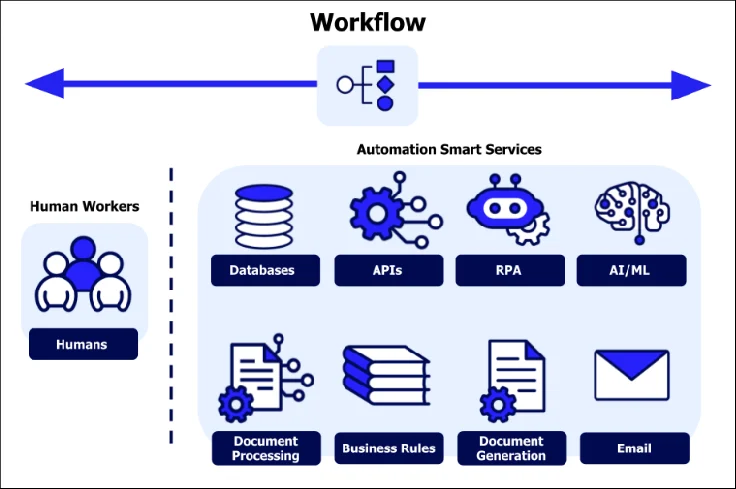
Modern enterprise search is intelligent, multilingual, and adaptive. Using vector databases, LLMs, and retrieval augmented generation, these systems index unstructured and structured content from across an organization.
A report from IDC found that companies using AI powered enterprise search save an average of 6 to 8 hours per employee per week. The productivity gains compound quickly, especially in sectors like consulting, finance, legal, and healthcare.
Case Study:
A global consulting firm implemented AI search across 30 million documents. Within months, consultants reduced research time by 35 percent and improved proposal development speed by 28 percent. This directly translated to higher win rates and greater client satisfaction.

How AI Personalizes Discovery for Customers
Customer behavior is no longer a guessing game. AI search analyzes patterns, preferences, and real time interactions to deliver hyper personalized results.
A Salesforce study shows that 73 percent of consumers expect companies to understand their unique needs. AI driven personalization helps businesses meet this expectation by tailoring product recommendations, support answers, and content journeys.
Retailers are leveraging intelligent search to reduce abandoned carts and improve product discovery. Financial institutions use AI to help customers identify optimal investment options. Streaming platforms use AI search to refine content suggestions instantly based on micro behavioral signals.
Example:
An e-commerce platform using AI search found that customers who used intelligent discovery tools were 2.4 times more likely to complete a purchase compared to those using traditional filters.
AI Search as a Catalyst for Knowledge Management
Knowledge workers spend up to 30 percent of their time searching for information. AI search reduces this dramatically by connecting fragmented information across tools like email, cloud drives, CRM systems, and analytics dashboards.
Companies are deploying intelligent discovery platforms that act as a centralized knowledge hub. These systems infer meaning, tag content automatically, and surface what matters most in context.
Expert Insight:
Dr. Jane Hsu, an AI researcher at MIT, highlights that organizations with AI powered knowledge systems gain a structural advantage in innovation output because information flows without friction.
Intelligent Discovery in Decision Making and Strategy
Search is now an engine for strategic intelligence. AI systems analyze trends, forecast scenarios, and consolidate insights into actionable summaries. Leaders can query real time data using natural language.
Example:
A logistics company might ask:
What are the primary causes of delivery delays in Southeast Asia this month and what corrective actions should we take?
The system would merge weather data, supply chain logs, driver reports, and route histories to deliver a synthesized, data backed answer.
Businesses using AI for strategic discovery report faster cycle times for planning, fewer errors in forecasting, and greater agility in responding to market changes.
Ethical and Governance Considerations
As AI search becomes more powerful, companies must adopt strong governance frameworks. Issues like data privacy, bias in search results, and transparency of recommendations require clear oversight.
According to PwC, 87 percent of CEOs believe trust in AI systems will be a major competitive differentiator. Organizations leading in AI adoption are prioritizing explainability, human oversight, and secure data architectures.
The Future of Search: Autonomous, Predictive, and Embedded Everywhere
Search is becoming embedded in every workflow, invisible yet indispensable. The next generation of AI systems will not wait for a query. They will anticipate needs, monitor business patterns, and trigger insights autonomously.
Imagine a world where:
- Your CRM alerts you to emerging customer churn based on subtle behavioral changes.
- Your financial system flags anomalies before they become costly errors.
- Your operations dashboard predicts supply chain risks weekly without being asked.
This is the future of intelligent discovery. Businesses that embrace it will operate with unprecedented clarity and speed.
Conclusion: What Leaders Must Do Now
To harness the power of AI reinvented search, business leaders should:
- Audit their data landscape and eliminate silos.
- Invest in AI powered enterprise search platforms with strong governance.
- Train teams on natural language querying for faster, smarter decision making.
- Integrate intelligent discovery into customer and employee experiences.
- Continuously refine and evaluate AI systems for accuracy and fairness.
AI is not just changing search. It is reshaping how businesses learn, decide, and compete. Those who adapt early will define the next era of innovation.
FAQs:
1. What is AI discovery in search?
AI discovery refers to search systems that not only find information but also analyze, summarize, and deliver insights directly to users.
2. How is AI changing traditional search?
AI shifts search from keyword-based results to intent-driven answers, providing faster, more relevant insights instead of just links.
3. Why is AI discovery important for businesses?
It helps businesses understand customer intent, improve decision-making, and deliver more personalized experiences at scale.
4. What technologies enable AI discovery?
Key technologies include artificial intelligence, machine learning, natural language processing (NLP), and data analytics.
5. How can companies leverage AI discovery for growth?
Companies can optimize content for AI-driven platforms, invest in data strategies, and use insights to refine marketing, products, and customer experiences.