


Marketing attribution is one of the most debated topics in modern growth teams. As customer journeys stretch across devices, platforms, and touchpoints, traditional attribution models are failing fast. Marketers are often stuck with incomplete visibility, misallocated budgets, and unreliable ROI calculations. According to a 2024 Nielsen study, over 60 percent of marketers say their attribution tools cannot keep up with multichannel consumer behavior.
This article explores how data driven marketing analytics helps fix broken attribution. We will unpack why attribution fails, what modern analytics models do differently, and how global brands are using advanced data strategies to reclaim clarity, efficiency, and growth.
Why Traditional Attribution Models Fail
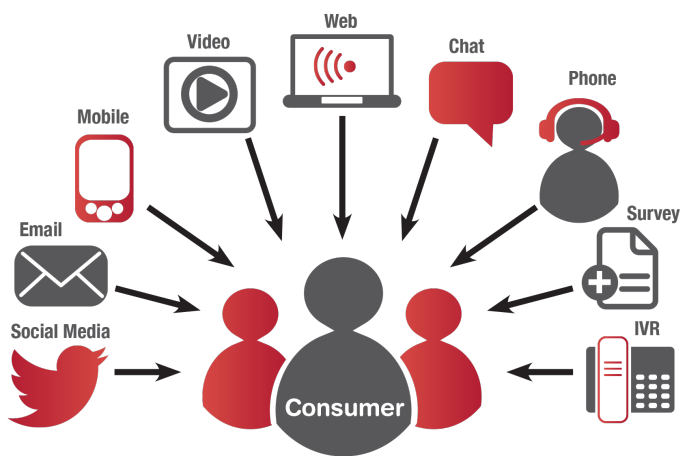
Classic attribution frameworks like last click, first click, or linear attribution were built for a world where customer journeys were short and predictable. That world no longer exists. Today, buyers discover brands on TikTok, compare options through search, interact via email, and convert days later on mobile.
One of the biggest issues is fragmentation. In a recent Google Marketing Insights report, a typical B2C customer journey now spans 6 to 8 touchpoints across three or more devices. When data lives in silos, attribution falls apart.
Another limitation is bias. Last click attribution still dominates many analytics systems, often inflating the importance of lower funnel channels like paid search while undervaluing awareness channels like video or influencer campaigns. This leads to chronic underinvestment in top of funnel growth.
How Data Driven Marketing Analytics Repairs Attribution
Modern attribution depends on unified, high-quality data. Data driven marketing analytics integrates every customer touchpoint into a single source of truth. Companies that adopt this approach reduce attribution errors by up to 40 percent (McKinsey, 2023).
Advanced analytics tools apply machine learning algorithms that analyze nonlinear journeys, assign incremental value, and reveal how each channel contributes to eventual conversion. Instead of guessing, marketers finally see which interactions truly matter.
Multi Touch Attribution and Incrementality Testing
Multi touch attribution (MTA) distributes credit across the entire journey. Unlike rule-based models, data driven MTA uses probabilistic modeling. It identifies patterns in thousands of journeys and determines how each touchpoint increases conversion probability.
However, MTA alone is not enough. Incrementality testing answers the deeper question: Which channels are actually causing incremental value? For example, Meta’s conversion lift studies reveal that some campaigns generate up to 30 percent more incremental conversions than platform-reported metrics suggest.
By combining MTA with incrementality experiments, brands can validate spend, reduce waste, and optimize for true business impact.

The Role of Unified Marketing Data Warehouses
A central marketing data warehouse is the backbone of modern attribution. By merging CRM interactions, ad platform metrics, customer behavior data, and offline events, organizations build a 360-degree view of the customer lifecycle.
Snowflake and BigQuery have become leading choices for global enterprises due to scalability and real-time analytics capabilities. According to Snowflake’s 2024 State of Data report, enterprise marketers who centralize data see a 29 percent improvement in attribution accuracy within the first year.
This infrastructure makes automated reporting, cross-channel visibility, and predictive modeling possible at scale.
Machine Learning Powered Attribution
Machine learning models outperform rule-based attribution because they learn from actual user behavior. Techniques like logistic regression, random forest modeling, and Markov chains reveal hidden relationships between touchpoints.
A Markov chain model, for instance, identifies the probability that a user progresses from one touchpoint to the next. This reveals “removal effects,” showing how conversions change when a specific channel is absent. Global e commerce companies like Zalando have used Markov attribution to reallocate budgets and drive double digit improvements in ROAS.
ML powered attribution also adapts automatically as customer behavior evolves, reducing the risk of outdated insights.
Practical Case Study: Global Retail Brand
A Southeast Asian retail group struggled with low conversion visibility across paid search, influencer marketing, and offline retail. Last click attribution overstated the value of branded search while ignoring the impact of content creators.
Using a unified analytics approach, the company deployed MTA in combination with geo holdout tests. The data revealed that influencer marketing generated a 48 percent lift in new customer acquisition, even though last click data attributed only 9 percent of conversions to influencers.
The outcome was transformative:
• Budget reallocation increased net revenue by 17 percent within two quarters.
• Influencer partnerships doubled, backed by clear evidence of ROI.
• Branded search spend was reduced by 22 percent without affecting conversions.
Building an Attribution Framework That Works in 2025
Modern attribution is not a single tool. It is an ecosystem. To fix attribution sustainably, marketing leaders should focus on five pillars:
- Data Quality: Clean, deduplicated, standardized data is non negotiable.
- Identity Resolution: Stitching cross device and cross channel identities improves accuracy dramatically.
- Unified Measurement: Combine MTA, MMM (marketing mix modeling), and incrementality testing.
- Transparent Reporting: Decision makers need simple dashboards, not black box models.
- Ongoing Iteration: Attribution is a living system that must evolve with customer behavior.
Companies adopting this framework typically increase marketing efficiency by 20 to 30 percent, according to Deloitte’s 2024 CMO Survey.

Conclusion: The Future of Attribution is Adaptive, Not Absolute
In an era of AI powered discovery and cross channel interactions, attribution cannot remain static. Data driven marketing analytics provides the clarity and confidence businesses need to scale investments intelligently. The winners of the next decade will be those who treat attribution not as a fixed formula but as a dynamic, evolving discipline powered by unified data and advanced analytics.
For organizations willing to invest in modern measurement, the payoff is substantial: smarter spending, stronger growth, and a competitive edge that compounds over time.
FAQs:
1. What is broken marketing attribution?
Broken attribution occurs when companies cannot accurately track which channels, campaigns, or touchpoints drive conversions. This leads to misallocated budgets and distorted ROI reporting.
2. Why is attribution harder today?
Privacy regulations, cookie deprecation, walled gardens, and fragmented customer journeys across devices have made tracking more complex and less deterministic.
3. What is the impact on ROI?
According to research from Gartner, marketing leaders report that nearly 60 percent of digital media budgets are wasted due to poor measurement strategies.
4. What solutions are emerging?
Advanced multi-touch attribution models, marketing mix modeling, and AI-powered analytics platforms from providers like Google Analytics and Adobe Analytics are helping brands regain visibility.
5. How can companies improve attribution accuracy?
By investing in first-party data, integrating CRM systems, unifying customer data platforms, and combining probabilistic and deterministic measurement methods.