

Artificial intelligence has transformed web design faster than almost anyone predicted. In 2026, AI-powered platforms can build landing pages in minutes, generate responsive layouts, write website copy, create images, optimize SEO, and even personalize user experiences. Businesses that once spent weeks building a basic website can now launch one before lunch.
This rapid progress has sparked an important question: Can AI replace web designers?
The short answer is no, but it is replacing parts of the job.
The role of a web designer is evolving rather than disappearing. AI has become a powerful assistant that automates repetitive work, while human designers remain essential for strategy, creativity, branding, and solving complex user experience challenges. The designers who embrace AI are becoming more productive and valuable than ever before.
AI Has Changed Web Design Forever
The web design industry has experienced one of the biggest shifts since responsive design became standard over a decade ago.
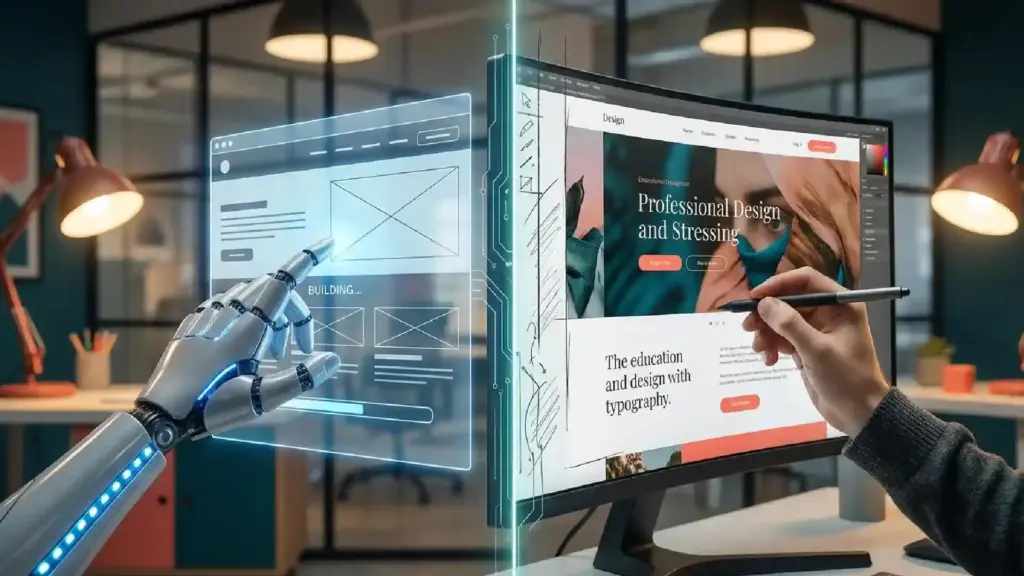
Modern AI platforms can now:
- Generate complete website layouts from a simple prompt.
- Create color palettes based on brand personality.
- Produce high-quality UI components.
- Write SEO-friendly content.
- Generate icons, illustrations, and product images.
- Optimize mobile responsiveness.
- Suggest accessibility improvements.
- Analyze user behavior and recommend design changes.
According to industry research, AI-assisted workflows can reduce website production time by more than 50% for many common projects. Instead of starting from a blank canvas, designers now begin with AI-generated drafts that they refine and customize.
This has fundamentally changed how agencies and freelancers work.
What AI Can Do Better Than Humans
AI excels at speed, consistency, and automation.
For routine websites such as portfolio sites, restaurant pages, local business websites, or simple landing pages, AI can deliver impressive results with minimal input.
Some of AI’s biggest strengths include:
Fast Prototyping
Designers can create multiple homepage concepts in minutes instead of hours.
Automated Coding
AI converts designs into HTML, CSS, React, or other frameworks much faster than manual coding.
Content Generation
AI produces headlines, product descriptions, FAQs, and metadata almost instantly.
Image Creation
Generative AI creates custom illustrations, backgrounds, and marketing visuals without expensive photoshoots.
SEO Assistance
Many AI tools automatically optimize headings, metadata, internal linking, and keyword placement.
For small businesses with limited budgets, these capabilities make professional-looking websites far more accessible than ever before.

Where AI Still Falls Short
Despite impressive progress, AI has significant limitations.
Design is not simply arranging text and images. Great websites solve business problems, communicate trust, and create emotional connections with visitors.
These are areas where human designers continue to outperform AI.
Understanding Business Strategy
Every company has unique goals.
A healthcare startup, luxury hotel, nonprofit organization, and fintech platform all require different messaging, navigation, and customer journeys.
AI can generate layouts, but it cannot independently understand a company’s long-term business strategy with the same depth as an experienced designer working directly with stakeholders.
Brand Identity
The world’s strongest brands do not look generic.
Companies invest heavily in visual identity because design communicates values before users read a single word.
AI often produces attractive designs, but many still resemble existing templates or follow similar visual patterns.
Human designers create distinctive experiences that competitors cannot easily copy.
Emotional Design
Successful websites evoke emotion.
Luxury brands create exclusivity.
Charities inspire empathy.
Technology companies build trust.
Educational platforms encourage curiosity.
These emotional experiences require cultural awareness, storytelling, psychology, and creative intuition that AI still struggles to replicate consistently.
Complex UX Problems
Large organizations often require custom workflows involving:
- Customer portals
- Healthcare systems
- Enterprise dashboards
- Financial platforms
- Government services
These projects involve research, interviews, usability testing, accessibility compliance, and continuous iteration.
AI assists with parts of the process but cannot replace experienced UX professionals leading these initiatives.
The Biggest Change Is Not Replacement. It Is Productivity.
The real transformation is not fewer designers.
It is designers working faster.
Many agencies now use AI throughout their workflow:
- Research competitors
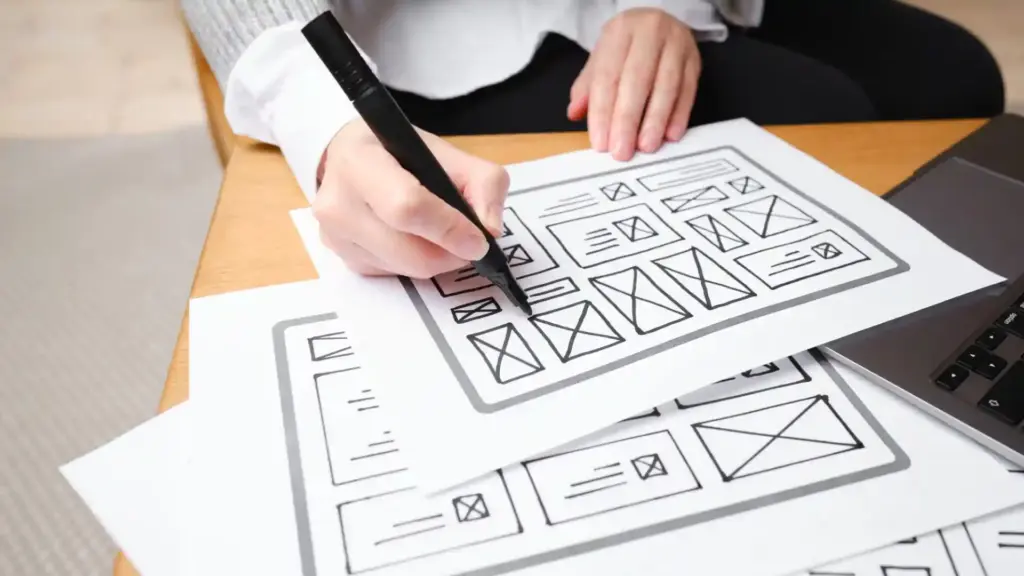
- Generate wireframes
- Produce design variations
- Create icons and graphics
- Draft website copy
- Generate code
- Test accessibility
- Improve SEO
Instead of spending hours on repetitive production work, designers spend more time solving business problems and improving user experience.
This shift mirrors previous technological advances.
Desktop publishing did not eliminate graphic designers.
Digital cameras did not eliminate photographers.
Website builders did not eliminate web developers.
Each innovation changed workflows while increasing expectations for quality.
AI follows the same pattern.
Which Web Design Jobs Are Most at Risk?
Not every role faces the same level of disruption.
The most vulnerable work includes:
- Basic landing pages
- Template customization
- Simple portfolio websites
- Small brochure websites
- Repetitive production tasks
- Basic HTML and CSS implementation
Clients who only need a simple online presence increasingly choose AI-powered website builders.
However, demand remains strong for professionals specializing in:
- UX strategy
- Conversion optimization
- Brand identity
- Accessibility
- Performance optimization
- E-commerce experiences
- Enterprise platforms
- Design systems
- Customer research
These skills require critical thinking that AI cannot fully automate.
The Skills That Matter Most in 2026
Successful web designers are becoming hybrid professionals.
Instead of competing against AI, they use it to amplify their expertise.
The most valuable skills include:
UX Research
Understanding real users through interviews, testing, and analytics remains highly valuable.
Strategic Thinking
Businesses pay for results, not simply attractive interfaces.
Designers who understand business goals become trusted advisors.
AI Collaboration
Knowing how to prompt, refine, edit, and validate AI-generated work is quickly becoming a core professional skill.
Brand Design
Companies continue investing in memorable identities that stand apart from competitors.
Accessibility
Inclusive design requires careful human judgment and ongoing testing.
Accessibility standards continue to become more important worldwide.
Communication
The ability to explain design decisions, present ideas, and collaborate with clients cannot be automated easily.
Real World Example
Imagine two agencies in 2026.
The first agency ignores AI.
Their designers manually create every wireframe, every icon, and every layout.
Projects take four weeks.
The second agency integrates AI into every stage of production.
Wireframes appear in minutes.
Content drafts are generated instantly.
Images are created automatically.
Developers receive production-ready code much earlier.
The project finishes in two weeks while allowing designers more time for user testing and strategic improvements.
The second agency delivers better value without replacing its designers.
AI increases efficiency rather than eliminating creative professionals.
The Future Belongs to AI-Powered Designers
History shows that technology rarely eliminates creative industries completely.
Instead, it changes which skills are valuable.
The same is happening in web design.
Clients no longer pay simply for creating pages.
They pay for solving problems, increasing conversions, improving customer experiences, and strengthening brands.
AI can generate a website.
It cannot build lasting customer trust, understand organizational politics, negotiate conflicting stakeholder priorities, or develop a long-term digital strategy.
Those responsibilities remain deeply human.
Conclusion
Can AI replace web designers in 2026?
For routine website production, the answer is increasingly yes. AI can automate much of the technical and repetitive work that once consumed hours.
For strategic design, branding, user experience, and business problem solving, the answer is not yet, and perhaps not for a long time.
The future is not humans versus AI.
It is humans working alongside AI to create better digital experiences faster than ever before.
Designers who learn to leverage AI will gain a competitive advantage, while those who resist change may find themselves struggling in a rapidly evolving industry. The profession is not disappearing. It is becoming more strategic, more collaborative, and more impactful.
FAQs:
1. Can AI completely replace web designers?
No. AI can automate repetitive design tasks, but human designers remain essential for strategy, branding, user experience, and creative decision making.
2. Will web design jobs disappear because of AI?
Some entry-level production tasks are becoming automated, but demand continues for designers with expertise in UX, accessibility, branding, and digital strategy.
3. What AI tools are web designers using in 2026?
Many designers use AI for wireframing, content generation, image creation, coding assistance, SEO optimization, and usability improvements.
4. Is learning web design still worth it?
Yes. Modern web designers who combine creativity, business understanding, UX knowledge, and AI skills are likely to remain in strong demand.
5. What is the biggest advantage of AI in web design?
AI dramatically reduces production time, allowing designers to focus on higher-value work such as user research, creative direction, and business strategy.