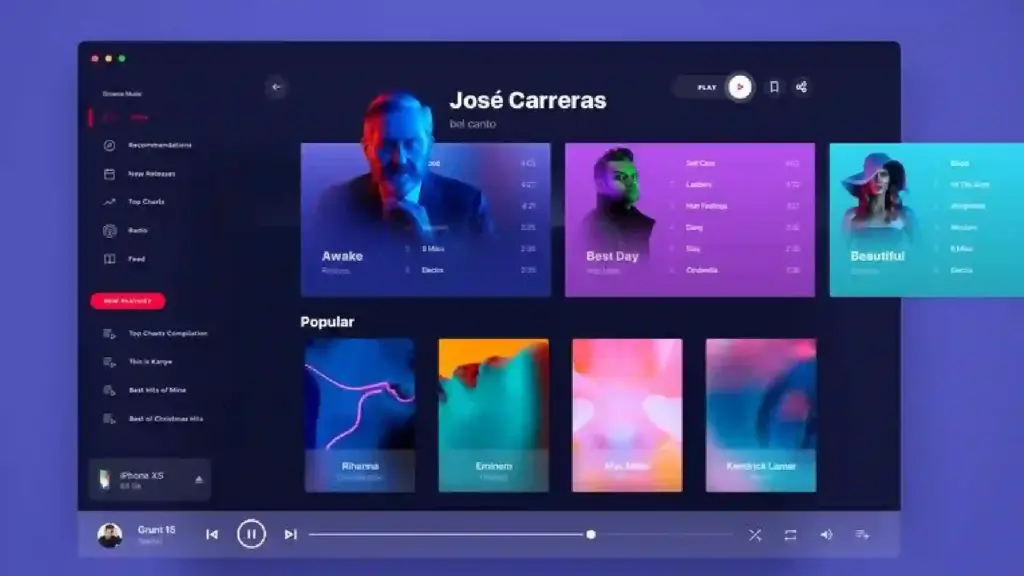


The modern website is no longer a static digital storefront. In 2026, websites are evolving into intelligent ecosystems that adapt to individual users in real time. Artificial intelligence is powering a new era of UX personalization where every interaction, recommendation, layout, and piece of content can be tailored to a visitor’s preferences, behavior, and intent.
For businesses, this shift is not optional. Consumers now expect digital experiences that feel relevant, intuitive, and frictionless. Companies that fail to personalize risk losing engagement, conversions, and long-term loyalty. Meanwhile, organizations investing in AI-driven user experience are seeing measurable improvements in customer satisfaction and revenue growth.
The rise of AI UX personalization is transforming industries from e-commerce and fintech to media, healthcare, and SaaS. As competition intensifies online, intelligent personalization is becoming one of the most powerful differentiators in modern web design.
The Evolution of Website Personalization
Website personalization is not a new concept. For years, businesses relied on simple segmentation strategies such as displaying different homepage banners based on location or device type. However, these approaches were limited and often ineffective because they treated users as broad demographic groups rather than unique individuals.
AI changes the equation entirely.
Modern machine learning systems can analyze behavioral patterns in milliseconds. Instead of relying on static rules, AI continuously learns from user interactions to optimize the experience dynamically. Every click, scroll, pause, and purchase contributes to a constantly evolving profile.
According to research from McKinsey & Company, businesses that excel at personalization generate significantly higher customer satisfaction and stronger revenue performance compared to competitors. The impact is especially visible in sectors where customer acquisition costs continue to rise.
In 2026, AI personalization extends far beyond product recommendations. It influences:
- Website layouts
- Navigation structures
- Content prioritization
- Search results
- Chatbot interactions
- Pricing strategies
- Language and tone
- Visual experiences
The result is a website that feels uniquely designed for every visitor.
Why Consumers Expect Personalized Experiences
Consumer behavior has fundamentally changed. Digital natives are accustomed to recommendation engines from platforms like Netflix, Amazon, and Spotify. These companies trained users to expect hyper-relevant experiences across all digital touchpoints.
Today, generic websites create friction.
When users land on a website that forces them to search manually for relevant information, the experience feels outdated. AI personalization reduces cognitive load by anticipating user needs before they are explicitly expressed.
Consider an online fashion retailer in 2026. Instead of showing the same homepage to every visitor, AI analyzes:
- Previous browsing behavior
- Purchase history
- Climate and geography
- Seasonal trends
- Real-time fashion demand
- User budget patterns
The homepage instantly adapts to display products most likely to resonate with that specific customer.
This level of relevance increases engagement dramatically. Studies consistently show that users spend more time on personalized platforms and are more likely to convert when content aligns with their intent.
AI Personalization Drives Higher Conversion Rates
One of the biggest reasons AI UX personalization is dominating modern websites is its direct impact on revenue.
Traditional conversion optimization relied heavily on A/B testing. Marketers would create two or three variations of a webpage and measure performance over time. AI personalization introduces a far more sophisticated approach called adaptive optimization.
Instead of testing static variants, AI continuously customizes experiences for each user in real time.
For example, a SaaS company may use AI to personalize:
- Call-to-action placement
- Pricing page messaging
- Product demos
- Onboarding flows
- Feature recommendations
A first-time visitor may receive educational content, while a returning visitor sees advanced integrations or enterprise-level solutions.
This adaptive experience improves conversion efficiency because users receive information aligned with their stage in the buying journey.
Research from Accenture has shown that consumers are substantially more likely to purchase from brands that provide personalized experiences. In highly competitive markets, personalization can become the deciding factor between conversion and abandonment.
Predictive UX Is Becoming the New Standard
Perhaps the most important trend in 2026 is predictive UX.
Predictive UX uses machine learning models to forecast what users are likely to want next. Instead of reacting to actions, websites proactively guide visitors toward relevant outcomes.
This creates experiences that feel seamless and intuitive.
For example:
- Travel websites predict preferred destinations
- Financial apps forecast spending behavior
- Healthcare portals recommend preventive care resources
- News platforms prioritize relevant topics
- Learning platforms customize educational pathways
The shift resembles moving from search-based interaction to intent-based interaction.
Rather than asking users to navigate complex menus, predictive systems reduce decision fatigue by surfacing relevant actions automatically.
Companies using predictive UX are seeing lower bounce rates and higher retention because users complete tasks more efficiently.
AI Chat Interfaces Are Replacing Traditional Navigation
Navigation menus are evolving rapidly.
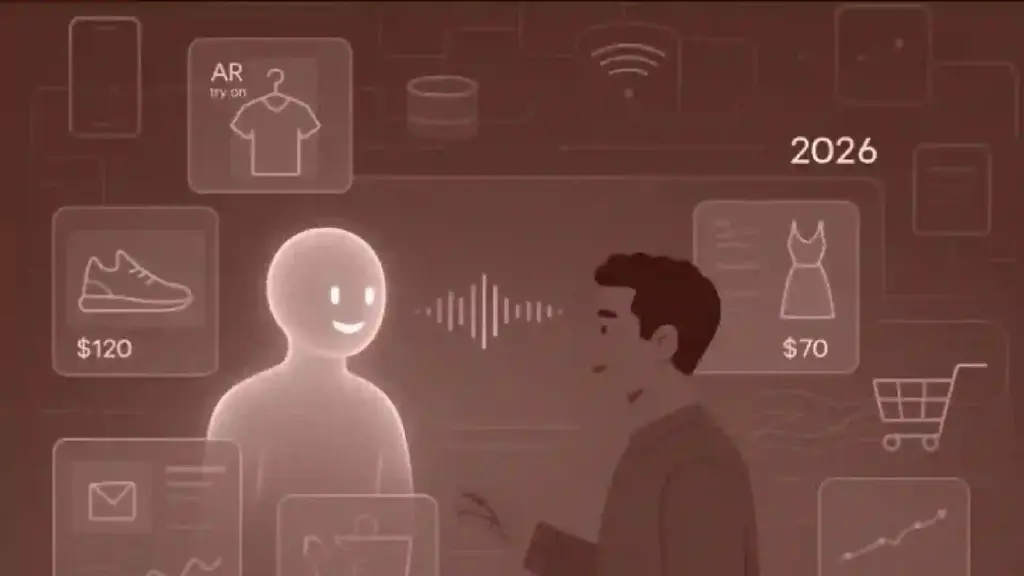
In 2026, AI-powered conversational interfaces are becoming central to website experiences. Instead of clicking through layers of menus, users increasingly interact with intelligent assistants capable of understanding natural language.
This trend is especially important for large websites with complex information architectures.
For example, an enterprise software platform may contain hundreds of product pages, support documents, and integrations. AI assistants simplify navigation by answering contextual questions instantly.
Users can type:
- “Show me pricing for startups”
- “Recommend the best CRM integration”
- “Find analytics tools for retail companies”
The AI delivers tailored responses immediately.
This conversational UX model improves accessibility while reducing friction in the customer journey. Businesses that implement intelligent website assistants are often seeing higher engagement and lower support costs simultaneously.
Hyper-Personalization in E-Commerce
E-commerce remains one of the strongest drivers of AI UX innovation.
Retailers in 2026 are using hyper-personalization to create shopping experiences that mimic one-on-one interactions with in-store associates. AI systems now combine behavioral analytics, inventory forecasting, and emotional data signals to personalize digital storefronts at scale.
Examples include:
- Dynamic pricing based on demand patterns
- Personalized bundles
- AI-generated styling recommendations
- Smart search experiences
- Context-aware promotions
- Real-time product ranking
Luxury brands are particularly aggressive in adopting AI personalization because premium customers expect concierge-level experiences online.
An emerging trend is emotionally adaptive UX, where AI analyzes sentiment signals such as typing speed, hesitation patterns, and browsing behavior to infer user mood. Websites then adjust tone, urgency, or support interactions accordingly.
While this raises ethical questions around privacy and transparency, it also demonstrates how sophisticated personalization is becoming.
Privacy and Ethical Challenges
As AI personalization becomes more powerful, privacy concerns are intensifying.
Consumers are increasingly aware of how their data is collected and used. Governments worldwide are also introducing stricter data regulations focused on transparency and consent.
This creates a major challenge for businesses: how to personalize effectively without violating user trust.
The winners in 2026 will not simply be the companies with the most advanced AI. They will be the organizations that balance personalization with ethical responsibility.
Key best practices include:
- Transparent data policies
- Explicit consent mechanisms
- Privacy-first AI frameworks
- Secure customer data infrastructure
- Explainable AI systems
Companies that misuse personalization risk backlash and reputational damage. Users want relevance, but they also want control.
The future of AI UX depends heavily on trust.
Small Businesses Can Now Compete With Enterprises
Historically, advanced personalization technologies were accessible only to large corporations with significant engineering resources.
That barrier is disappearing.
AI-as-a-service platforms now allow startups and small businesses to deploy sophisticated personalization tools without building custom machine learning systems internally.
Website builders and marketing platforms increasingly offer:
- AI-generated landing pages
- Smart recommendation engines
- Automated content personalization
- Predictive analytics dashboards
- Conversational AI integrations
This democratization is reshaping the competitive landscape.
A small e-commerce brand can now deliver experiences previously available only to global retailers. As implementation costs decline, AI personalization is becoming a standard expectation rather than a premium feature.
The Rise of Real-Time Adaptive Design
Another major trend shaping 2026 is real-time adaptive design.
Traditional responsive design focused on adjusting layouts based on screen size. Adaptive AI design goes much further by modifying the interface based on user behavior and intent.
For example:
- Simplifying interfaces for overwhelmed users
- Highlighting urgency for high-intent shoppers
- Reducing distractions during checkout
- Prioritizing educational content for new users
- Accelerating workflows for returning customers
This creates interfaces that evolve dynamically during a session.
Real-time adaptation improves usability because the website continuously optimizes itself around human behavior rather than forcing users into fixed pathways.
UX designers are increasingly collaborating with AI engineers to create systems capable of autonomous interface optimization.
AI Personalization and SEO in 2026
Search engine optimization is also evolving alongside personalization.
Search engines increasingly reward websites that deliver high engagement and user satisfaction. Metrics such as dwell time, interaction quality, and return visits are becoming stronger indicators of content relevance.
AI personalization contributes directly to these performance signals.
However, marketers face a new challenge: balancing personalized experiences with search engine crawlability.
To succeed, companies are adopting hybrid strategies that combine:
- Search-optimized foundational content
- AI-driven dynamic experiences
- Context-aware recommendations
- Personalized conversion pathways
The result is a website architecture that serves both algorithms and human users effectively.
Businesses that master this balance gain significant competitive advantages in organic search visibility.
The Future of AI UX Personalization
The next phase of AI UX personalization will likely involve multimodal intelligence.
Websites will increasingly combine:
- Voice interaction
- Computer vision
- Emotional AI
- Augmented reality
- Behavioral prediction
- Context-aware computing
Instead of interacting with websites through static screens alone, users will engage with adaptive digital environments capable of understanding context across devices and channels.
The line between website, assistant, and digital concierge will continue to blur.
In many ways, modern websites are evolving into intelligent companions rather than information repositories.
Businesses that embrace this transition early will shape the future of digital engagement.

Conclusion
AI UX personalization is no longer a futuristic concept. In 2026, it is becoming the foundation of successful digital experiences.
Consumers expect relevance, speed, and intuitive interactions. Businesses that deliver these experiences through intelligent personalization are gaining measurable advantages in engagement, conversion, and customer loyalty.
From predictive UX and conversational interfaces to adaptive design and hyper-personalized commerce, AI is redefining how users interact with websites across every industry.
The organizations that succeed in this new era will be those that combine advanced AI capabilities with ethical data practices and human-centered design principles.
The future of the web is not static. It is adaptive, intelligent, and deeply personal.
FAQ
1. What is AI UX personalization?
AI UX personalization refers to the use of artificial intelligence and machine learning to customize website experiences for individual users based on behavior, preferences, and intent.
2. Why is personalization important for websites in 2026?
Consumers increasingly expect tailored digital experiences. Personalized websites improve engagement, conversion rates, and customer retention while reducing friction in the user journey.
3. How does predictive UX work?
Predictive UX uses machine learning models to anticipate user needs and recommend actions, content, or products before users explicitly request them.
4. Is AI personalization safe for user privacy?
AI personalization can be safe when businesses implement transparent data policies, consent-based tracking, secure infrastructure, and ethical AI practices.
5. Can small businesses use AI personalization tools?
Yes. Many affordable AI-powered platforms now offer personalization features such as smart recommendations, AI chatbots, and predictive analytics for small businesses.