


Introduction
Ecommerce in 2026 is no longer about looking modern. It is about engineering trust, speed, and relevance at every click. As global online retail sales continue to grow amid rising customer acquisition costs, design has become one of the most powerful levers for conversion. Shoppers now expect sites that feel intuitive, personal, and human, while still being fast and secure.
The ecommerce web design trends of 2026 reflect this shift. Brands are moving beyond visual aesthetics into experience driven design that guides decisions, reduces friction, and increases average order value. From AI powered personalization to immersive product storytelling, design choices now directly influence revenue outcomes.
In this article, we break down the most important ecommerce web design trends for 2026 that are proven to increase sales, with real world examples and practical takeaways for founders, marketers, and product leaders.

1. AI Driven Personalization as the Default Experience
Personalization is no longer optional. In 2026, AI powered personalization is the baseline expectation for ecommerce success.
Modern ecommerce sites dynamically adjust homepages, product listings, pricing displays, and even copy based on user behavior, location, and intent. This goes far beyond “recommended for you” sections.
According to McKinsey, companies that excel at personalization generate up to 40 percent more revenue from those activities. Ecommerce leaders are embedding machine learning models directly into their design systems.
A strong example is Amazon, which continuously tests layout variations, product bundles, and messaging for individual users. The result is a shopping experience that feels curated rather than transactional.
Design takeaway:
Build flexible design components that can change content, layout, and CTAs in real time. Your UI should be adaptable, not static.
2. Hyper Minimalist Interfaces With Conversion Focus
Minimalism in 2026 is less about white space and more about cognitive efficiency.
High performing ecommerce sites are stripping away anything that does not directly support a buying decision. Navigation is simplified. Product pages prioritize one clear action. Visual hierarchy is carefully engineered to guide the eye.
Baymard Institute research shows that overly complex layouts increase cart abandonment, especially on mobile. As mobile commerce dominates globally, clean and focused design directly impacts sales.
Brands like Apple have long demonstrated how simplicity increases perceived value and trust. Ecommerce brands are now applying similar principles at scale.
Design takeaway:
Every element should earn its place. If it does not help the user decide or trust, remove it.
3. Immersive Product Experiences With 3D and AR
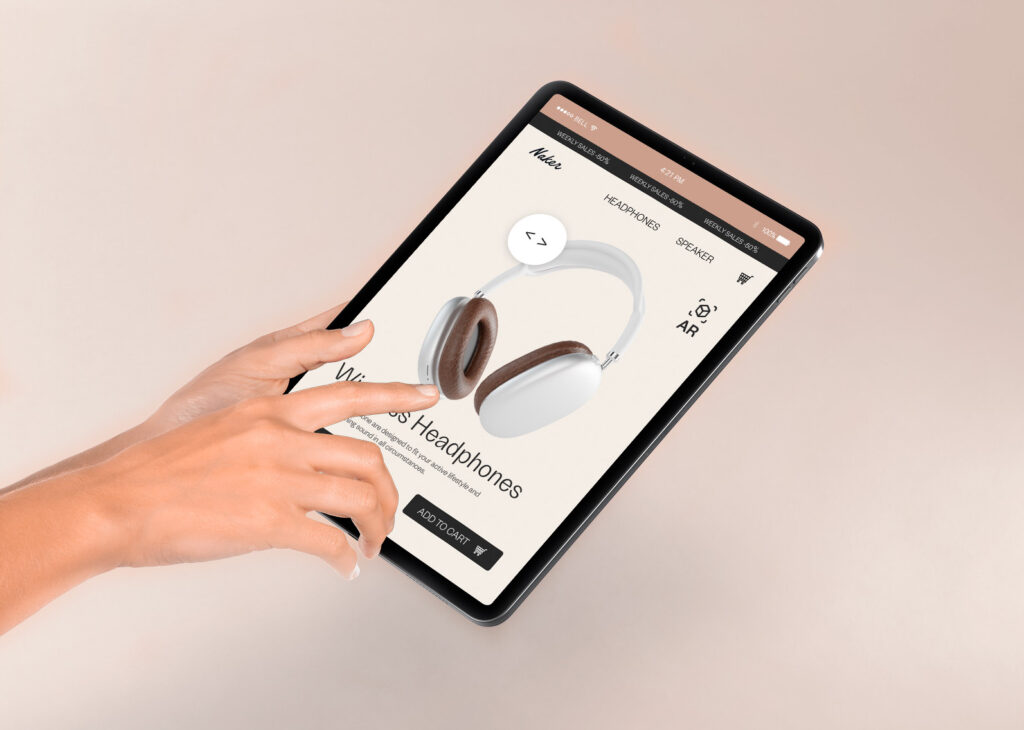
In 2026, product images alone are no longer enough. Shoppers want to explore products digitally as if they were physically present.
3D product viewers, augmented reality previews, and interactive zoom features are becoming standard for high consideration purchases. Shopify reports that products with AR experiences see conversion rates increase by up to 94 percent compared to those without.
Furniture, fashion, and beauty brands are leading adoption, allowing customers to visualize products in their homes or on their bodies before purchasing.
This trend reduces returns while increasing buyer confidence, two metrics that directly impact profitability.
Design takeaway:
Design product pages as experiences, not catalogs. Allocate space and performance budget for interactive media.
4. Mobile First Design That Feels App Like
By 2026, more than 70 percent of ecommerce traffic globally comes from mobile devices. Yet many sites still treat mobile as a secondary layout.
Leading ecommerce brands now design mobile first experiences that feel closer to native apps than websites. Sticky buy buttons, thumb friendly navigation, gesture based interactions, and lightning fast load times are standard.
Progressive Web Apps allow brands to deliver app like performance without forcing downloads, reducing friction in emerging markets with limited storage and bandwidth.
Google data shows that a one second improvement in mobile load time can increase conversions by up to 27 percent.
Design takeaway:
Design for the thumb, not the cursor. Mobile UX decisions should drive your layout, not adapt to it.
5. Trust Centered Design and Transparent UX
As online scams and data breaches rise, trust has become a primary design objective.
In 2026, high converting ecommerce sites make trust visible. Security indicators, clear return policies, delivery timelines, and customer support access are integrated into the design, not hidden in footers.
Checkout pages now emphasize reassurance with real time validation, progress indicators, and transparent pricing breakdowns.
A study by PwC shows that 88 percent of consumers say trust is a deciding factor in purchasing decisions.
Design takeaway:
Design trust into every step of the funnel. Transparency is a conversion tool, not a legal obligation.
6. Voice and Conversational Commerce Interfaces
Voice search and conversational interfaces are shaping ecommerce design in 2026.
More consumers are using voice assistants and chat based interfaces to discover products, compare options, and complete purchases. This requires ecommerce sites to rethink navigation and search UX.
Conversational AI chat widgets now act as sales assistants, guiding users through decisions in natural language. These tools reduce bounce rates and increase average order value when properly designed.
Juniper Research estimates that conversational commerce will drive over $290 billion in global sales by 2026.
Design takeaway:
Design for dialogue, not just clicks. Your interface should answer questions before users ask them.
7. Sustainable and Ethical Design Signals
Sustainability is influencing purchasing decisions, especially among Gen Z and Millennial consumers.
In 2026, ecommerce design increasingly highlights ethical sourcing, carbon neutral shipping, and sustainability commitments through visual cues and storytelling.
Icons, badges, and dedicated product filters allow shoppers to align purchases with values. This is not greenwashing when backed by real data and transparency.
Nielsen reports that 78 percent of global consumers say sustainability influences their buying decisions.
Design takeaway:
If sustainability is part of your brand, make it visible and verifiable through design.

Conclusion: Designing for Revenue, Not Just Aesthetics
The ecommerce web design trends of 2026 reflect a fundamental truth. Design is no longer decoration. It is infrastructure for growth.
Brands that win are those that treat design as a strategic investment tied directly to revenue metrics. Personalization, simplicity, immersion, trust, and mobile excellence are not trends to copy, but systems to build.
As competition intensifies and attention spans shrink, ecommerce leaders must design experiences that respect users’ time, intelligence, and values. Those who do will not only increase sales but build lasting loyalty in a crowded digital marketplace.
FAQs:
Q1. What ecommerce web design trends will have the biggest impact on sales in 2026?
Personalized user experiences, AI-powered product discovery, mobile-first immersive design, and faster checkout flows will drive the biggest sales gains. Brands focusing on speed, relevance, and trust are outperforming competitors.
Q2. How does AI influence ecommerce web design in 2026?
AI shapes design through dynamic layouts, personalized homepages, predictive search, and smart product recommendations. These features reduce friction and increase average order value by showing shoppers what they want faster.
Q3. Why is mobile-first design more important than ever for ecommerce?
In 2026, most ecommerce traffic and purchases happen on mobile. Mobile-first design ensures fast load times, thumb-friendly navigation, and seamless checkout, directly impacting conversion rates.
Q4. Do immersive ecommerce designs like AR and 3D really increase conversions?
Yes. Interactive product visualization such as 3D views and augmented reality builds buyer confidence, reduces returns, and increases purchase intent, especially for fashion, furniture, and beauty brands.
Q5. How can small ecommerce businesses adopt 2026 web design trends on a budget?
Start with high-impact updates like simplifying navigation, improving mobile checkout, adding social proof, and using AI-powered tools already built into platforms like Shopify or WooCommerce.