


The immersive web is no longer confined to bulky headsets, expensive hardware, or niche gaming communities. Today, immersive web experiences without headsets are redefining how people interact with digital environments using nothing more than a browser, a smartphone, or a laptop. This shift marks a pivotal moment in the evolution of the internet, one where spatial, interactive, and emotionally engaging experiences become accessible to billions.
Driven by advances in browser technology, graphics processing, and real-time rendering, the web is quietly transforming from a flat, scroll-based medium into a living, responsive environment. From interactive product showrooms to virtual events and data-rich storytelling, immersion is becoming a design philosophy rather than a device category. For entrepreneurs, marketers, and product leaders, this evolution presents both an opportunity and a competitive imperative.
The question is no longer whether immersive experiences require headsets. The real question is how fast businesses can adapt to an internet that feels alive without asking users to strap anything on.

What Defines an Immersive Web Experience
Immersive web experiences are defined by presence, interactivity, and spatial awareness rather than hardware. Unlike traditional websites that rely on static pages and linear navigation, immersive experiences respond to user behavior in real time. They invite exploration, simulate depth, and create a sense of participation.
At their core, these experiences leverage technologies such as WebGL for real-time 3D rendering, WebXR for augmented and mixed reality in browsers, and modern JavaScript frameworks that enable fluid animation and physics. According to Google developer data from 2024, WebGL-enabled sites can increase average session duration by up to 40 percent compared to static layouts.
The key distinction is accessibility. Users do not need VR headsets, special downloads, or high-end devices. If it runs in a browser, it qualifies. This low barrier to entry is precisely why immersive web design is gaining traction across industries.
Why Headset-Free Immersion Is Scaling Faster Than VR
Virtual reality promised total immersion, but adoption has been slowed by cost, comfort, and context. Headsets isolate users, limit session length, and introduce friction at the moment of engagement. In contrast, immersive web experiences without headsets integrate seamlessly into daily digital habits.
A 2023 Accenture study found that over 70 percent of users prefer interactive 3D or AR web experiences over VR when browsing products or learning new information. The reason is simple. Browsers are already trusted environments. Opening a link feels safe, familiar, and immediate.
For businesses, this means reach. A headset-dependent experience might serve thousands. A browser-based immersive experience can serve millions overnight. This scalability is why global brands are prioritizing immersive web over pure VR investments.
Key Technologies Powering Immersive Web Experiences
The rise of headset-free immersion is not accidental. It is the result of several technologies maturing simultaneously.
WebGL enables hardware-accelerated graphics directly in the browser, allowing complex 3D scenes to run smoothly on consumer devices. WebXR extends this capability by blending digital objects into the physical world using smartphone cameras, enabling web-based AR without app downloads.
Another critical enabler is real-time rendering engines adapted for the web, such as Three.js and Babylon.js. These tools abstract complexity and allow designers and developers to build cinematic experiences that were once exclusive to gaming engines.
Cloud computing also plays a role. Heavy assets can be streamed progressively, reducing load times and ensuring consistent performance across regions. According to Cloudflare analytics in early 2025, sites using edge-optimized immersive content saw latency reductions of up to 30 percent globally.

Business Use Cases Across Industries
Immersive web experiences without headsets are already delivering measurable results across sectors.
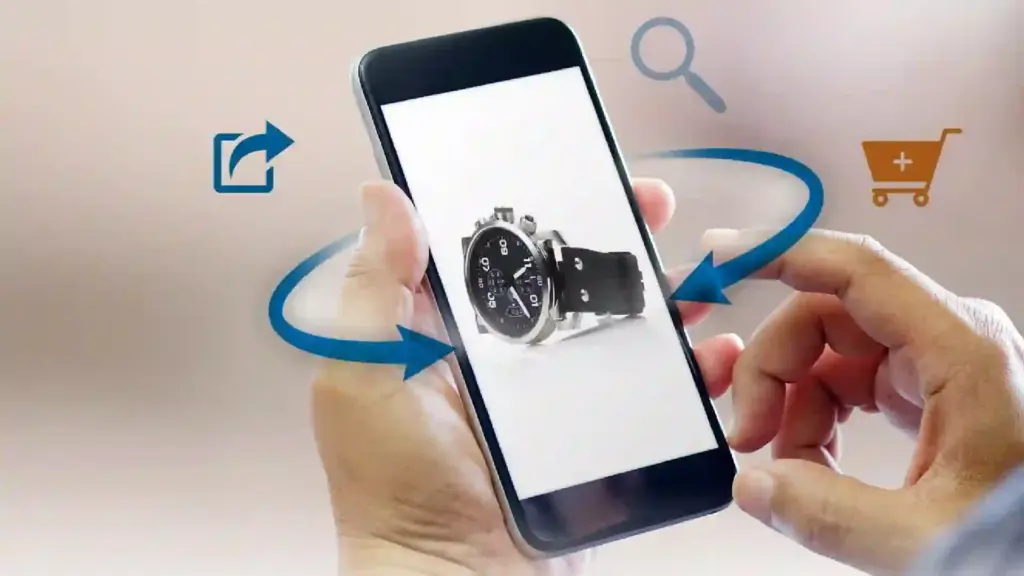
In ecommerce, brands use 3D product configurators that let customers rotate, customize, and explore items in detail. Shopify reported that products with interactive 3D views increased conversion rates by an average of 18 percent in 2024.
In real estate, virtual walkthroughs embedded directly into listing pages allow buyers to explore properties remotely. This approach reduces time-on-market and filters out low-intent inquiries. A leading Dubai-based developer reported a 25 percent increase in qualified leads after deploying browser-based immersive tours.
Education and training also benefit. Interactive simulations help learners understand complex systems through exploration rather than passive reading. Medical schools now use web-based anatomy explorers that run on tablets, eliminating the need for specialized VR labs.
Marketing campaigns have perhaps seen the most creative applications. Immersive storytelling microsites blend video, sound, and interaction to create emotional resonance. According to WARC data, immersive digital campaigns outperform traditional display ads by up to 2.5 times in brand recall.
User Experience Design in an Immersive Web World
Designing for immersion without headsets requires a different mindset. The goal is not to overwhelm users with visual effects but to guide them through meaningful interaction.
Successful immersive sites use spatial cues, subtle motion, and intuitive controls. Navigation often shifts from menus to gestures, scrolling, or object-based interaction. Sound design also plays a role, adding depth without distraction.
Accessibility remains critical. Designers must ensure experiences degrade gracefully on lower-end devices and remain usable with keyboard navigation and screen readers. The World Wide Web Consortium has emphasized that immersive design must align with inclusive web standards, not replace them.
A useful analogy is architecture. Just as well-designed buildings guide people naturally through space, immersive web experiences should lead users intuitively toward desired outcomes, whether that is learning, purchasing, or engaging with a brand.
Monetization and ROI Considerations
One common misconception is that immersive web experiences are expensive experiments with unclear returns. In reality, costs have dropped significantly as tools mature and reusable components become standard.
For startups, immersive landing pages can differentiate offerings in crowded markets. For enterprises, immersive platforms reduce reliance on physical showrooms, events, and printed materials. According to Deloitte Digital, companies adopting immersive web interfaces saw an average ROI of 120 percent within 18 months, driven by higher engagement and lower customer acquisition costs.
Monetization models vary. Some brands use immersive experiences as top-of-funnel engagement, while others gate premium features behind subscriptions or integrate direct commerce. The flexibility of the web allows rapid iteration and A/B testing, something traditional VR environments struggle to support.
The Role of Mobile in Headset-Free Immersion
Mobile devices are the primary gateway to immersive web experiences. Smartphones combine high-resolution screens, sensors, cameras, and processing power in a familiar form factor. This makes them ideal for browser-based AR and spatial interaction.
In markets across Asia, Africa, and the Middle East, mobile-first immersive experiences are leapfrogging desktop adoption. For example, educational platforms in India use web-based simulations optimized for low-bandwidth environments, reaching millions of students without requiring app installs.
This global accessibility is one of the immersive web’s greatest strengths. It aligns with how the next billion users will experience the internet.
Challenges and Limitations to Address
Despite rapid progress, challenges remain. Performance consistency across devices is a persistent issue. What runs smoothly on a flagship smartphone may struggle on older hardware.
There are also creative constraints. Browser-based immersion cannot yet match the sensory depth of high-end VR. However, for most commercial and educational use cases, the tradeoff is acceptable given the reach and convenience.
Privacy is another concern. Immersive experiences often rely on behavioral data to adapt in real time. Transparent data practices and compliance with global regulations such as GDPR are essential to maintain trust.
The Future Outlook of Immersive Web Experiences
Looking ahead, immersive web experiences without headsets are poised to become a default expectation rather than a novelty. As 5G networks expand and browsers continue to adopt advanced graphics standards, the line between websites and digital environments will blur further.
Major technology companies are investing heavily in spatial computing for the web, signaling long-term commitment. The next phase will likely involve AI-driven personalization, where immersive environments adapt dynamically to individual users.
For businesses, the strategic implication is clear. Immersion is no longer about chasing futuristic gadgets. It is about rethinking how value is delivered through interaction, presence, and emotion on the most universal platform ever created.
Conclusion: Actionable Takeaways for Leaders
Immersive web experiences without headsets represent a pragmatic evolution of the internet. They combine the emotional impact of immersive design with the accessibility of the open web.
Leaders should start by auditing existing digital touchpoints and identifying where interaction can replace explanation. Pilot projects, such as 3D product views or interactive storytelling pages, offer low-risk entry points. Investing in immersive capability today positions organizations to meet rising user expectations tomorrow.
The immersive web is not coming. It is already here, quietly reshaping how we experience the digital world.
FAQs :
1. What are immersive web experiences without headsets?
They are interactive, engaging digital experiences delivered through standard web browsers without requiring VR or AR headsets. These experiences rely on technologies like WebGL, WebXR-lite interactions, spatial audio, scroll-based storytelling, and real-time 3D graphics.
2. How do immersive web experiences differ from traditional websites?
Traditional websites are mostly static and page-based. Immersive web experiences are dynamic and exploratory, allowing users to interact with content through movement, animation, sound, and micro-interactions that feel closer to a game or physical environment.
3. Why are companies choosing headset-free immersive experiences?
Headset-free experiences remove friction. Users do not need special hardware, downloads, or learning curves, making immersive content accessible on laptops, tablets, and smartphones while still delivering emotional impact.
4. What industries benefit most from immersive web experiences?
Retail, real estate, automotive, education, media, travel, and luxury brands benefit the most. These sectors use immersive web to showcase products, tell stories, and simulate real-world experiences digitally.
5. Are immersive web experiences expensive to build?
Costs vary. While high-end 3D experiences require skilled teams, many immersive effects can now be achieved with modern frameworks and lightweight 3D assets. Performance-focused design helps control both cost and sustainability.