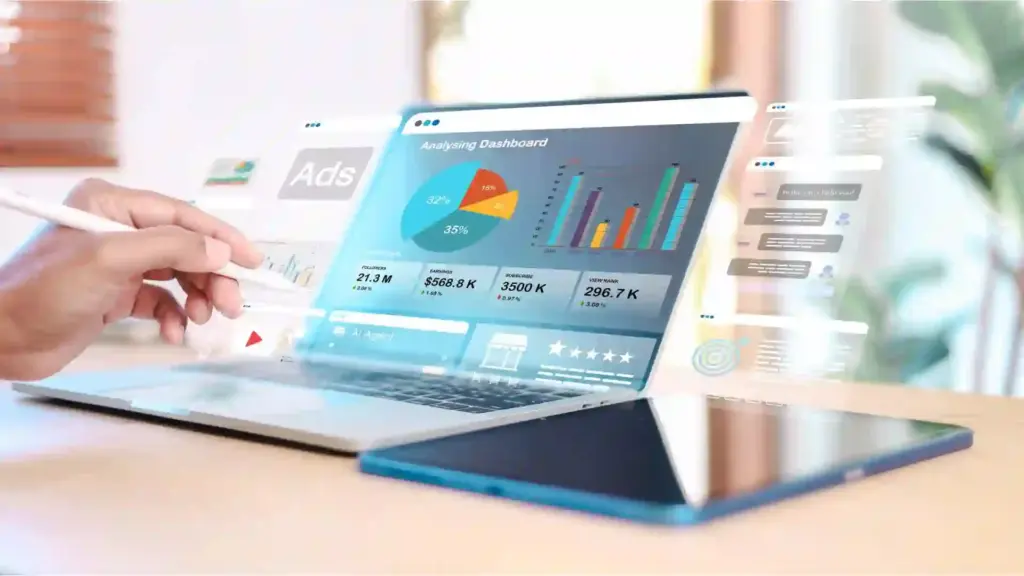


Marketing has always evolved with technology, from print to digital to social media. But the next shift is not incremental. It is existential. By 2026, autonomous AI agents will replace large parts of traditional marketing teams, not because companies want fewer people, but because software will outperform humans at speed, scale, and precision.
Today, most marketing departments are bloated with specialists managing tools, dashboards, and workflows. Ironically, humans now exist to coordinate software. Autonomous AI agents flip this model. They do not just assist marketers. They plan, execute, optimize, and learn independently across channels in real time.
This transition is already happening inside growth-stage startups and enterprise innovation labs. By 2026, it will be mainstream. The question is no longer if marketing teams will be replaced, but which parts, how fast, and who survives the transition.

What Are Autonomous AI Agents in Marketing?
Autonomous AI agents are software systems that can set goals, make decisions, execute tasks, and improve performance without continuous human input. Unlike traditional automation tools that follow predefined rules, these agents operate with intent.
In marketing, an autonomous AI agent can:
- Analyze market data and customer behavior
- Design campaigns across email, search, social, and content
- Generate creative assets including copy, visuals, and video
- Allocate budgets dynamically across channels
- Run experiments, measure results, and optimize outcomes
Platforms like Salesforce and HubSpot have already embedded early agentic capabilities into their ecosystems. Meanwhile, startups building pure agent-based systems are leapfrogging traditional marketing stacks entirely.
By 2025, Gartner estimates that over 30 percent of digital marketing decisions will be made by AI without human intervention. By 2026, that number is expected to exceed 60 percent.
Why Traditional Marketing Teams Are Structurally Vulnerable
Traditional marketing teams are organized around human limitations. Separate roles exist because no single person can do everything at once. Copywriters write. Analysts analyze. Media buyers buy ads. Managers coordinate.
AI agents eliminate these constraints.
A single autonomous system can simultaneously:
- Write 1,000 ad variations
- Test them across multiple platforms
- Shift budget toward the top-performing creatives
- Rewrite underperforming copy
- Retarget users based on micro-behaviors
This happens continuously, 24 hours a day, without fatigue or bias.
According to McKinsey research published in 2024, marketing is among the top three business functions most susceptible to AI-driven labor disruption, with up to 70 percent of activities automatable using existing technology.
The issue is not creativity. It is efficiency. AI agents are becoming good enough creatively while being infinitely faster operationally.

The First Roles to Be Replaced by 2026
Not all marketing jobs will disappear at once. Replacement will be uneven and role-specific.
Performance Marketers and Media Buyers
AI agents already outperform humans in bid optimization, audience segmentation, and attribution modeling. Platforms like Google Ads and Meta are increasingly optimized for machine-led decision making. Human media buyers are becoming supervisors, not operators.
Content Production Teams
Generative AI can now produce SEO content, social posts, ad copy, landing pages, and even short-form video. By 2026, content teams focused on volume rather than brand storytelling will largely disappear.
Marketing Analysts
AI agents do not just report data. They act on it. Dashboards are being replaced by autonomous decision engines that interpret signals and adjust strategy instantly.
Marketing Operations
Workflow management, CRM updates, campaign scheduling, and attribution modeling are ideal tasks for agentic systems. These roles will shrink dramatically.
What Will Not Be Replaced: The New Human Marketing Core
Despite the disruption, marketing will not become fully autonomous. Humans will remain critical in areas where judgment, ethics, and long-term vision matter.
Brand Strategy and Narrative
AI can optimize messaging, but it cannot define meaning. Brand positioning, cultural relevance, and emotional resonance still require human leadership.
Ethical Oversight and Governance
Autonomous agents need boundaries. Humans will be responsible for ensuring compliance, fairness, and brand safety across markets.
Market Creation and Insight
AI excels at pattern recognition, not imagination. Humans will continue to identify unmet needs, invent categories, and set direction.
The future marketing team will be small, senior, and strategic. Think three to five people overseeing systems that once required 30 to 50 staff.
How Autonomous AI Agents Reshape Marketing Economics
The economic impact is profound.
Companies deploying autonomous AI agents report:
- 40 to 70 percent reduction in marketing operating costs
- Faster time-to-market for campaigns by up to 90 percent
- Continuous optimization rather than quarterly planning cycles
- Higher ROI due to real-time experimentation
A 2024 case study from a global ecommerce brand showed that replacing a 22-person growth team with a five-person AI-led unit increased revenue per marketing dollar by 52 percent within six months.
This is why adoption will accelerate rapidly. In competitive markets, companies that do not adopt agentic marketing will be priced out.
The Technology Stack Powering the Shift
By 2026, the modern marketing stack will look fundamentally different.
Key components include:
- Large language models for reasoning and content
- Reinforcement learning systems for optimization
- Multi-agent orchestration frameworks
- Direct integrations with ad platforms, CRMs, and commerce systems
- Synthetic customer models for simulation and testing
Vendors are racing to build end-to-end autonomous growth platforms rather than standalone tools. This mirrors how cloud computing replaced on-premise IT teams a decade earlier.
How Leaders Should Prepare Now
Executives who wait until 2026 will be too late. Preparation must begin now.
Actionable steps include:
- Audit marketing workflows to identify automation-ready tasks
- Pilot autonomous agents in low-risk channels
- Reduce tool sprawl and consolidate data infrastructure
- Retrain senior marketers as AI supervisors and strategists
- Redesign KPIs around outcomes, not activities
The biggest risk is cultural, not technical. Teams must accept that AI will not assist marketing. It will run it.
Conclusion: Marketing Becomes a Machine, Guided by Humans
By 2026, autonomous AI agents will replace traditional marketing teams not through layoffs alone, but through irrelevance. The old model of large, execution-heavy departments cannot compete with systems that learn, adapt, and optimize continuously.
Marketing will become leaner, faster, and more scientific. Human creativity will not disappear, but it will move upstream into strategy, meaning, and stewardship.
The winners will be organizations that redesign marketing around intelligence rather than labor. The losers will cling to headcount as a proxy for capability.
The future of marketing is autonomous. The only question is whether you will lead it or react to it.
FAQs:
1. What are autonomous AI agents in marketing?
Autonomous AI agents are systems that plan, execute, and optimize marketing tasks with minimal human input. They can manage campaigns, adjust budgets, generate content, and analyze performance in real time.
2. How are AI agents different from traditional marketing automation?
Traditional automation follows predefined rules. Autonomous agents make decisions dynamically based on goals, data signals, and performance outcomes.
3. What marketing functions can AI agents handle?
Campaign management, media buying, personalization, lead nurturing, content optimization, customer segmentation, and predictive analytics.
4. Do AI agents replace marketing teams?
No. They augment teams by handling execution and optimization, allowing marketers to focus on strategy, brand positioning, and creative direction.
5. How do AI agents improve ROI?
By continuously testing variables, reallocating budgets instantly, and optimizing based on real-time performance data.
6. What are the risks of using autonomous AI in marketing?
Brand voice inconsistency, data privacy concerns, over-automation, and lack of human oversight if governance frameworks are weak.
7. What infrastructure is required to deploy AI agents?
Unified data systems, clean CRM integration, strong analytics pipelines, and clear goal definitions.