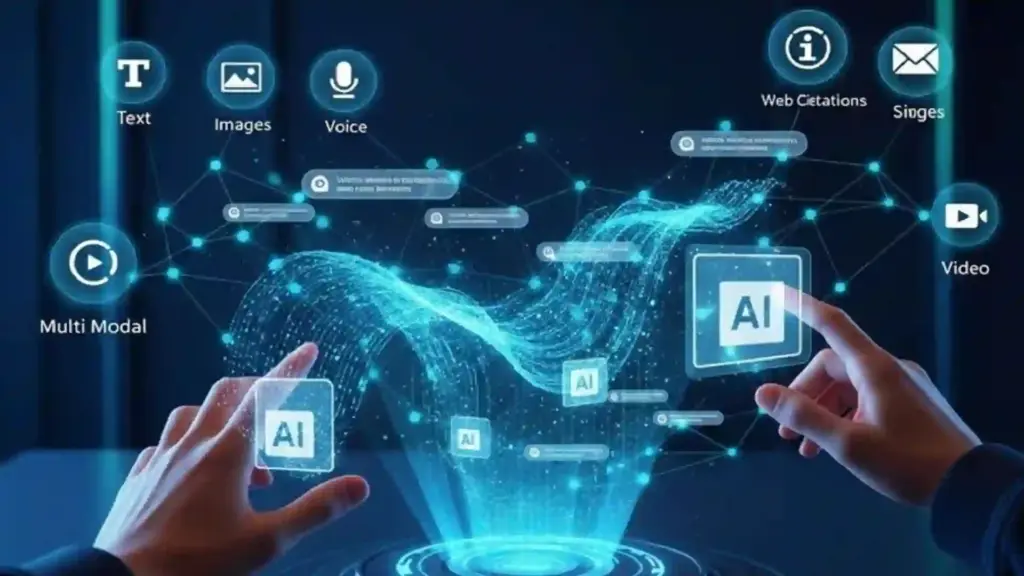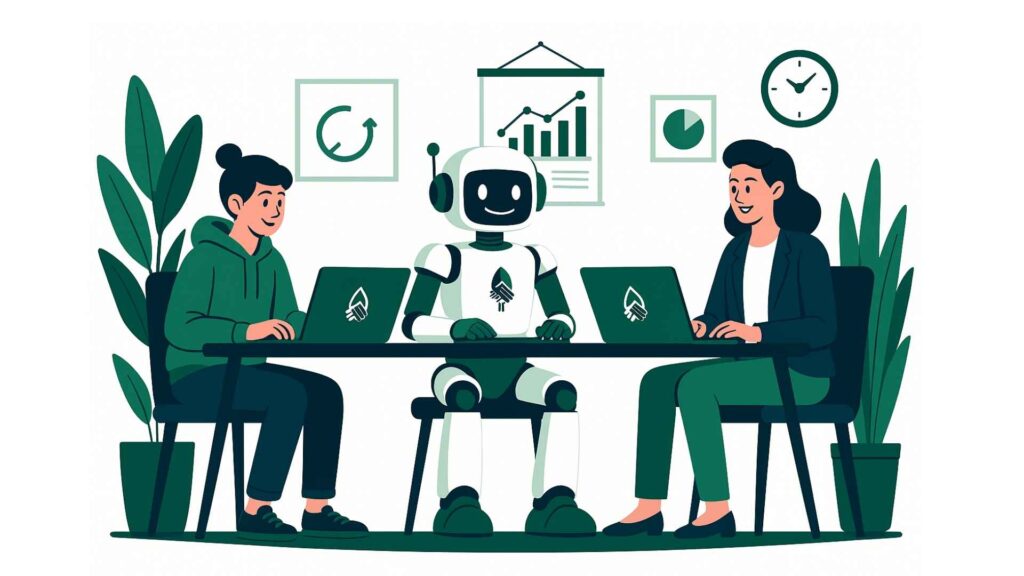


The world’s top brands have entered a new era where marketing is no longer led solely by creativity or intuition. Instead, companies like Coca Cola, Airbnb and HubSpot are building AI first marketing teams that outperform competitors by combining advanced analytics, automation and human insight. These teams use AI as a core operating system for decision making, campaign execution and customer experience design.
In this report, we unpack how leading organizations structured their AI powered teams, the technologies they adopted and the cultural shifts that made the transformation stick. Through real case studies and recent data, you will learn how to design, hire and scale your own AI first marketing team for 2025 and beyond.

The Rise of AI First Marketing Teams
AI adoption in marketing has accelerated dramatically. According to a 2024 McKinsey study, companies using AI in marketing saw up to 25 percent revenue uplift and 60 percent cost efficiency gains within two years. High performing teams share three traits: they automate repetitive work, individualize customer journeys at scale and empower marketers with real time insights.
Airbnb, for example, built an internal AI platform that predicts traveler intent using billions of behavioral data points. As their former CMO noted, the marketing team shifted from campaign planners to “experience orchestrators” supported by machine intelligence. This change helped reduce customer acquisition costs while improving retention.
Today, the pressure to adopt AI first principles is global. Emerging markets in Asia and the Middle East are moving even faster. In the UAE, for instance, over 70 percent of enterprise CMOs report accelerating AI investment to remain regionally competitive.
How Leading Companies Structured Their AI First Marketing Teams
1. Centralized Intelligence with Decentralized Execution
Many high growth companies start by creating an AI Marketing Hub. This is a small, cross functional team that owns data infrastructure, experimentation frameworks and AI governance. Execution remains with marketing pods such as brand, content, growth and CRM.
HubSpot adopted this model in 2023. Their central AI team built internal copilots for content, segmentation and analytics. Marketers across the company access these tools without needing deep technical skills. As a result, content production time dropped by 80 percent.
A Gartner report highlights that companies using centralized intelligence see faster adoption and maintain stronger data quality, a key requirement for AI success.
2. New Hybrid Roles Designed for the AI Era
Leading companies redesigned job descriptions rather than replacing staff. A typical AI first marketing team now includes:
- Marketing AI Strategist: aligns business goals with AI capabilities
- Prompt Architect: designs reusable AI workflows and prompt libraries
- Data Scientist for Marketing: builds predictive models and attribution systems
- AI Content Producer: blends narrative skill with generative tools
- Automation Engineer: manages orchestration across CRM, ads and email systems
Coca Cola’s “AI Creativity Studio,” launched in partnership with research labs, employs hybrid creative technologists. These professionals combine art direction with model fine tuning, enabling the brand to launch global creative campaigns in weeks instead of months.
3. A Culture of Continuous Experimentation
AI first teams thrive on experimentation. Leaders establish cultures where A/B testing, rapid prototypes and data feedback loops are part of daily work.
At Netflix, the marketing organization runs thousands of micro experiments annually, using AI to predict user engagement with trailers, visuals and messaging. According to Netflix’s 2024 shareholder letter, experimentation led to double digit improvements in viewer retention.
What sets these teams apart is not just the use of AI, but a mindset of learning faster than competitors.
Technology Stack Behind AI Powered Marketing Teams
1. Unified Customer Data Platforms
Teams rely on CDPs like Segment, Adobe Experience Platform or home built systems. Unified data enables accurate prediction models and personalized campaigns. Without this foundation, AI initiatives often fail due to fragmented or inconsistent data.
2. Generative AI for Omnichannel Content
Marketers use tools like OpenAI, Midjourney, and Jasper for content ideation, ad variation generation and personalization. Generative AI turns one creative concept into hundreds of context relevant outputs.
A 2024 BCG study found that using generative AI in content workflows reduces campaign production time by 55 to 70 percent.
3. Predictive Analytics for Targeting and Forecasting
Forecasting models help teams anticipate customer churn, lifetime value and purchase intent. Amazon famously uses predictive analytics to refine product recommendations, which account for up to 35 percent of company revenue.
4. Marketing Automation Orchestration
Platforms like Braze, Salesforce Marketing Cloud and HubSpot automate multi channel workflows. AI enhances timing, sequencing and messaging, turning static campaigns into responsive, dynamic systems.
Case Studies: How Global Leaders Built AI First Teams
Case Study 1: Coca Cola’s AI Reinvention
In 2023 Coca Cola launched “Create Real Magic,” an initiative combining generative AI with brand storytelling. The company then formalized an AI first marketing structure by establishing:
- A global AI council for governance
- AI powered creative studios
- Training programs for marketers on generative tools
This model allowed Coca Cola to run hyper localized campaigns across 200 markets with unprecedented agility.
Case Study 2: Airbnb’s Predictive Journey Engine
Airbnb built a machine learning layer that predicts what travelers are most likely to book next. Their marketing team restructured around this intelligence, reallocating budgets to intent driven channels.
This AI powered approach cut acquisition costs and boosted conversion rates across the funnel.
Case Study 3: eCommerce Scale Ups in Southeast Asia
Companies like Lazada and Shopee invested early in AI for customer segmentation and recommendation engines. Their marketing teams now include ML engineers embedded within growth squads. This model helped them personalize millions of user journeys with minimal manual intervention.
Skills and Training Required to Build Your Team
Top performing companies invest heavily in upskilling. Marketers need not become engineers, but they do learn:
- Prompt engineering fundamentals
- Data literacy and experimentation frameworks
- Automation design
- Ethical and governance standards for AI
A 2024 Deloitte survey found that organizations that upskill marketing teams see 3 times higher ROI from AI investments compared with those that rely solely on new hires.
The strongest teams integrate internal academies, certifications and weekly learning cycles.
Action Plan: How to Build Your Own AI First Marketing Team
- Conduct a capability audit: Identify your current data maturity, tooling and skill gaps.
- Build a centralized AI marketing hub: Start small with 3 to 5 specialists.
- Upskill existing marketers: Implement a 6 week AI learning curriculum.
- Redesign workflows around automation: Convert repetitive tasks to AI powered systems.
- Launch pilot projects: Start with content automation, segmentation or predictive models.
- Measure ROI early: Track speed, cost efficiency and revenue lift consistently.
- Scale through governance: Create guidelines for responsible, reliable AI usage.
Conclusion: The Future of Marketing Will Be AI Native
The shift to AI first marketing teams is not optional. It is the new competitive standard across sectors and regions. Companies that win will be those that blend human creativity with machine intelligence, design agile workflows and cultivate data driven cultures.
As models grow more powerful and accessible, the advantage will move from technology itself to how teams are structured, trained and empowered. Organizations that adopt AI first operating principles today will define the next decade of marketing excellence.